People bothered by particles or occasional odours
Once you’ve identified an issue linked, for example, to cooking, dust or smoke, you may be looking for an additional way to tackle it without neglecting the source or airing the room.


First reduce sources of pollution and make sure the air is regularly refreshed. According to ADEME and Anses, an air purifier should only be used as a complement to address a specific issue. If you’re targeting particles, check the clean air delivery rate, the room, noise levels and filter maintenance. For odours or certain gases, assess activated carbon separately. If ventilation is inadequate, or damp or mould persists, have the property checked rather than relying on the appliance alone.
When considering an air purifier, start with a specific issue, the room affected and the condition of its ventilation.
Once you’ve identified an issue linked, for example, to cooking, dust or smoke, you may be looking for an additional way to tackle it without neglecting the source or airing the room.
The stated room size isn’t enough on its own: clean air delivery rate, noise at the setting you’ll use and filter maintenance all matter when choosing an appliance for an occupied room.
If air isn’t circulating well or damp persists, the priority is to check the air inlets and outlets and make sure the system is working properly. If you rent or live in a managed block, your landlord or property manager may be able to help investigate the problem.
First identify what’s bothering you and check the home’s ventilation. Then compare the features that address the issue and suit the room.
| Priority | What to check | Your needs |
|---|---|---|
| Source of the problem | Identify the possible source, then distinguish between particles, odours, damp and inadequate air circulation. Tackle the source and ventilation before considering an additional treatment, as recommended by ADEME. | I want to avoid choosing a filter for a problem that first needs to be addressed in the home. |
| Particles and room size | For particles, compare the clean air delivery rate (CADR), including its unit and measurement method, with the room you’ll actually use it in. The NF EN IEC 63086-2-1 standard published by AFNOR covers the determination of particle reduction, not gas reduction. | For my bedroom or living room, I want a relevant measure of particle performance rather than just a maximum room size. |
| Noise during use | Check the noise level at the speed needed for your room, not just at the lowest setting. Compare figures measured under the same conditions where these are specified. | An appliance for an occupied room should have a setting quiet enough for me. |
| Odours and activated carbon | Check whether it has an activated carbon medium, which pollutant the model’s data relates to and how the filter needs to be replaced. The presence of activated carbon alone doesn’t prove it will tackle every gas. | If odours are the issue, I want to assess this feature separately from particle filtration. |
| Filter maintenance | Note the compatible filter reference, check replacement availability and read the manufacturer’s instructions. A filter’s stated lifespan depends on the model and how it’s used. | I want to be able to maintain the appliance after buying it, without mixing up filters for different models. |
| Active technologies | For features such as ionisation, look for performance and emissions data for the exact model, the pollutant being targeted and comparable conditions of use. Don’t assume what it does from the technology’s name alone. | An additional feature only interests me if I can assess what it does in my situation. |
| Ventilation and damp | Check the air inlets and outlets and make sure the ventilation is working if damp or mould persists. An air purifier doesn’t restore air circulation; ADEME treats this as a priority separate from additional treatments. | If the home seems poorly ventilated, I want to have the problem checked rather than mask it with an appliance. |
An appliance won’t fix the source of damp or inadequate air circulation. Buying one could distract you from a problem with the property.
Check for sources of damp and make sure the air inlets and outlets are working properly. If you rent, explain the problem to your landlord or property manager so it can be investigated.
A stated room size doesn’t tell you on its own how well an appliance will reduce particles or how noisy it will be at the setting you use.
For the room in question, check the clean air delivery rate and how it was measured, then consider the noise level at the speed you plan to use.
A filter must be compatible with the exact model. Its stated replacement interval varies depending on the appliance and how it’s used.
Before choosing, note the filter reference, check that it’s available and read the manufacturer’s maintenance instructions.
Filter replacement is an ongoing maintenance cost to factor in, depending on the model and how you use it.
Results from an active technology depend, among other things, on the model, pollutant and measurement conditions. A claim about one appliance doesn’t apply to every home.
Check performance and emissions data for the exact model, while continuing to reduce sources of pollution and ventilate the space.
These models illustrate features worth comparing. The figures given are those stated by each brand for its model, and aren’t directly comparable across ranges.
According to Philips France, the PureProtect Quiet 2200 Series AC2221/13 combines a stated clean air delivery rate with a HEPA filter and activated carbon.
The Smart Air Purifier 4 provides stated figures you can use to compare clean air delivery rate and coverage area.
Rowenta France describes the Pure Air Mini PU1520F0 as suitable for rooms up to 22 m², with an activated carbon filter.
These appliances are filtration options to consider alongside ventilation; some also feature activated carbon. Choose according to the issue you want to address, the room and the maintenance requirements. Don’t expect them to fix ventilation or damp problems in your home.
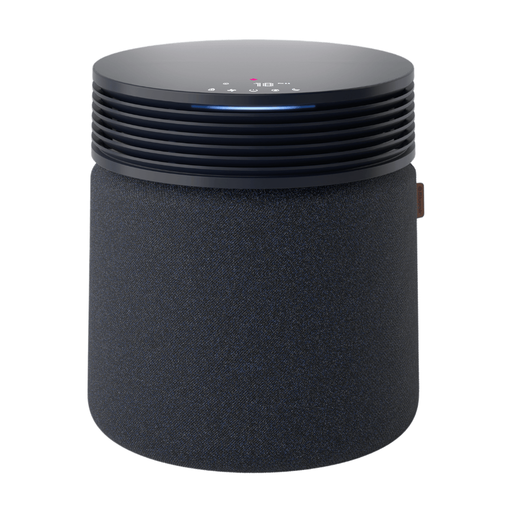 Image unavailable
Worth considering for a large room if particles are the issue you want to address. The product title states coverage of 154 m² and HEPASilent technology. Compare this room size with your space and check the clean air delivery rate and noise at the setting you plan to use. Also confirm the filter reference and availability before buying. This appliance won’t fix poor ventilation.
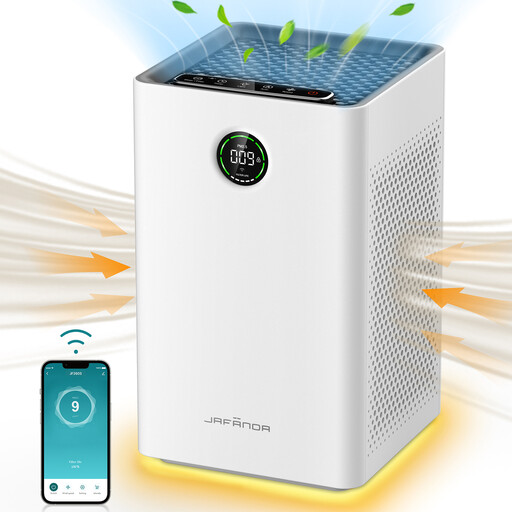 Image unavailable
Consider this if you want to compare particle filtration with an activated carbon feature for a specific odour issue. The title states coverage of up to 1190 ft². Check the conditions behind this claim, the noise level at the speed you need and the filter reference. The presence of activated carbon doesn’t prove it will tackle every odour or gas.
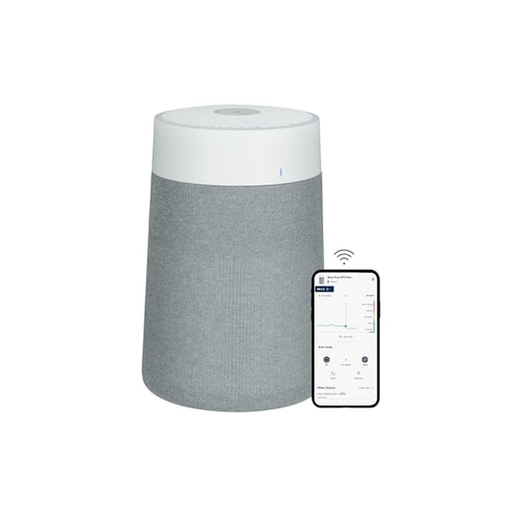 Image unavailable
Worth comparing for a room where particles are the priority. The title states coverage of 43 m². Check the clean air delivery rate, noise at the setting you plan to use and whether it suits your actual room. Confirm that the F5MAX (111582) filter is compatible and available, and check electrical compatibility with your home.
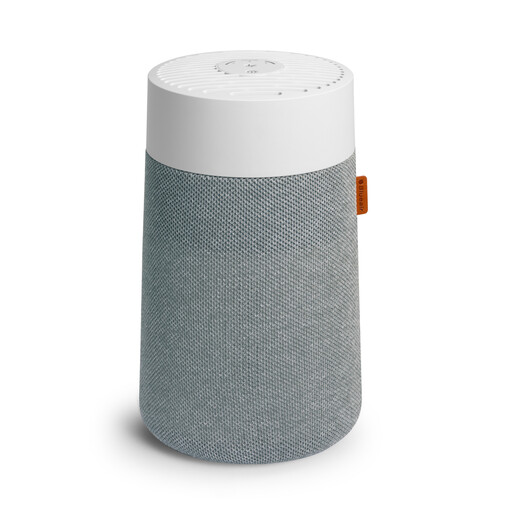 Image unavailable
Its compact, portable design could be useful if you need an appliance for a small space. Before choosing it for particle filtration, check the clean air delivery rate for your room and the noise level at the setting you need. Also check the availability of the FMINI (113197) filter and electrical compatibility with your home.
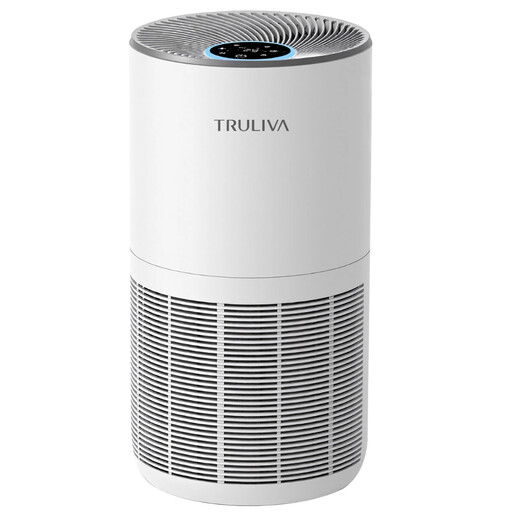 Image unavailable
Worth considering for a particle issue in a room that suits the intended use. The title states a CADR of 450 m³/h and a 24-hour timer. Check how the clean air delivery rate was measured and the noise level at the speed you need. For odours, assess the activated carbon data separately, then check the filter reference and maintenance requirements.
No. ADEME and Anses recommend reducing sources of pollution and refreshing the air before using additional treatments. An air purifier can target a specific issue, but it won’t repair poor ventilation or solve damp or mould on its own.
Check the clean air delivery rate or a particle-reduction measure, including its unit and how it was measured. Then consider how it relates to your room and the noise level at the speed you’ll use. The NF EN IEC 63086-2-1 standard published by AFNOR covers the determination of particle reduction; a stated maximum room size isn’t a substitute for these checks.
No. If you’re concerned about a particular odour or gaseous pollutant, check the data for that model and issue, as well as the filter reference and replacement requirements. The mention of activated carbon alone doesn’t prove it will tackle every gas.
Not on the basis of that feature’s name alone. An ADEME study of three ionisers representative of the European market reports varying reductions in PM2.5 fine particles depending on the model, with more pronounced reductions near the appliances. These observations don’t apply to all models or pollutants. Check the performance and emissions data for the model you’re considering.
Check the air inlets and outlets, then explain the problem to your landlord or property manager so it can be investigated, rather than relying solely on an air purifier. If damp or mould persists, look for the cause. ADIL can help you work out the right steps for your situation.