A freestanding air purifier can complement ventilation in a room where a specific need remains, but it does not replace reducing pollution sources or bringing in fresh air, which ADEME considers a priority. For particles, compare the clean air delivery rate for the particles you’re concerned about, and the noise level at a setting you can use. For odours or certain gases, check the activated carbon and whether it can be replaced, without assuming it will be effective in every case. Active technologies require evidence specific to the model and its conditions of use, particularly regarding secondary emissions.
Who is this option for?
Households concerned about particles in a particular room
If you’re looking for local filtration in a bedroom or living room, check the clean air delivery rate for the particles you’re concerned about, and the noise level at the setting you plan to use. INRS highlights the importance of particle diameter when interpreting the stated delivery rate.
Households concerned about odours or certain gases
Once you’ve reduced an identifiable source, you could consider a device with activated carbon. Check which pollutants the model has been tested against and whether the filter can be replaced: the presence of carbon does not prove it will work on every gas.
Consumers who take an interest in active technologies
If you’re considering ionisation, plasma, ozonation or photocatalysis, ask for results that apply to the specific device and how it is used. Anses and ADEME advise against generalising claims about effectiveness and safety in real-world conditions.
What should you look for?
Start by identifying sources of pollution and checking the state of your ventilation. If a local need remains, focus on criteria related to the pollutant and the room, rather than relying on the stated maximum room size alone.
| Concern |
What to check |
Consumers concerned |
| Sources and fresh air supply |
Identify avoidable emissions and check that air inlets and outlets are not blocked. |
If an emission persists or the air is not being refreshed properly, I want to tackle the cause before adding a local device; around 31% of consumers prioritise this need. |
| Particles, airflow and noise |
Compare the clean air delivery rate, the test method and the particle diameter it relates to, then check the noise level at a useful setting. |
In an occupied room, I need an appropriate airflow without having to use a setting that is too noisy; filtering particles is a priority for around 25% of consumers. |
| Odours, gases and maintenance |
Check which pollutants the device targets, whether it contains activated carbon and the reference for the replacement filter. |
Once the source of an odour has been reduced, I want to know whether the filter material is suitable for my needs and whether I’ll be able to maintain it; this is the main priority for around 19% of consumers. |
| Active technologies |
Ask for tests specific to the model, covering the pollutants targeted, conditions of use and secondary emissions. |
When a product claims to destroy pollutants, I also want to be able to assess any potential by-products; around 25% of consumers prioritise this precaution. |
Mistakes to avoid
-
Choosing based only on the stated room size
A maximum room size alone doesn’t tell you what clean air delivery rate the device provides for the particles in question, or how noisy it is. INRS recommends interpreting this rate in relation to particle diameter.
Compare the test method behind the delivery rate and the noise level at the setting you’ll actually use.
-
Forgetting to replace the activated carbon
The filter material designed to tackle odours or certain gases needs to be maintained according to the manufacturer’s instructions to remain usable.
Before buying, check the compatible reference for the version you’ve chosen, its availability and the replacement instructions.
Replacing the consumable adds an expense and a maintenance task to factor in during use.
-
Assuming that ‘destroying’ pollutants proves a device is safe
Anses highlights limitations in the evidence for the effectiveness and safety of several active technologies in real-world conditions. INRS observed ozone and nitrogen oxide emissions from the device it tested, which combines filtration, photocatalysis and cold plasma; this result does not describe every device.
Check tests for the specific model, including secondary emissions and the conditions in which measurements were taken.
-
Using the device instead of ventilation
An air purifier acts on the air that passes through it; it does not remove an emission source or refresh the air in your home.
First reduce identifiable sources and maintain ventilation or air circulation, then define the local need the device should address.
Air purifier brands to know
Philips
The range includes different sizes and stated airflow rates, with HEPA filtration and activated carbon on some models.
- For the AC2221/13 model, Philips states a clean air delivery rate of 420 m³/h and a HEPA filter with activated carbon.
- These specifications alone are not enough to predict the results in your room: check the testing method, noise at the chosen airflow rate and the filter reference.
Dyson
Depending on the model, the brand offers devices that combine purification with air circulation, as well as replacement filters for several models.
- Dyson describes the BP04 as having three-stage filtration, including HEPA H13, activated carbon and catalytic oxidation.
- Check the evidence for the pollutants you’re concerned about and for the BP04, as well as filter compatibility and replacement instructions. A filter listed for other models may not be designed for this one.
Rowenta
The range includes compact air purifiers and filters combining several materials, depending on the model.
- Rowenta presents the Pure Air Mini PU1521F0 as suitable for rooms up to 22 m² and states a clean air delivery rate of 85 m³/h.
- The stated room size is no substitute for comparing airflow and noise for the room in question; also check the replacement filter reference.
Air purifiers to consider on Joybuy
These freestanding devices are designed for local particle filtration; some also contain activated carbon for odour-related concerns. Compare their stated specifications with your room’s needs, while continuing to reduce pollution sources and maintain ventilation.
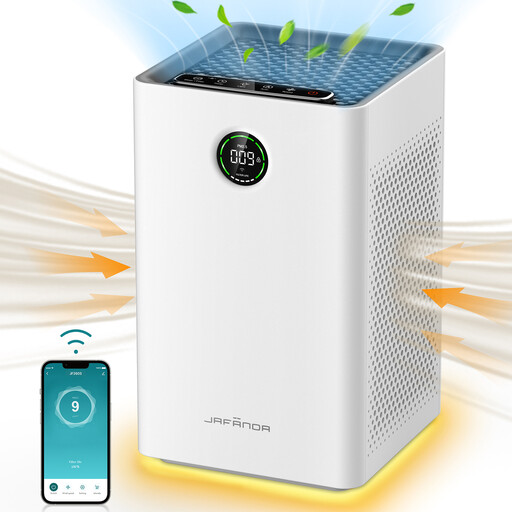 Image unavailable
Jafända H13 air purifier with activated carbon, Wi-Fi and Alexa
Worth considering if you’re looking for particle filtration with activated carbon in a particular room.
The product details list an H13 filter, Wi-Fi and Alexa control, and a night mode at 23 dB. Check the documented airflow at a useful setting, which pollutants the device has been tested against and the replacement filter reference.
View on Joybuy
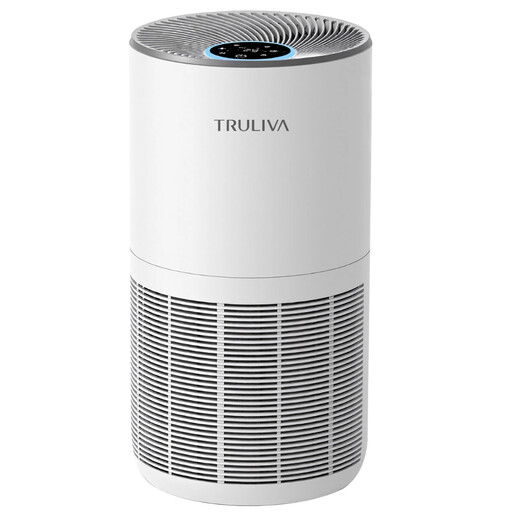 Image unavailable
TRULIVA H13 HEPA air purifier, stated CADR of 450 m³/h
Worth comparing for a room where particles are the priority and activated carbon may also help with odours.
The title states a CADR of 450 m³/h and a 24-hour timer. Before deciding whether it’s right for your room, ask for the test method behind the airflow rate, the noise level at the required setting and the replacement filter reference.
View on Joybuy
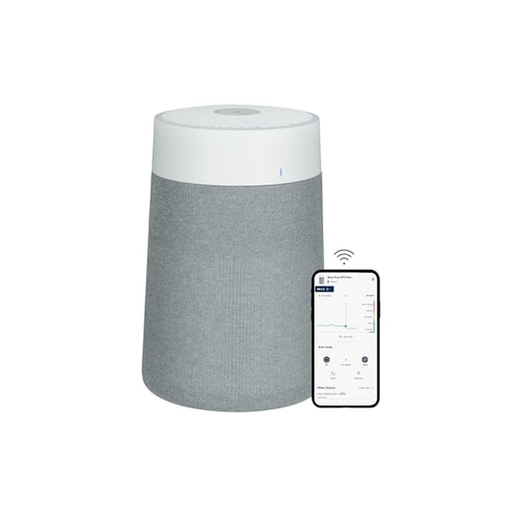 Image unavailable
Blueair Blue Pure 511i Max, grey
Worth considering if your priority is local particle filtration in an occupied room.
The product details state coverage of 43 m² and HEPASilent technology. For this model, which combines mechanical and electrostatic filtration, check airflow tests, emissions data, noise at a useful setting and compatibility with the F5MAX filter.
View on Joybuy
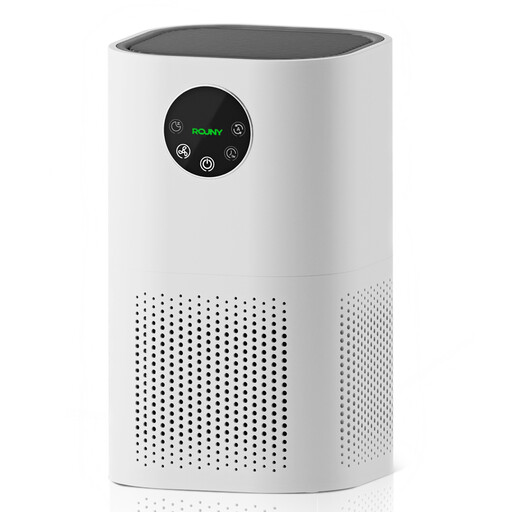 Image unavailable
ROUNY AP-T1 H13, stated CADR of 150 m³/h
Worth considering if you want to compare particle filtration and noise for a room used at night.
The product details state coverage of 20 to 50 m² and a night mode at 25 dB or below. Compare airflow and noise at the same setting, then check the CADR test method and the replacement filter.
View on Joybuy
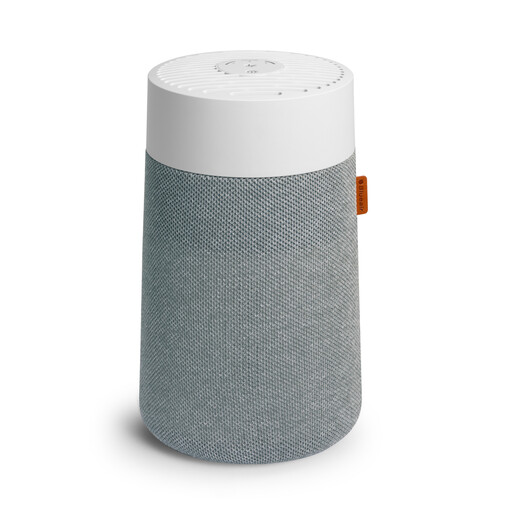 Image unavailable
Blueair Blue Pure Mini Max, grey
Worth considering if you’re looking for a compact device for a specific local filtration need.
The title describes it as portable. Before choosing it for a room, compare documented airflow and noise at the settings you’re considering, then check whether the FMINI filter is available.
View on Joybuy
Frequently asked questions
Can an air purifier replace opening windows or mechanical ventilation?
No: a freestanding air purifier does not refresh the air in your home. ADEME prioritises reducing pollution sources and bringing in fresh air before treating it; a purifier can meet an additional local need, even when ventilation is already in place.
Which figures should I compare for particle filtration?
Compare the clean air delivery rate, or CADR, with its test method and the particles it relates to, then check the noise level at the setting you’ll use. INRS notes that this rate should be specified according to particle diameter; a stated room size alone does not allow the same comparison.
Does activated carbon tackle all VOCs and odours?
No: its presence does not prove general effectiveness against all volatile organic compounds, or VOCs, and all odours. Once you’ve reduced the source, check which pollutants the model has been tested against, the measurement conditions and how to replace the filter.
What should I check before choosing an ionisation or photocatalysis device?
Ask for results covering the specific model, how it is used and any secondary emissions. Anses highlights limitations in the evidence for the effectiveness and safety of several active technologies in real-world conditions; ADEME also draws attention to the potential breakdown products of photocatalysis.


