What should you check before choosing?
First identify what is emitting pollutants in the room and which pollutant concerns you. Only then will it be useful to compare a device’s specifications.
| Priority | What to check | What you need |
|---|
| Sources and air renewal |
Identify products or materials that may emit pollutants. Limit their emissions and keep the room aired and ventilated. ADEME recommends opening the windows wide for 5 to 10 minutes each day. |
After painting or installing furniture, I want to tackle potential sources of emissions without expecting a device to replace airing the room. |
| Particles and sizing |
Compare the clean air delivery rate (CADR), or another documented airflow rate, with the room’s volume. Also check where you plan to position the device and how noisy it is at the speed you’ll need. ADEME notes that room layout and openings affect real-world results. |
I’m concerned about dust after minor renovation work, so I need an airflow rate suited to the room that I can use at an acceptable noise level. |
| Odours and gaseous pollutants |
Check whether the exact model contains activated carbon and which pollutants its data relates to. A particle-filtration specification does not demonstrate that it reduces VOCs. |
If I’m concerned about paint, adhesive or new furniture, I want to distinguish gases from particles without assuming that a filter treats every VOC. |
| Technology and evidence |
Identify the technology claimed and the test conditions for the pollutant in question. Anses and ADEME have highlighted limitations around the effectiveness or safety of some technologies studied in real-world use, including photocatalysis. |
A general claim about air purification isn’t enough to help me choose a device for my home. |
| Maintenance |
Note the replacement filter’s reference number, whether it is compatible with the exact model, and the replacement instructions. Check that it is available before you choose. |
I want to be able to maintain the device while I’m using it, without finding out later that a filter with a different reference number won’t fit. |
Air purifiers to consider on Joybuy
These models are worth considering as an additional measure if you’re concerned about particles after minor renovation work, or about filter contents after painting or furnishing. Their inclusion here doesn’t replace the need to limit emissions and air the room. Compare each product’s details with your room and the pollutant you’re targeting.
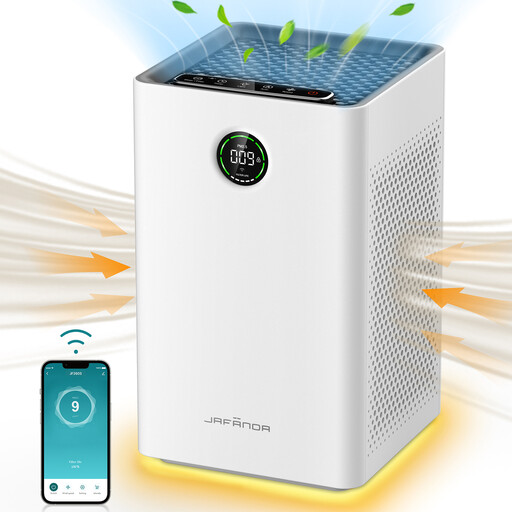 Image unavailable
Jafända H13 with activated carbon, WiFi and Alexa
Worth considering if you’re looking for particle filtration and want to check whether the same device also contains activated carbon. The title lists an H13 filter, WiFi and Alexa control, and a 23 dB sleep mode. Check that the airflow rate suits your room and confirm the replacement filter reference. Activated carbon does not guarantee a reduction in VOCs in your home.
View on Joybuy
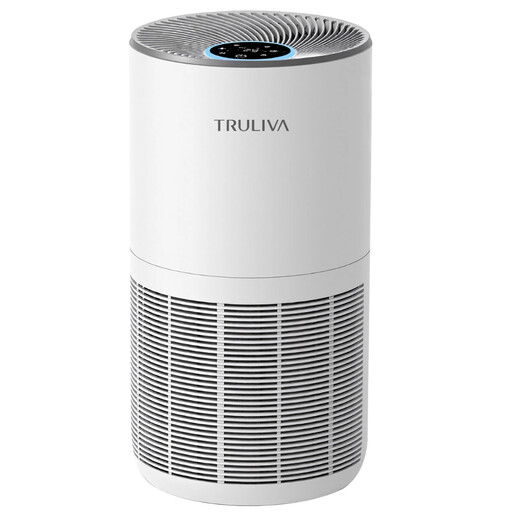 Image unavailable
TRULIVA H13, CADR 450 m³/h
If you’re concerned about particles, compare the CADR of 450 m³/h stated in the title with your room’s volume. Check the noise level at the speed you’ll need, the exact filter contents if you’re concerned about odours, and the replacement filter reference. The stated airflow rate does not guarantee real-world results.
View on Joybuy
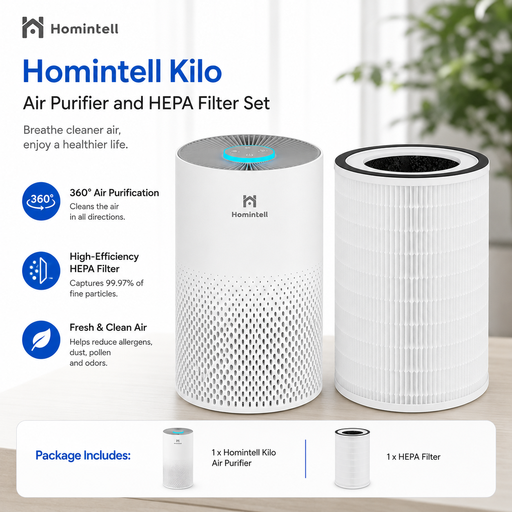 Image unavailable
Homintell Kilo HEPA and carbon, 150 m³/h
This model is worth considering for a small room where particles are the main concern. The title lists a CADR of 150 m³/h, HEPA and carbon filtration, and an extra filter. Check the suitable room size, what’s included and whether the stated filter is compatible before choosing.
View on Joybuy
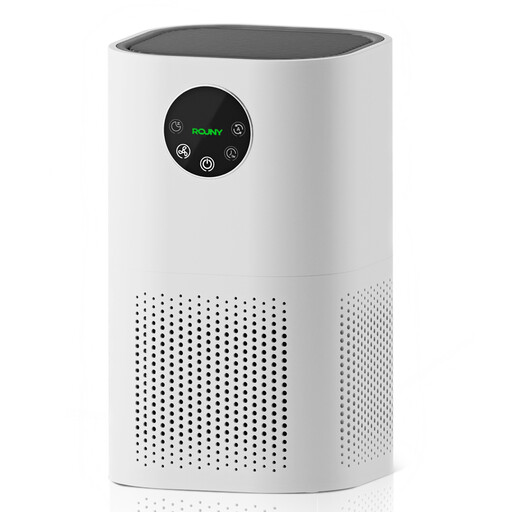 Image unavailable
ROUNY AP-T1 H13, CADR 150 m³/h
Worth considering if your main concern is particles after minor renovation work. The title lists a CADR of 150 m³/h, coverage of 20–50 m² and a ≤25 dB sleep mode. Check that it’s the right size for your room and how noisy it is at the speed you’ll need. If you’re concerned about odours or VOCs, confirm what the filter contains.
View on Joybuy
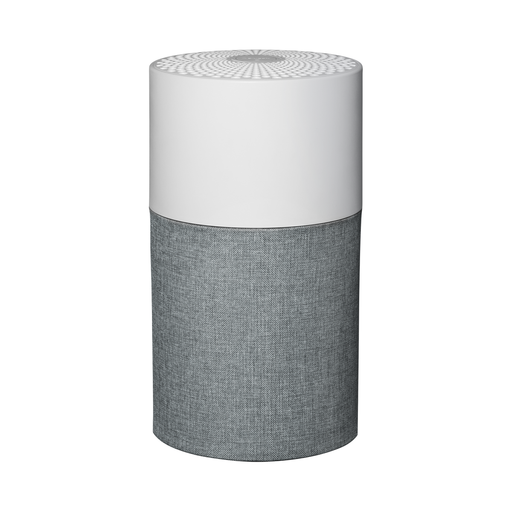 Image unavailable
BLUEAIR Blue Pure 511 HEPASilent
If you’re considering this model for a small room after cleaning or minor renovation work, start by thinking about your particle-filtration needs. Check the airflow rate for the room’s volume, the noise level at the speed you’ll need and the replacement filter reference. If you’re concerned about VOCs, check the filter contents separately.
View on Joybuy
Frequently asked questions
After painting or bringing home new furniture, should I air the room before using an air purifier?
Yes. First limit sources of emissions and air the room, without neglecting ventilation. ADEME recommends opening the windows wide for 5 to 10 minutes each day, and Anses recommends these steps before using air-cleaning devices. An air purifier can only play a supporting role.
Is a HEPA filter enough to deal with pollutants from paint, adhesives or furniture?
Don’t assume that particle filtration also treats VOCs. Anses lists paints, adhesives and some new furniture among potential sources of VOCs. If you’re concerned about gaseous pollutants, check whether the exact model contains activated carbon, but don’t treat its presence as proof that it will work in your room.
How can I check whether an air purifier is suitable for my room?
Compare its CADR or documented airflow rate with the room’s volume, rather than relying only on a stated floor area. According to ADEME, the room’s shape, openings, ventilation, occupancy and the device’s position all affect real-world results.
What should I check about replacement filters?
Before choosing a device, check the filter reference, compatible models, availability and replacement instructions. For example, for the specific XD6270F0 reference, Rowenta recommends replacing the filter every 12 months or when the indicator says to. This recommendation does not apply to other filters.
Does the ‘Indoor Air Emissions’ label tell me anything about an air purifier?
No. The label described by Anses applies to emissions from the construction and decorative products it covers; it does not indicate how effective an air purifier is. You can refer to it when choosing materials to help tackle emissions at their source.


