What should you check before buying?
Start by reducing sources, then focus on replacing indoor air. Filtration addresses a different question: is there still a need to tackle particles in a particular room, which a suitably chosen appliance could help with?
Reduce the source
When: an activity, product or appliance is still emitting identifiable pollutants.
What to expect: changing how you use something or removing the source may take practical action, but it means you won’t be relying on a filter to deal with ongoing emissions.
Ventilate and maintain your ventilation system
When: indoor air isn’t circulating well or moisture from everyday household activities persists.
Worth considering: opening windows also depends on the quality of the outdoor air, while an air purifier cannot replace the air in a room.
Filter the air in a room
When: the remaining need is to tackle particles in a specific room, after addressing sources and ventilation.
Bear in mind: results depend on the pollutant, the airflow rate used, the room and the condition of the filter.
| Concern |
What to check |
Consumers concerned |
| Whether an appliance is the right choice |
Identify the activity or emissions involved, and check that air inlets and outlets are working before looking for an additional solution. |
If emissions persist or the air isn’t circulating well, I want to tackle the cause rather than rely on an appliance. Around 33% of consumers make this their priority. |
| Particles in a room |
Compare the stated clean air delivery rate, or CADR, in m³/h with the room you want to treat, then check the noise level at the setting you need. |
For pollen, dust or smoke in my room, I’m looking for filtration I can run at the required airflow rate. This is the priority for around 27% of consumers. |
| Gases and odours |
Identify the source and look for results that apply to the gas you want to tackle and the exact model. Don’t draw conclusions from the words ‘activated carbon’ alone. |
If there’s an odour or VOC emission, I want to know whether the appliance can tackle that pollutant, without delaying the removal of an accessible source. Around 20% of consumers prioritise this issue. |
| Everyday use |
Check noise levels at different speeds, how often filters need replacing and whether replacements are available. Also look for data specific to any active technology. |
An appliance I have to switch off because it’s too noisy, or whose filter I can’t maintain, won’t suit my needs. For around 20% of consumers, these practical considerations come first. |
Air purifier brands to consider
The specifications below relate to specific models as described by their manufacturers. They are not indicative of the performance of an entire range or of the results you can expect in your home.
Philips
The range includes filter-based purifiers in various sizes, with specifications to compare on a model-by-model basis.
- Philips France states that the refurbished PureProtect Pro series 4200 AC4221/11R1 has a CADR of 600 m³/h and HEPA and activated carbon filters.
- The specifications stated for this model do not demonstrate effectiveness against all pollutants or the same coverage in every home.
Rowenta
The Pure Air range includes compact filter-based models, with settings and filters that vary by appliance.
- Rowenta France states that the Pure Air Compact PU2220F0 has a CADR of 200 m³/h, a HEPA Allergy+ filter with activated carbon and a noise level of 19 dB(A) in night mode at the lowest speed.
- The noise level at the lowest setting doesn’t tell you how loud the appliance will be at the airflow rate needed in your room. Also check that the model and its filters are available.
Xiaomi
Some of Xiaomi’s connected air purifiers list separate stated airflow rates for particles and formaldehyde.
- Xiaomi France states that the Mi Air Purifier 3H has a particle CADR of 380 m³/h, a formaldehyde CADR of 60 m³/h and a filter replacement interval of 6 to 12 months.
- These airflow rates aren’t interchangeable. Check the figure that corresponds to the pollutant you want to tackle and the conditions under which it applies.
Filter-based air purifiers on Joybuy
These filter-based appliances are options to consider for tackling a remaining need for particle filtration in a room at home. Compare their stated specifications with your room and how you plan to use the appliance, while continuing to reduce sources and ventilate.
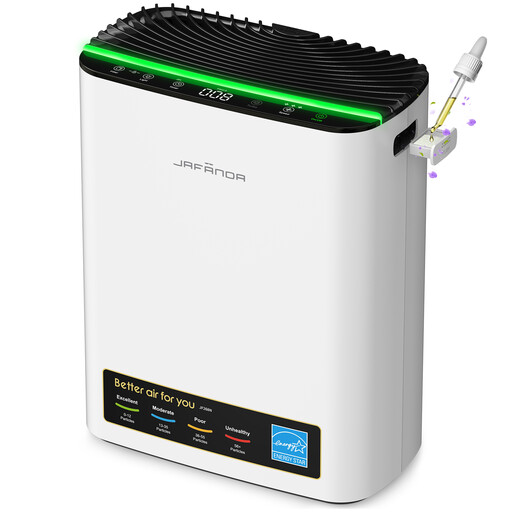 Image unavailable
Jafända True HEPA with PM2.5 display
Worth considering for a room where the remaining need is to tackle particles. Check that the airflow rate is right for the actual room volume.
- Floor area stated in the product title: up to 1226 ft². This figure alone doesn’t confirm coverage at the setting you’ll use.
- Sleep mode stated at 20 dB: also check the noise level at the airflow rate you need.
- Check the reference and availability of replacement filters.
View on Joybuy
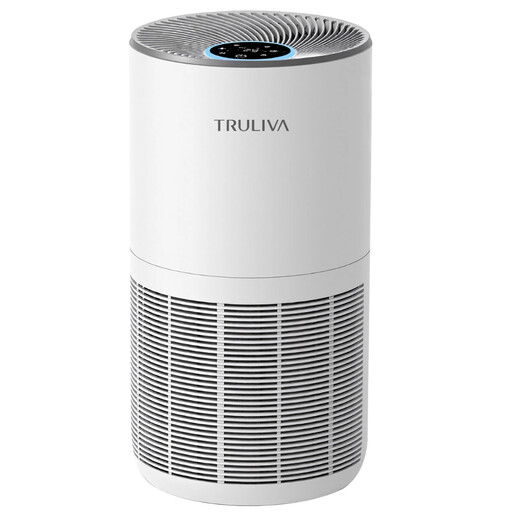 Image unavailable
TRULIVA H13 HEPA, CADR 450 m³/h
This model is worth comparing for particle filtration in a room, provided you check how it performs at the airflow rate you want.
- Stated CADR: 450 m³/h; H13 HEPA filtration and 360° air circulation are also specified in the product title.
- 24-hour timer stated. Check noise levels at different settings and how to replace the filter.
- The mention of odours in the product title does not demonstrate general effectiveness against gaseous pollutants.
View on Joybuy
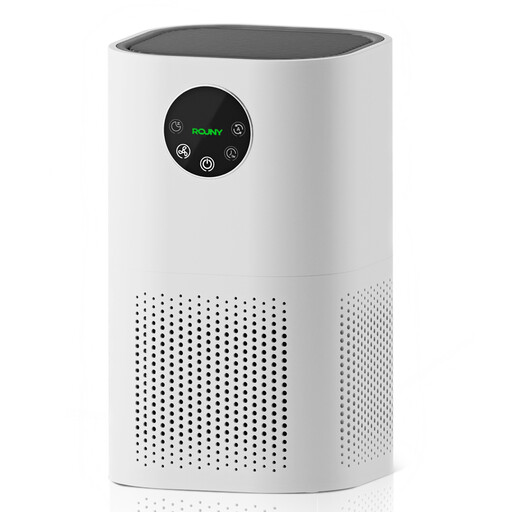 Image unavailable
ROUNY AP-T1 H13 HEPA
If you want to filter particles in a room, compare the stated airflow rate with the room volume rather than relying on the floor area alone.
- Stated CADR: 150 m³/h; stated coverage: 20 to 50 m², with no airflow rate specified for each floor area.
- Sleep mode stated at a maximum of 25 dB and four speeds. The noise level at the setting you need is still worth checking.
- Check that replacement filters are available before buying.
View on Joybuy
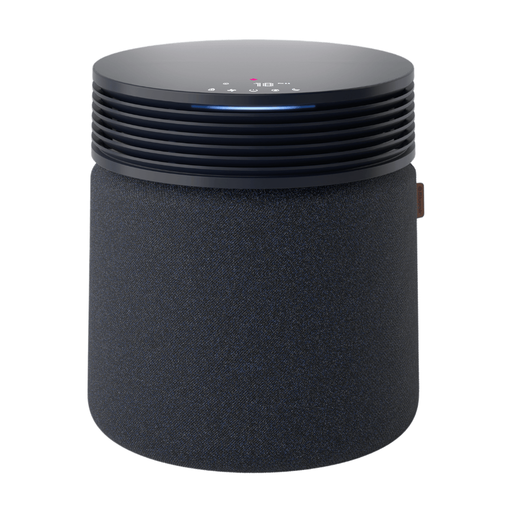 Image unavailable
Blueair Blue Signature Large HEPASilent
Worth considering if you need to tackle particles in a large room, after checking the volume to be treated and the setting required.
- Floor area stated in the product title: 154 m². This alone doesn’t demonstrate how it will perform in your room.
- HEPASilent technology is mentioned in the product title. Don’t assume from the name that it is effective against all pollutants.
- Check noise levels at different speeds and whether replacement filters are available.
View on Joybuy
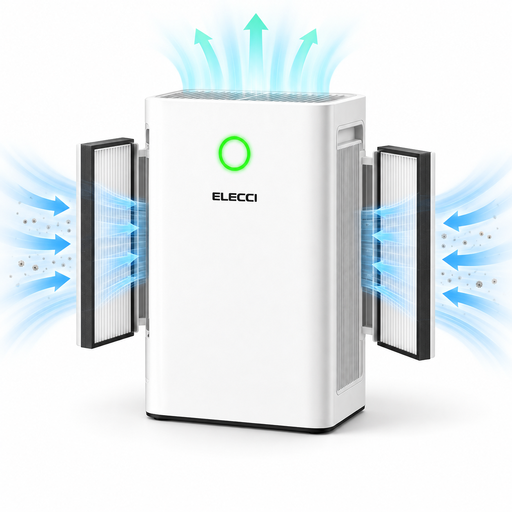 Image unavailable
ELECCI Dual-HEPA, up to 48 m² (120 m³)
If you need to tackle particles in a specific room, check that the specifications match the room volume and setting you have in mind.
- The product title states a CADR of 550 m³/h. Confirm the figure and its unit for this model.
- An air quality indicator and an 8-hour timer are mentioned in the product title.
- Check noise levels at different speeds and how to replace the main filter. The virus-related claim in the product title does not establish effectiveness.
View on Joybuy
Frequently asked questions
Can an air purifier replace ventilation or a mechanical ventilation system?
No. A standalone air purifier filters the air in a room, but it doesn’t replace ventilation or bring in fresh air. ADEME prioritises reducing sources and replacing indoor air. If your ventilation isn’t working well, look into the problem before buying an additional appliance.
Which pollutant should you identify before choosing an air purifier?
First, distinguish particles from gas or VOC emissions, then look for potential sources in the room. An appliance designed to filter particles won’t necessarily tackle another pollutant. ADEME notes that a microsensor can help guide your investigation, but it isn’t as reliable as a reference instrument.
Is activated carbon enough to tackle formaldehyde and VOCs?
No. The presence of activated carbon in a filter alone doesn’t show that it can remove enough formaldehyde or VOCs. In tests reported by Que Choisir in 2020, none of the appliances tested effectively removed formaldehyde under the protocol used. This result shouldn’t be applied to every model currently available. Prioritise reducing the source and look for data relevant to the pollutant and appliance you’re considering.
What should you check with a seller in France?
Check the seller’s identity, the exact description of the appliance, the relevant compliance information and the filter reference. The French Ministry of the Economy points out that the legal guarantee of conformity is mandatory for new, second-hand or refurbished goods sold by a business to a private individual in France. This includes goods that don’t match their description.


