Who is this option for?
Whether an additional air purifier is useful depends on the activity involved, the pollutant you want to tackle and the room where the device would be used.
Households where cooking creates smoke or particles
Once you’ve reduced emissions and aired the room, you might consider occasional filtration in a specific space. To compare devices, start with the room’s volume and the usable airflow rate, rather than relying on the stated floor area alone. ADEME points out that real-world performance varies according to your home’s layout and how you use it.
People using cleaning or fragranced products
Anses lists cleaning products and air fresheners among the possible sources of volatile organic compounds indoors. Cutting down on the product that’s emitting them and airing the room should come before buying a device. If you’re considering activated carbon filtration for certain odours, check which pollutant it targets and what replacement filter it needs. Don’t assume that eliminating an odour means the air quality has been fully assessed.
People buying for a bedroom or living space
If you’ve already considered how to air your home and its ventilation, you could look at a device for a specific room. Compare the noise at the airflow setting you’ll actually use, where you can place it and which filters are compatible. HEPA describes a filter; it isn’t enough on its own to predict how well the device will perform in your room.
What should you check before buying?
First identify what’s emitting the pollutants and how the room is ventilated. Then compare devices based on the pollutant they target and the conditions in which they’re used.
| Priority | What to check | What you need |
|---|
| Source and fresh air |
Identify the activity or product causing the emissions; reduce them, air the room and check that the ventilation is working. ADEME recommends prioritising these steps before treating the air. |
After cooking or cleaning, I want to tackle the cause and not expect a device to replace the air in the room. |
| Airflow suited to the room |
Compare the clean air delivery rate, or CADR, and how it was measured. Check it against the room’s volume and layout, then consider the noise at the setting you’re thinking of using. According to ADEME, the purifier’s position, openings and ventilation also affect real-world results. |
For the room where the device would be used, I want an airflow rate I could actually use, rather than relying solely on a stated floor area. |
| Technology and pollutants |
Identify the filter and the pollutants covered by the tests. The NF EN 1822-1 standard, as described by AFNOR, classifies particle filters; it does not rate the overall effectiveness of a device in your home. For active technologies, ask for data specific to the model and any potential by-products. |
If I’m concerned about particles or certain odours, I want to distinguish between these needs before choosing a technology. I won’t assume that results for particles also apply to gases. |
| Filters and maintenance |
Note the reference of the compatible filter, whether it’s available and the replacement instructions. If the device combines particle filtration with activated carbon, check which parts need replacing for that specific model. |
I want to be able to maintain the device over time, especially if I plan to use it regularly after household activities. |
A guide to the brands
Manufacturers’ product information can help you identify filters and specifications to compare, but the stated features don’t guarantee how a device will perform in your room.
Philips
Philips France offers air purifiers, some of which are listed with a HEPA filter and activated carbon.
- For the PureProtect Pro 4200 AC4221/11R1, Philips states a CADR of 600 m³/h. Check how it was measured and consider the room where you plan to use it.
- Check the exact device and compatible filter references before applying these details to another Philips model.
Levoit
Levoit France describes some models in its range as combining a pre-filter, HEPA filter and activated carbon.
- This description can help you identify the filters to consider if you’re looking to tackle particles and certain odours.
- The stated filter design doesn’t prove how well a device will perform in a particular room. Compare the documented airflow rate, noise level and filter reference for the model you choose.
Dyson
Dyson France offers a replacement HEPA and activated carbon filter, reference 965432-01, for a specific list of devices.
- Dyson describes this filter as HEPA H13 grade and lists the models it’s compatible with.
- Check that it’s compatible with the device you’re considering. The stated filter grade alone doesn’t tell you how well the device will perform in your home.
Filter-based air purifiers on Joybuy
These filter-based devices are options for adding an air purifier to a specific room, after you’ve tackled emissions and aired the space. Compare their stated specifications with your room and intended use. This selection is not an assessment of your home’s ventilation.
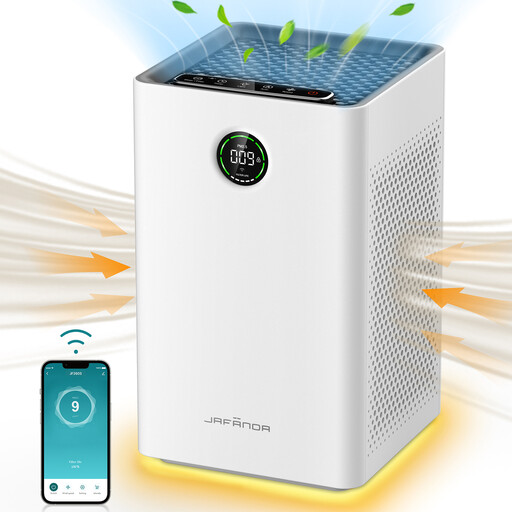 Image unavailable
Jafända H13 air purifier, 1190 ft², WiFi and Alexa
If you’re considering extra filtration after a one-off activity, compare the stated airflow rate and how it was measured with the room’s volume. The product title specifies an H13 filter with activated carbon and a night mode rated at 23 dB. The product information advises against use in rooms containing greasy particles, so bear this restriction in mind when choosing where to place it. Check the replacement filter reference too.
View on Joybuy
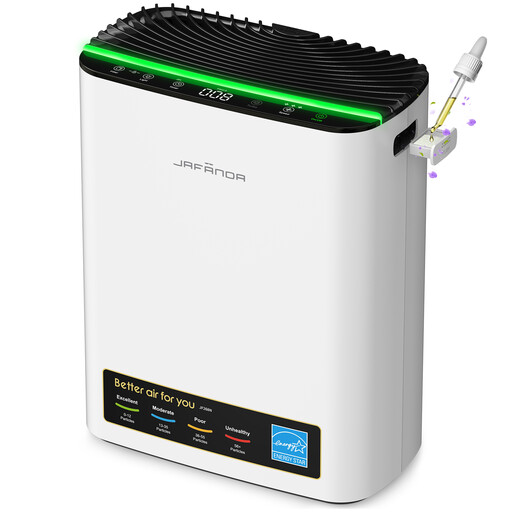 Image unavailable
Jafända True HEPA air purifier, 1226 Ft², PM2.5 display
This version displays PM2.5 readings, and its title states a night mode rated at 20 dB. If you’re planning to use it after cooking or cleaning, check the documented airflow rate at the setting you intend to use rather than relying on the stated floor area alone. The product information advises against use in a room containing greasy particles. Also check the compatible filter reference.
View on Joybuy
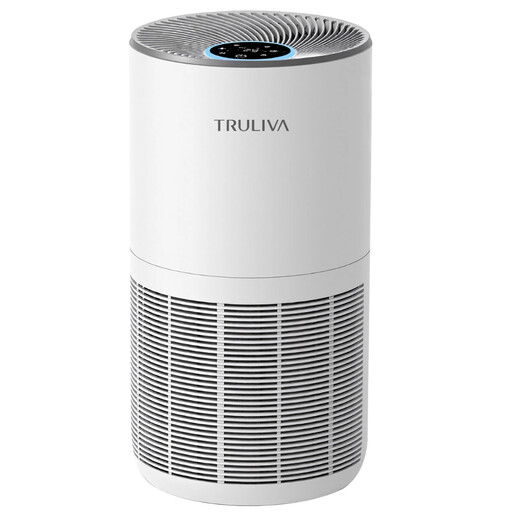 Image unavailable
TRULIVA H13 HEPA, stated CADR of 450 m³/h
The stated airflow rate is a starting point for considering how the purifier might work in a specific room, but it doesn’t guarantee results after household activities. The title specifies H13 filtration and 360° air circulation. Check how the CADR was measured, the noise level at your intended speed and the replacement filter reference.
View on Joybuy
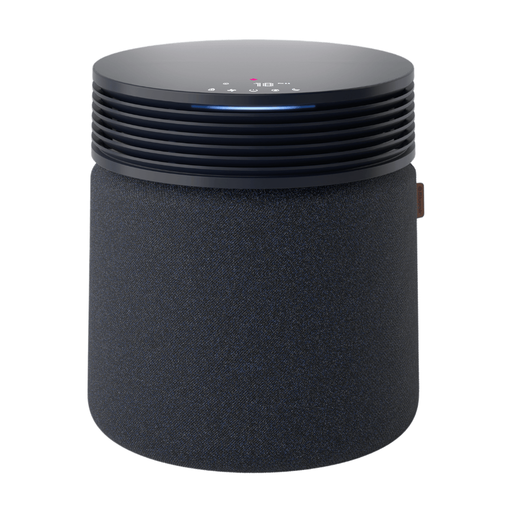 Image unavailable
Blueair Blue Signature Large, HEPASilent, stated coverage of 154 m²
For a large room, compare the stated coverage of 154 m² with its volume, layout and the setting you’ll use. The title mentions HEPASilent technology and connected features. Check the noise level at the airflow rate you need, as well as the test conditions for any claims about odours or gases.
View on Joybuy
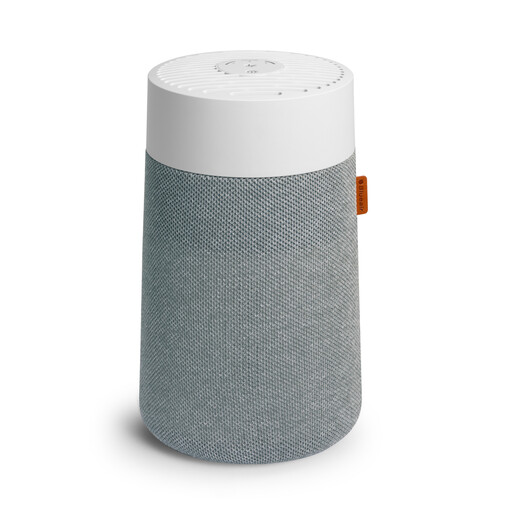 Image unavailable
Blueair Blue Pure Mini Max, compact grey air purifier
Its compact size is worth comparing with the volume of a small room where you want to filter particles alongside airing the space. If you also want to tackle certain odours, check which filter this version uses and what its tests cover. Also check the noise level at your intended setting and whether the FMINI (113197) replacement filter is compatible.
View on Joybuy
Frequently asked questions
Does an air purifier replace airing the room or mechanical ventilation after cooking?
No. ADEME recommends reducing emissions and refreshing the air as a priority. An air purifier can complement these steps for a specific use, but it won’t make up for ventilation that’s missing or not working properly.
Which figure should I compare when filtering particles in a room?
Compare the clean air delivery rate, or CADR, and its measurement protocol with the room’s volume. This figure doesn’t automatically demonstrate performance against gases or odours. ADEME points out that the purifier’s position, openings and ventilation affect real-world results.
Does a HEPA filter guarantee the effectiveness of the whole device?
No. According to AFNOR, the NF EN 1822-1 standard covers the classification and testing of high-efficiency filters. When choosing an air purifier, also look at its documented airflow rate and the conditions in which it would be used in your home.
Should you choose ionisation or ozone for odours?
Don’t choose these processes based solely on claims that they neutralise odours. In its 2017 assessment, Anses stated that the available data did not demonstrate the effectiveness and safety of the technologies studied, including ionisation and ozonation, under real-world conditions. Ask for data specific to the model, the pollutant it targets and any potential by-products.
What should you check about replacement filters?
Note the exact reference of the filter compatible with the device you’re considering, then check its availability and the manufacturer’s replacement instructions. Check each model individually: filters from the same brand aren’t necessarily interchangeable.


