After cooking or cleaning, start by reducing pollution at source, airing the room and keeping the ventilation running, as recommended by ADEME. An air purifier can complement these measures if particles or odours remain a problem in a particular room. Choose one based on the size of that room, its clean air delivery rate, the noise level at the setting you plan to use and the filter that suits your needs.
Who is this suitable for?
What you need depends on whether you’re mainly bothered by cooking smells, particles after cleaning or how often you plan to use the appliance.
Households bothered by cooking smells
If a smell lingers in the kitchen or an open-plan room after airing it, look for a model whose specifications explicitly mention an activated carbon filter. Check the filter reference too: a HEPA filter for particles alone doesn’t mean it will tackle odours.
Households concerned about particles after cleaning
After vacuuming or cleaning, decide which room you want to treat. The room’s volume, the stated clean air delivery rate and the noise level at the speed you have in mind are more useful points of comparison than the maximum floor area on its own.
Households planning frequent use
If you’ll use the appliance regularly in a bedroom or living room, check the noise level of the mode you’ll choose, how much space it takes up and how to replace the filter. A quiet mode and a high speed won’t necessarily deliver the same airflow.
What should you look for?
ADEME recommends prioritising the reduction of pollution sources and fresh air circulation. If the problem is limited to one area, compare air purifiers for that room, but don’t expect a portable appliance to ventilate your home.
| What matters |
What to check |
Who this is for |
| Airing and ventilation |
Identify the activity causing the problem and work out whether it affects one room or the whole home. Keep the ventilation running. |
If the problem affects several rooms or the ventilation doesn’t seem to be working properly, check these points before adding an appliance for a specific area; around 31% of consumers prioritise this check. |
| Cooking smells |
Check that activated carbon is explicitly listed and note the reference of the corresponding filter. |
If a smell lingers after cooking, look first for filtration designed to tackle it, without assuming every odour will disappear; around 25% of consumers prioritise this. |
| Particles and room size |
Measure the room and compare it with the particle CADR, given in m³/h, and the stated floor area for the exact model. |
After vacuuming or cleaning, choose an appliance sized for the room where particles are bothering you; around 25% of consumers put this need first. |
| Noise and maintenance |
Compare the noise level at the setting you plan to use, then check the filter reference and replacement interval. |
If the appliance will often be running in an occupied room, make sure its noise setting is suitable and that you can replace the filter easily; around 19% of consumers prioritise this. |
Mistakes to avoid
-
Choosing based only on the maximum floor area
The stated floor area alone doesn’t tell you how much air the appliance will clean at a noise level you’re happy to live with in your room.
Measure the room you want to treat, compare the CADR in m³/h and check the noise level stated for the speed you’re likely to use.
-
Assuming HEPA filtration also tackles odours
A claim about particle filtration doesn’t prove that a model will deal with cooking smells. Check whether the specific model has activated carbon.
If odours are your priority, look for an activated carbon filter and check the replacement filter reference.
-
Using the appliance instead of ventilation
According to ADEME, reducing pollution sources and bringing in fresh air remain the priorities. An air purifier in one room doesn’t replace your home’s ventilation system.
Keep the ventilation running, air the room when possible and use the purifier for a problem confined to one area.
-
Relying on a broad promise to remove pollutants
Results depend on the technology and how it’s used. ADEME notes, for example, that the effectiveness and safety of photocatalysis can’t be guaranteed in every real-world situation.
Ask for information that applies to the specific model and the way you plan to use it, rather than choosing based on the name of a technology alone.
Brands to know when comparing models
The features below relate to the models mentioned, not every appliance from each brand. The stated floor areas and airflow rates are figures published by the manufacturers.
Rowenta
The Pure Air range includes models in different sizes. The Pure Air Mini PU1520F0 is worth considering if activated carbon is one of your requirements for tackling cooking smells.
- Rowenta states that the Pure Air Mini PU1520F0 is suitable for rooms up to 22 m² and says its activated carbon reduces unpleasant odours.
- Check the filter reference and the conditions behind the stated floor area before comparing this model with another.
Xiaomi
Xiaomi says the Smart Air Purifier 4 Compact is suitable for rooms of 16 to 27 m², with a stated particle CADR of 230 m³/h.
- Xiaomi publishes airflow, floor area and filtration specifications for this model, making it easier to check whether it’s suitable for the room you have in mind.
- Published noise figures may not refer to the same operating mode, so compare them with the setting you plan to use.
Philips
Philips offers several air purifier series with different stated airflow rates. For the AC3021/10, the brand gives a CADR of 520 m³/h.
- Philips’ published model references and airflow rates make it possible to compare specific models rather than the brand as a whole.
- Check that the replacement filter is compatible with the exact appliance reference. A filter designed for some 600 Series models won’t necessarily fit other series.
Air purifiers to consider on Joybuy
These appliances are options if you’re looking for a home air purifier for a specific room after cooking or cleaning. Compare their stated features with your room and main concern; they don’t replace airing or ventilation.
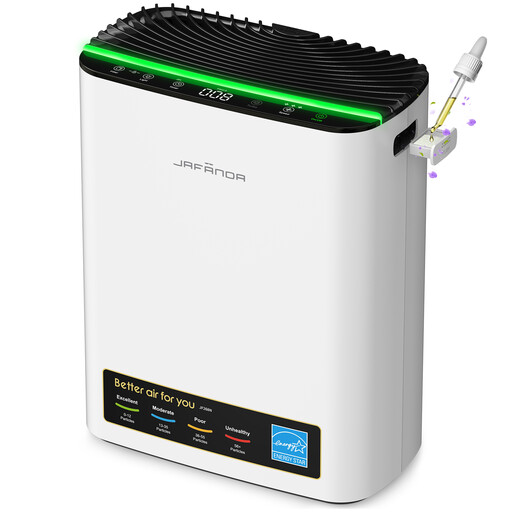 Image unavailable
Jafända HEPA air purifier with PM2.5 display
Worth considering if you want to monitor the PM2.5 reading after cleaning in a specific room. The title states coverage of up to 1226 ft² and a 20 dB sleep mode. Check the conditions behind the stated floor area and the noise level at the setting you’ll use. If cooking smells are your main concern, also check the filter’s composition and reference.
View on Joybuy
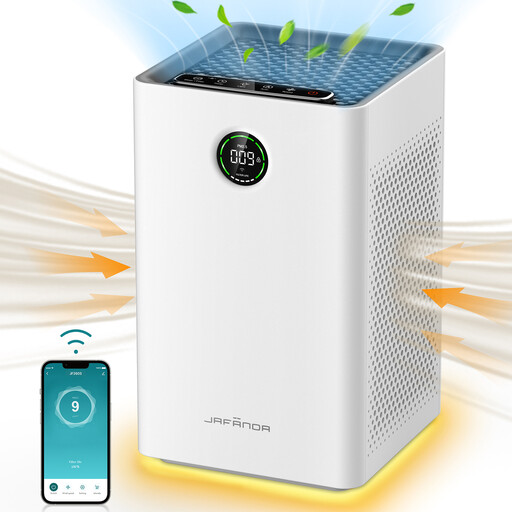 Image unavailable
Jafända H13 with activated carbon, Wi-Fi and Alexa
Consider this if you want to address both particles and odours in the same room: the title mentions an H13 filter and activated carbon. It states coverage of up to 1190 ft² and a 23 dB sleep mode. Check that it’s the right size for your room and note the replacement filter reference.
View on Joybuy
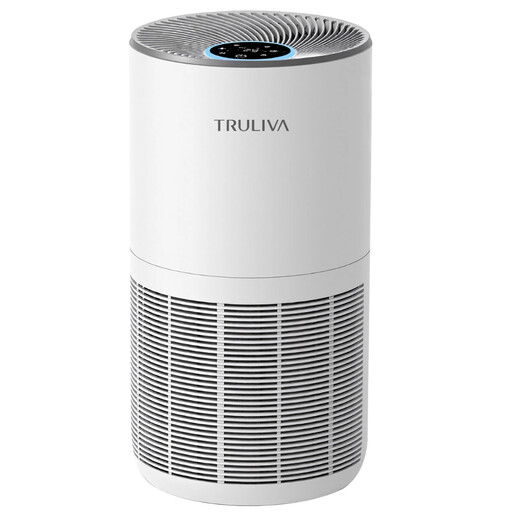 Image unavailable
TRULIVA H13, CADR of 450 m³/h
Compare this model for a room where particles after cleaning are your main concern. The title states a CADR of 450 m³/h and a 24-hour timer; compare the airflow rate with the room you want to treat. If you’ll use it in an occupied room, check the noise level of the mode you plan to use and how to replace the filter. If odours matter too, check for activated carbon.
View on Joybuy
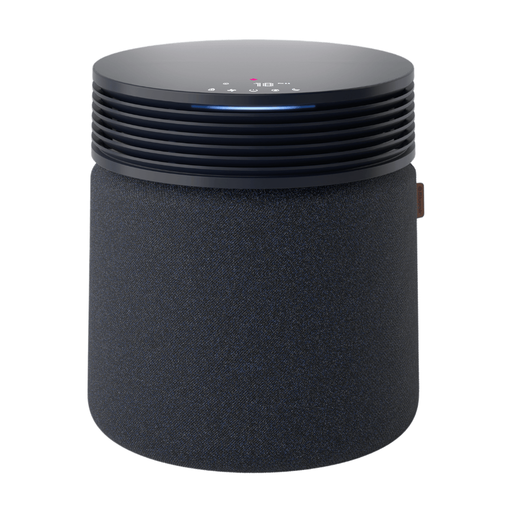 Image unavailable
Blueair Blue Signature Large, stated coverage of 154 m²
Worth considering if you’re looking to treat a large room and compare the floor areas stated by different manufacturers. The title gives coverage of 154 m² and mentions HEPASilent technology. Check the coverage conditions and noise level for the mode you’ll use. For odours, look for specific information about the filter rather than assuming it will help based on the technology’s name.
View on Joybuy
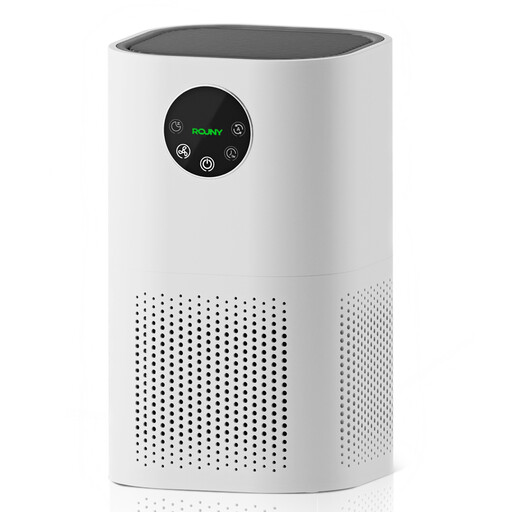 Image unavailable
ROUNY AP-T1 H13, CADR of 150 m³/h
Compare this model if your main concern is particles in a room whose size you know. The title states a CADR of 150 m³/h, coverage of 20 to 50 m², four speeds and a sleep mode with a maximum noise level of 25 dB. Compare the stated floor area with your room and check the filter’s composition separately if cooking smells are a priority.
View on Joybuy
Frequently asked questions
Can an air purifier replace airing or a mechanical ventilation system?
No. ADEME recommends keeping the mechanical ventilation system running and prioritising the reduction of pollution sources and fresh air circulation. An air purifier can only complement these measures when a specific problem has been identified in one room.
What should you distinguish between after cooking and cleaning?
First, work out whether your main concern is cooking smells or particles after cleaning. The French Ministry for Ecological Transition lists these activities as possible sources of indoor air pollutants. When choosing an appliance, check for activated carbon if odours are your priority, and for an airflow rate suited to the room if particles are your main concern.
Why look at the CADR rather than just the stated floor area?
The CADR tells you how much clean air the appliance delivers, whereas a maximum floor area on its own tells you less about how it will perform at your preferred speed. Compare the CADR of the specific model with the size of your room, then check the noise level at the setting you plan to use.
When should you replace the filter?
Follow the guidance for your chosen model and check the filter reference: replacement intervals vary between filters. Xiaomi recommends replacing the Smart Air Purifier 4 Compact filter every 6 to 12 months, while Philips states one year for the FY0611/30, which is compatible with certain 600 Series models. Always check compatibility and follow the instructions for your appliance.


