After cooking, cleaning or vacuuming, start by reducing emissions at source, keeping ventilation running and airing the room. An air purifier does not replace these steps, as ADEME and Anses point out. If a need remains in a particular room, a filtration device may be worth considering as an additional measure. Check the clean air delivery rate, filters, noise levels and maintenance requirements for the model in question. Stated performance figures are no guarantee of results in your home.
Who should consider this option?
Households concerned about air quality after certain activities
After cooking, cleaning, vacuuming or DIY, you may wonder whether a device could offer anything beyond airing the room and ventilation. ADEME recommends airing rooms after cleaning and vacuuming, for example, without switching off the mechanical ventilation system (VMC).
People looking to equip a particular room
For a bedroom, home office or living room, compare the clean air delivery rate and stated room coverage with the room you have in mind. Then check the noise level at the setting you plan to use.
Buyers who want to understand the technology
You want to distinguish documented filter specifications from broad claims about air purification. Anses advises caution about the effectiveness and safety of emerging air-purification technologies it has studied under real-world conditions.
What should you check before buying?
First, work out whether the issue calls for action at source or improved ventilation. If you then consider a device for a particular room, compare its technology and the conditions in which it will be used.
Ventilation, airing and reducing sources
Best for: after activities that produce emissions or moisture, and when dealing with a persistent source.
Bear in mind: these steps and ventilation maintenance need regular attention. ADEME recommends keeping the VMC running and not blocking air inlets or vents.
Portable filter air purifier
Worth considering: as an additional measure for a specific room and a particular pollutant that the model’s documentation covers.
Bear in mind: how you use it depends on finding a noise setting you can live with, and the filters need replacing. The French National Consumer Institute treats these as separate considerations from purification performance.
Ionisation and other emerging technologies
Before choosing: ask for evidence relevant to the specific model and how you will use it, rather than relying on a general claim that it purifies the air.
Limitation: according to Anses, the data it assessed did not demonstrate the effectiveness and safety of the emerging technologies studied under real-world conditions.
| What matters to you | What to check | Consumers concerned |
|---|
| Keeping priority measures in place |
Identify the source or activity in question. Check that ventilation is working and that its openings are clear. |
After cleaning or cooking, I want to know whether a device could meet a need that remains after addressing the source and the air in my home. This is the priority for around 33% of consumers. |
| Choosing a device to suit the room |
Compare the clean air delivery rate, or CADR, in m³/h using the same measurement method, and check the filter documentation for the pollutant you want to target. |
To equip a bedroom or living room, I need an air delivery rate and filters suited to the room and to what I want to reduce. Getting the right size is the main concern for around 27% of consumers. |
| Understanding additional features |
Check whether the model includes ionisation or another emerging technology, and what test conditions its claims are based on. |
If a device combines several technologies, I want to understand how they work during use before deciding. Around 20% of consumers put caution about these features first. |
| Living with the device |
Check the noise level at the speed you plan to use, along with the filter model, availability and replacement frequency. |
In a room where I spend time, an overly noisy setting or difficult maintenance could limit how often I use the device. Comfort and maintenance come first for around 20% of consumers. |
What mistakes should you avoid?
-
Buying a device so you no longer need to air the room
A portable device will not remove a persistent source of emissions or moisture, or the need to refresh the air. ADEME recommends keeping the VMC running and not blocking its openings.
Start by tackling the source, maintaining your ventilation as instructed and airing the room after the activities in question. Then consider whether an additional device could be useful.
-
Comparing only the stated room coverage
A stated room size alone does not tell you what air delivery rate you will get at the setting you plan to use. The measurement conditions for CADR and claimed room coverage may also differ.
For each model, compare the CADR in m³/h, how it was measured, the room in question and the noise level at the speed required.
-
Trusting a general claim about air purification
Anses says that the data it assessed did not demonstrate the effectiveness and safety of the emerging technologies studied under real-world conditions, including ionisation, plasma and photocatalysis.
Identify the main technology and any additional features. Ask for evidence relevant to the specific model, pollutant and intended conditions of use.
-
Overlooking noise and filter replacement
A setting that is acceptable in a living room may not be suitable for a bedroom. Compatible filters and their replacement schedules vary by model.
Check the noise level at the setting you plan to use, then confirm the filter model, its availability and how often it needs replacing before you buy.
Brands to compare
Philips
Philips’ French range includes purifiers in different sizes, with stated CADR figures and room coverage varying by model.
- Philips product pages let you shortlist models based on their stated air delivery rate and listed filters.
- These specifications alone cannot tell you what results to expect in a particular room. Compare the measurement conditions, noise level and filters for the exact model.
Dyson
Dyson offers purifiers and replacement filters, with compatibility depending on the model number.
- For its HEPA+K-Carbon 360° filter, Dyson lists the compatible models and recommends replacing it annually, or sooner if needed.
- This replacement interval applies to this filter. It does not demonstrate how a device will perform in a particular room, and it does not apply to other models.
Xiaomi
Xiaomi’s French product pages feature connected purifiers, with stated air delivery rates and filters listed for each model.
- The Smart Air Purifier 4 product page states a CADR of up to 400 m³/h, among other specifications. Check the measurement conditions.
- Some models also feature ionisation. Check this function separately, and do not take its presence as proof of effectiveness or safety in real-world use.
Rowenta
Rowenta offers a compact model, the Pure Air Mini, and provides information explaining CADR.
- Rowenta’s Pure Air Mini product page states a CADR of 85 m³/h and says it is suitable for rooms of up to 22 m².
- These figures apply to this model and the stated conditions. Check the noise level and compatible filters for how you plan to use it.
Filter air purifiers on Joybuy
These filter air purifiers are worth considering as additional equipment for a particular room. Before choosing, compare each model’s specifications with the pollutant you want to target, the room and the setting you will use. They are not a replacement for airing or ventilation.
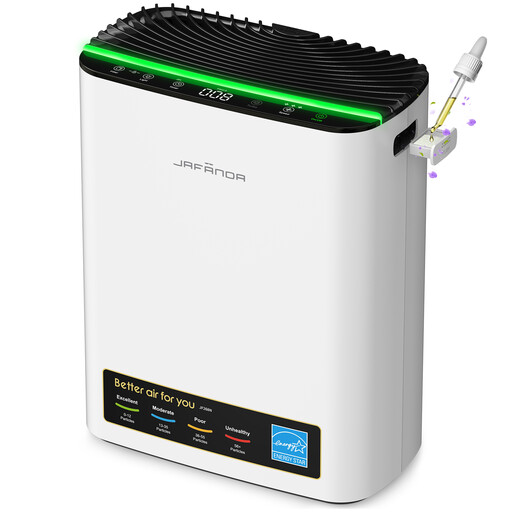 Image unavailable
Jafända True HEPA air purifier with PM2.5 display
Worth considering if you are looking for a filter device for a particular room. The product page lists a True HEPA filter, PM2.5 display and sleep mode. Check the conditions attached to the stated room coverage and the noise level at a setting that would suit you. Also confirm the replacement filter model and its availability.
View on Joybuy
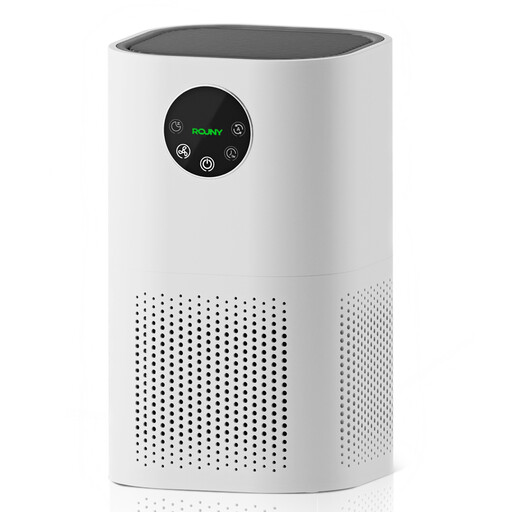 Image unavailable
ROUNY AP-T1 air purifier with H13 filter
Worth comparing for a room where air delivery rate and noise are important factors. The product name states a CADR of 150 m³/h, coverage of 20 to 50 m², four speeds and a sleep mode at ≤25 dB. Compare these figures with the measurement conditions and the setting you plan to use. Also check which filters are compatible.
View on Joybuy
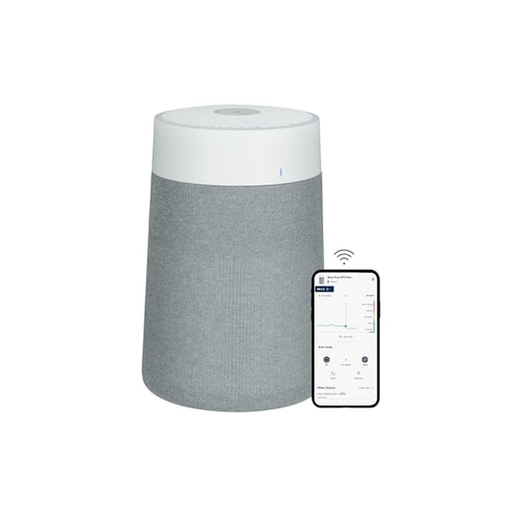 Image unavailable
Blueair Blue Pure 511i Max
Worth considering for a room whose size you can compare with the stated coverage. The product is described as featuring HEPASilent technology and covering 43 m². Check the conditions behind this figure, the noise level at a useful setting and how to replace the filter.
View on Joybuy
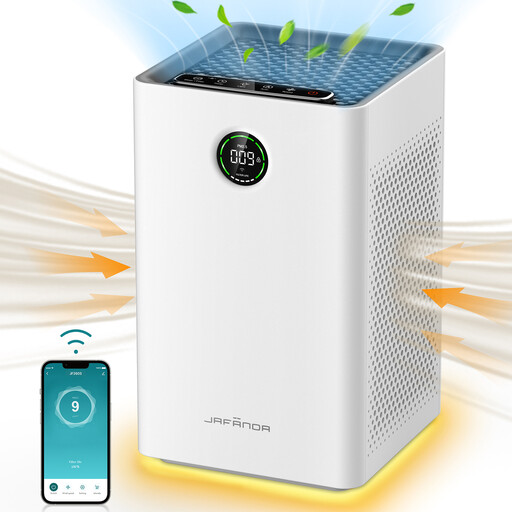 Image unavailable
Jafända H13 air purifier with activated carbon and WiFi
Worth considering if you want to compare a device advertised for a large room. The product name mentions an H13 filter, activated carbon, WiFi controls and Alexa. Check how many air changes per hour the stated room coverage is based on. The product page gives differing noise specifications, so check these before choosing it for a quiet room.
View on Joybuy
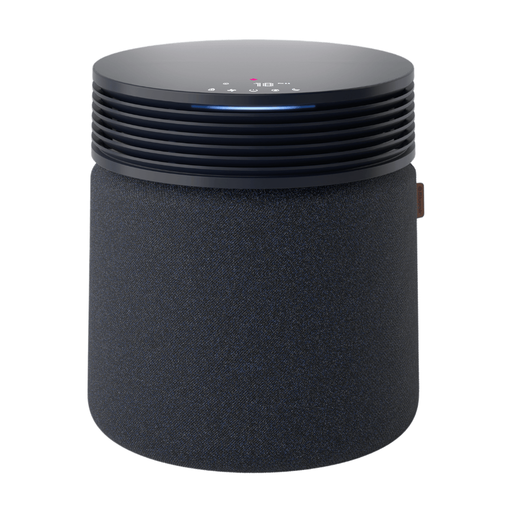 Image unavailable
Blueair Blue Signature Large
Worth comparing if you are considering a device advertised for a large room. The product name mentions HEPASilent technology and coverage of 154 m². Check the assumptions behind this room size, then look at the noise level at the setting you plan to use and the replacement filters.
View on Joybuy
Frequently asked questions
Can an air purifier replace airing or a VMC system?
No. Anses prioritises reducing emissions at source, airing and ventilation. ADEME recommends not switching off the VMC or blocking air inlets or vents. A portable device should only be considered as an additional measure.
Should you choose the same filter for particles and gases?
Do not assume that one filter will address both. Anses distinguishes between several categories of indoor pollutants, while the French National Consumer Institute’s test with ADEME looks separately at fine particles and certain volatile organic compounds. Check which pollutants the exact model is designed to target and the conditions under which it was tested.
How should you use CADR to choose a device?
CADR indicates the clean air delivery rate, expressed in m³/h, as Rowenta explains. Compare figures measured using the same method, then consider the room in question and the noise level at the speed required. A stated room size alone does not answer these questions.
When should you replace the filter?
Follow the instructions for your model and check the reference of the compatible filter. For its HEPA+K-Carbon 360° filter, Dyson recommends replacement every year or sooner if needed. This interval does not apply to other filters.
Does the CE mark prove that an air purifier is effective?
No. The DGCCRF explains that the CE mark shows the manufacturer’s commitment to meeting the applicable regulatory requirements; it is not a certification mark. On its own, it does not prove effectiveness against the pollutant you are concerned about in your home.


