
Livraison le jour même ou le lendemain

Qualité garantie

Débloquez vos offres de bienvenue: Livraison GRATUITE | Jusqu'à -80 % | 30 jours d'essai gratuits à JoyPlus
Téléchargez l'application
Dust, pollen, cooking fumes, pet hair and lingering odours: an air purifier can significantly improve the comfort of a room, provided you choose a device that is genuinely suited to how you intend to use it. Marketing claims are not always enough to compare models.
Before buying, three common pitfalls are worth bearing in mind:
The CADR, expressed in m³/h, indicates the volume of air filtered per hour. The higher this figure, the more quickly the appliance can refresh the air in a room, provided it is installed correctly.
As a starting point:
Ceiling height also plays a part. A 25 m² room with a high ceiling does not contain the same volume of air as a standard-sized bedroom.
An air purifier fitted with a HEPA filter will generally combine several stages of filtration:
The H13 HEPA filter label is not a general guarantee against every pollutant. Always check the particle sizes covered, the associated air flow rate and the testing conditions. The percentages stated in product specifications reflect data supplied by manufacturers; they do not constitute medical endorsement.
When choosing an air purifier for allergies, air flow, filter sealing and consistent use matter just as much as the name of the technology. If you are looking for an air purifier for pets or a device that can help reduce odours, also prioritise an easy-to-clean pre-filter and an activated carbon layer.
A quiet air purifier should not be assessed solely on its night mode, but also on its intermediate speeds. A device advertised as operating at 20 or 25 dB in sleep mode may be considerably more audible at higher power.
A PM2.5 sensor monitors changes in fine particle levels and, on some models, activates an automatic mode. This can be useful after cooking or airing the room, but it does not replace opening the windows when ventilation is necessary.
Before confirming your order, check:
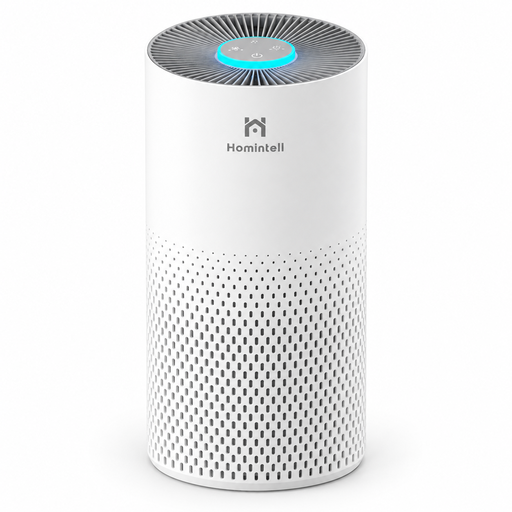
Why this choice suits this profile : Its compact design and touch controls make it suitable for a bedroom, home office or room of less than 18 m², without requiring you to juggle numerous settings.
The product specifications mention a combination of a pre-filter, an H11 HEPA filter and activated carbon, along with a CADR of 130 to 150 m³/h depending on the configuration: check the selected version before buying.
Three speeds, a 2-, 4- or 8-hour timer, a PM2.5 sensor and an air quality indicator light.

Why this choice suits this profile : This model is designed for large living rooms, open-plan spaces and homes with pets when you want a high flow rate and remote monitoring.
Its product information distinguishes between coverage based on one air change per hour and faster purification across a smaller area: a useful distinction that helps avoid misleading comparisons based solely on the number of square metres.
Advertised CADR of over 700 m³/h, laser sensors, automatic mode, app and voice control compatibility according to the product information.
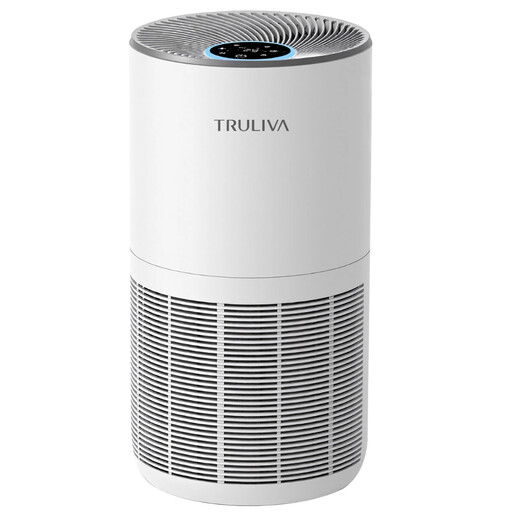
Why this choice suits this profile : With an advertised flow rate of 450 m³/h and three-stage filtration, it is aimed at large rooms, homes with pets and frequent use.
The product information distinguishes between air circulation capacity, the H13 filter and activated carbon. However, the stated maximum noise level of up to 66 dB(A) is worth considering if you plan to install it in a bedroom.
PM2.5 display, child lock, 24-hour timer and 360-degree air intake.
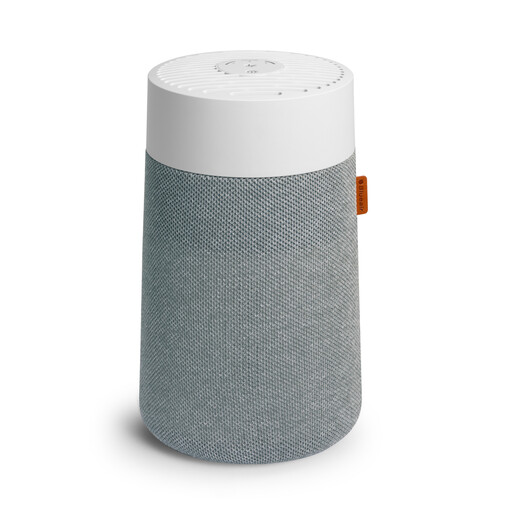
Why this choice suits this profile : Lightweight and easy to move, it is suitable for small bedrooms, home offices and spaces where you want a discreet appliance.
Its stated coverage is limited to 20 m², with a CADR of 117 m³/h: a figure that makes it unsuitable for a large living room.
Advertised HEPASilent technology, two controls and a pre-installed FMINI filter.
We have put together a complete, real-time updated list of products that fully meet these strict selection criteria and European safety regulations.
Place the appliance on a stable surface, leaving the recommended space around the air inlets and outlets. Keep it away from curtains, enclosed furniture and damp areas. In a bedroom, activate night mode before going to bed and reduce the brightness of the indicator lights if the appliance allows it.
The pre-filter can sometimes be dusted or washed, but the composite HEPA filter should generally not be rinsed or reused. Always unplug the air purifier before cleaning it or replacing its filter. Depending on the room and your habits, continuous use at low speed may provide more consistent operation than occasional use at maximum power.
Keep it away from walls and the bed, without blocking its grilles. An unobstructed position helps air circulate. Also avoid placing it directly behind furniture or beneath a source of moisture.
The cost depends on its electricity consumption, how many hours it is used and the price of the filter. To estimate it, add the annual cost of the electricity used to the cost of replacing the filter. A timer and automatic mode can reduce unnecessary operating periods.
The service life varies according to the model, frequency of use, whether you have pets and the amount of dust in your home. Follow the replacement indicator and the recommendations in the manual. Reduced air flow, a persistent odour or a heavily loaded filter may also indicate that replacement is necessary.