
Livraison le jour même ou le lendemain

Qualité garantie

Débloquez vos offres de bienvenue: Livraison GRATUITE | Jusqu'à -80 % | 30 jours d'essai gratuits à JoyPlus
Téléchargez l'application
An air purifier can make everyday life more comfortable in a bedroom, living room, home office or pet-friendly home. The problem is that product descriptions sometimes mix up coverage area, airflow and filtration performance. Before long, you can end up with a device that is too small for the space, too noisy at night or expensive to run because of replacement filters.
Before reaching for your bank card, it is therefore worth looking beyond claims such as ‘high performance’ and focusing on a few genuinely comparable specifications.
A maximum coverage area may be calculated on the basis of just one air change per hour. That is not the same as effectively filtering a bedroom where several air changes are expected. Manufacturers do not always use the same methods to calculate their figures.
When comparing an air purifier for the home or a model designed for larger rooms, look instead at the CADR, expressed in m³/h. This purified airflow figure gives you a more practical idea of the device’s capabilities. Ceiling height, how often windows are opened and the layout of the room also matter.
A HEPA air purifier is designed to capture fine particles, but product descriptions do not always specify the filter class or the testing conditions. An H13 HEPA filter is often preferred for reducing dust, pollen, smoke and airborne particles. However, the stated percentage must be considered alongside its unit of measurement: particle size, airflow and conditions of use also play a role.
A filter that captures particles will not necessarily eliminate odours or gaseous compounds. If that is your priority, choose a device fitted with an activated carbon filter.
A powerful air purifier that can only be used at full speed for a few minutes may prove less practical than a model capable of running quietly for several hours. In a bedroom or child’s bedroom, compare the noise level in night mode rather than just the standard mode.
The filter is a consumable part. Its price, availability and replacement interval should all be included in your calculations from the outset. Depending on the model, replacement may be recommended every few months, but this period varies according to running time and indoor air quality.
The CADR is one of the most useful indicators. As a guide, the models featured here offer airflow rates ranging from 117 to more than 700 m³/h, depending on the version. A compact device is better suited to a bedroom or home office, while a higher airflow rate is preferable for a living room or larger space.
Avoid placing the air purifier in a corner or behind furniture. Leave enough space around the air inlets and outlets, as recommended in the instruction manual.
For an air purifier for allergies or an air purifier for pets, prioritise effective particle filtration. If odours are a particular concern, also check whether the device has an activated carbon filter.
A PM2.5 sensor, automatic mode, timer and replacement indicator can make the device much easier to use. A connected air purifier also lets you monitor certain readings or schedule operation from an app. However, these options are secondary if you are mainly looking for a compact device with straightforward controls.
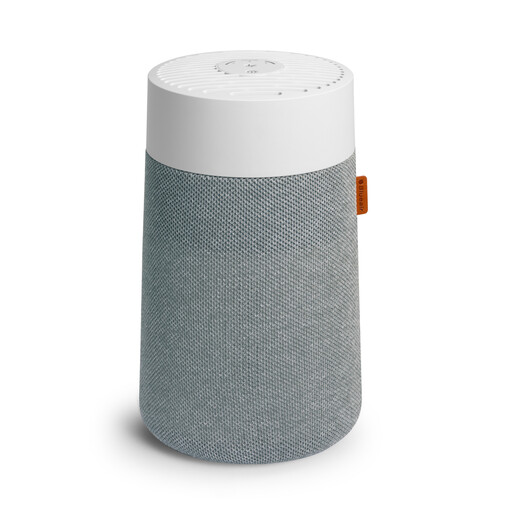
Why this model suits this user profile : Measuring 29 × 17,3 × 17,3 cm and featuring a two-button interface, it offers a straightforward first installation in a bedroom, home office or small room of up to 20 m², according to the product details.
Its CADR of 117 m³/h provides a more reliable reference than a simple maximum coverage area. The filter is pre-installed, but you must remove its packaging before switching the device on.
HEPASilent technology is rated at 99,97 % efficiency for particles up to 0,1 micron. Filter replacement is recommended every 6 to 9 months.

Why this model suits this user profile : With a CADR of more than 700 m³/h and stated coverage of up to 154 m² in 30 minutes, it is designed for large spaces and users who want to control their device remotely.
The high airflow rate is clearly stated, making it easier to compare with the size of your home. According to the description, automatic mode uses air quality sensors.
The device offers a mobile app, voice controls compatible with Alexa and Google Home, and a filter rated for an approximate lifespan of 6 to 9 months.
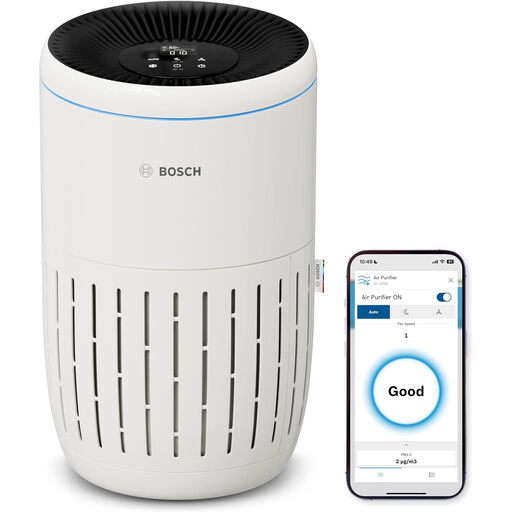
Why this model suits this user profile : According to the available information, it can be used in a living room, main living space or area of up to 37,5 m². Its various control options are well suited to regular use.
The product details specify a CADR of 180 m³/h and outline the three-stage filtration system : pre-filter, HEPA and activated carbon.
Automatic mode, air quality sensor, display, timer, mobile app and voice control compatibility, depending on the system used.
We have put together a complete, real-time updated selection of products that meet these selection criteria as well as European safety requirements.
An air purifier does not replace ventilating your home, caring for textiles or regularly cleaning surfaces. Nor should it be considered a medical device for people with sensitivities.
Position it away from walls, curtains and furniture, without blocking the air inlets or outlet. An unobstructed position helps air circulate throughout the room. Night mode can reduce noise and brightness, but always check the noise level stated by the manufacturer.
Its lifespan depends on the model, how it is used and the amount of dust, smoke or pet fur in the home. Several devices recommend replacement every 6 to 9 months, while others have a dedicated indicator. Check the instruction manual and never wash a filter that is not designed to be washed.
It depends entirely on its power rating, the selected speed and how long it is used. A device running in automatic mode or at low speed spends less time at full power, which can help limit energy consumption. To estimate the cost, check its power rating in watts and multiply it by the number of hours it is used each day.