
Livraison le jour même ou le lendemain

Qualité garantie

Débloquez vos offres de bienvenue: Livraison GRATUITE | Jusqu'à -80 % | 30 jours d'essai gratuits à JoyPlus
Téléchargez l'application
Dust, cooking smoke, pet odours, damp in a cupboard or stuffy air in a bedroom: each problem calls for a different solution. An air purifier doesn’t replace ventilation, while an odour absorber won’t necessarily remove airborne particles. To avoid buying the wrong product, start by distinguishing between air purification, odour neutralisation, moisture absorption and disinfection of surfaces or textiles.
A large room size quoted on a product page doesn’t guarantee that the appliance will refresh the air quickly. Instead, look at the CADR, measured in m³/h, and the recommended number of air changes. A model may be perfectly suited to a bedroom on a high setting, but less effective in a large living room if it’s run continuously at low power.
An air purifier with a HEPA filter is primarily designed to capture particles such as dust, pollen and some smoke particles. To tackle odours and certain gaseous compounds, it will generally also need a layer of activated carbon. So, a HEPA H13 filter alone won’t be enough to effectively deal with cooking, tobacco or pet odours.
A saturated filter reduces airflow and can make the appliance noisier. Before placing your order, check that replacement filters are available and find out how much they cost. For a moisture absorber, remember to factor in the cost of dehumidifying refills and check that they’re compatible with the unit.
A complete filtration system generally combines:
The claim «99.97% at 0.3 micron» found on some product pages refers to performance measured under specific conditions. It doesn’t mean that the appliance will remove every pollutant in your home.
When comparing two appliances, look at the CADR rather than relying solely on the room size highlighted in the marketing. For example, the Jafända JF268N has a stated CADR of 268 m³/h, several speed settings and a 20 dB sleep mode. The TRULIVA KJ450, meanwhile, has a CADR of 450 m³/h and a stated coverage range of 32 to 55 m². However, these figures should be considered alongside ceiling height, furniture layout and how often you ventilate the room.
In a bedroom or home office, a quiet mode and the option to switch off the display may be more useful than running the appliance at maximum power all the time. Don’t place it against a wall or block its air inlets and outlets. The electric air purifiers featured here are designed for dry indoor use: don’t use them in a damp bathroom, near a heat source or with an adapter that wasn’t supplied.
For a small enclosed space, such as a shoe cupboard, car or dressing room, a natural odour absorber made with activated bamboo charcoal may be a simpler option. It works without being plugged in, but won’t replace ventilation or treat an entire room.
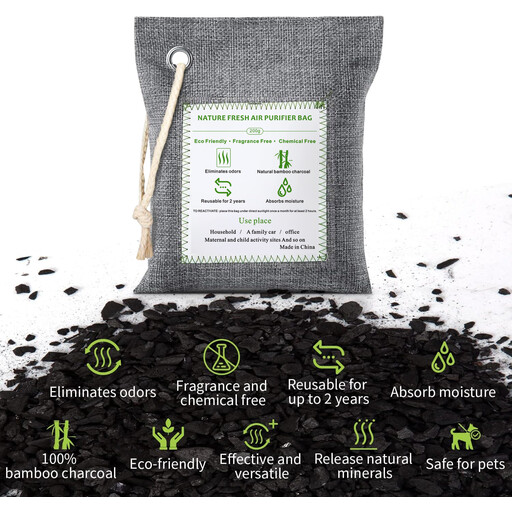
Why it suits this type of user: With no plug or added fragrance, this set is ideal for cupboards, shoes, cars or small spaces that simply need an easy solution.
It doesn’t claim to replace an air purifier for the whole home: each bag goes in a specific area and, according to the product page, should be left in the sun for at least 2 hours a month.
Fragrance-free bamboo activated carbon, a handy hanging design and a stated reusable life of up to 2 years with regular care.
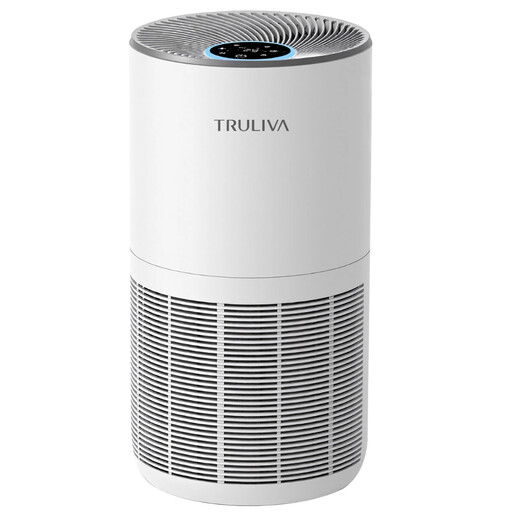
Why it suits this type of user: Its stated airflow rate and PM2.5 display are ideal if you want to monitor air quality and fine-tune the settings in a living space.
The product page sets out the CADR, stated coverage area and maximum noise level, as well as how to remove the protective film from the filter.
Three-stage filtration, a 360° air intake, a 24-hour timer and a child lock.
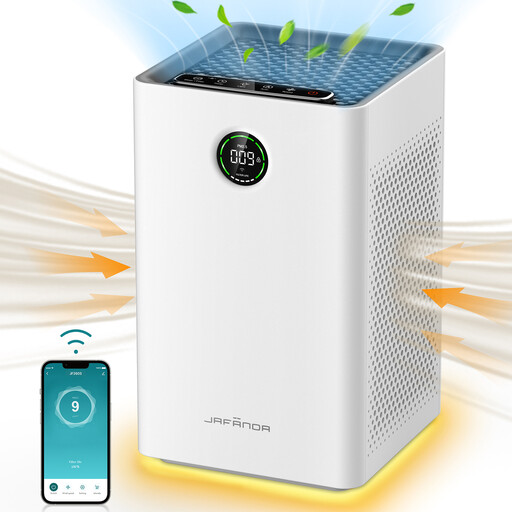
Why it suits this type of user: App and voice assistant controls can be useful if you run your air purifier to a regular schedule.
The product page gives several air-change rates for different room sizes, rather than claiming one general coverage figure.
A stated CADR of 260 m³/h, a 300 g activated carbon layer, a PM2.5 sensor and a sleep mode rated at 23 dB.
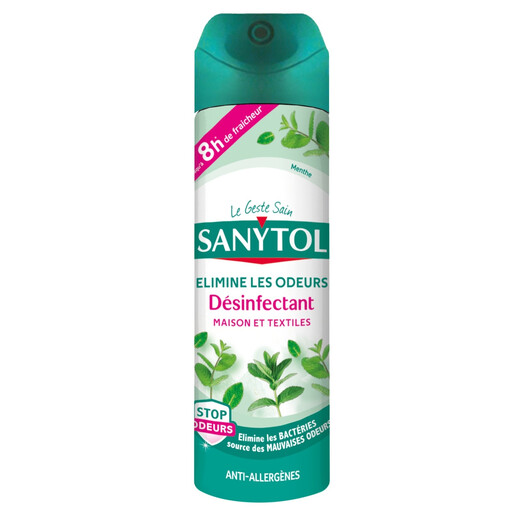
Why it suits this type of user: This spray is made for occasional treatment of curtains, rugs, upholstery or surfaces, rather than continuous air filtration.
This product is intended for surfaces and textiles, so don’t confuse it with a filter-based air purifier. Test it on an inconspicuous area first and leave it to dry.
A 300 ml bottle, a mint fragrance and stated use on textiles and surfaces. This is a biocide: read the label carefully before use.
We’ve put together a comprehensive selection, updated in real time, of products that meet these demanding criteria and European safety standards.
It can help reduce certain particles and odours if it combines a HEPA filter with a sufficient amount of activated carbon. However, start by removing the source, ventilating the room and cleaning any affected surfaces. For a specific issue, an odour neutraliser or suitable absorber can complement the purifier.
Its lifespan depends on the amount of dust, whether there are pets or smoke, and how long the appliance runs for. Several models featured here state a lifespan of 3,000 hours, but compare this figure with the replacement indicator and the manufacturer’s recommendations. Never wash a composite filter unless the instructions say you can.
Choose a moisture absorber if the main problem is condensation, a poorly ventilated room or a damp cupboard. A bamboo activated carbon bag is better suited to localised odours. If a room has both problems, you can use both solutions separately, following the safety instructions and keeping the space regularly ventilated.