
Livraison le jour même ou le lendemain

Qualité garantie

Débloquez vos offres de bienvenue: Livraison GRATUITE | Jusqu'à -80 % | 30 jours d'essai gratuits à JoyPlus
Téléchargez l'application
Breathing clean air at home is no longer a luxury—it's a necessity. From heating systems that dry out the air in winter to seasonal allergies, pet dander, and outdoor pollution seeping indoors, the reasons to invest in air quality are numerous. Faced with an overwhelming number of options, the air purifier and humidifier, a 2-in-1 device, seems like the perfect solution. But how do you navigate the jungle of technical specs and avoid marketing traps to make a purchase you won't regret??
As a product expert for the Joybuy editorial team, my mission is to equip you to decipher spec sheets and make the right choice. To start, let's review the most common mistakes that turn a good investment into a useless gadget.
To truly improve your indoor air quality, forget the marketing jargon and focus on the numbers that matter. Here are the three technical indicators to examine closely.
The CADR (Clean Air Delivery Rate) is THE performance metric for an air purifier. It's the number one criterion. Expressed in cubic metres per hour (m?/h), it quantifies the volume of air the device can effectively process. A CADR appropriate for your room size guarantees purification that does more than just move air around.
As a general rule, aim for a CADR (in m?/h) at least 3 times the volume of the room (length x width x height). For allergy sufferers or pet owners, don't hesitate to aim for a ratio of 4 or even 5 for maximum effectiveness.
Filtration quality is the heart of the matter. It determines what the device will actually capture.
For use in a bedroom, silence isn't an option—it's a requirement.
You won't find an endless list here. Instead, we've matched high-performance devices to specific use cases, based on the technical criteria we've just outlined.
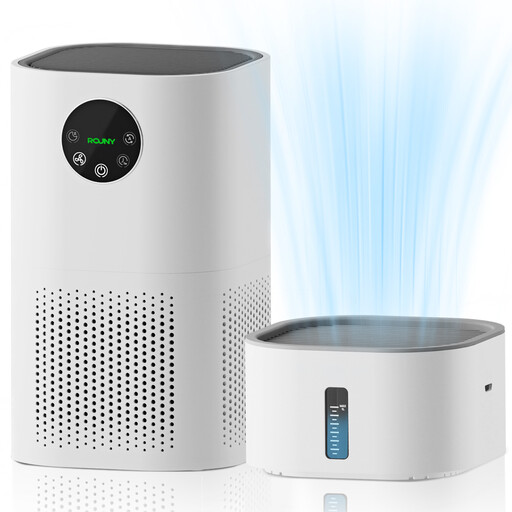
The verdict : Ideal for apartments where heating dries out the air and allergies are a concern. It tackles two problems with one device, a real plus for optimising space and budget.
This model features a real H13 True HEPA filter, not a vague "HEPA-type" imitation. Its 150 m?/h CADR is clearly stated, allowing you to easily determine if it's suitable for your room.
It successfully combines effective purification and humidification. The air quality sensor with its colour-coded indicator is a great bonus for seeing its real-time effectiveness.
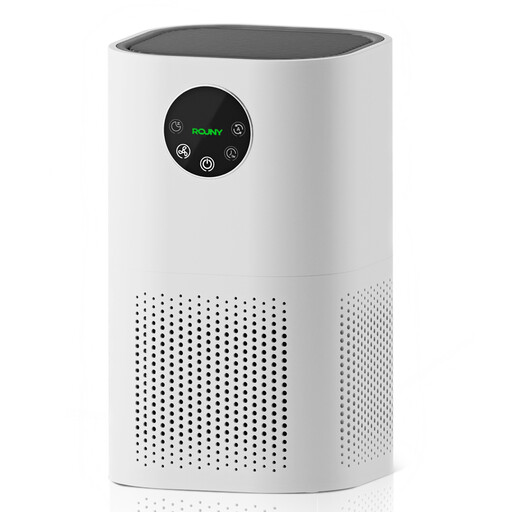
The verdict : For those who refuse to compromise on air quality and whose priority is to eliminate every last particle (pollen, pet dander, fine dust). This device does one thing, but it does it perfectly : purify.
By focusing on a single function, it avoids the awkward compromises of low-end 2-in-1s. Here, everything is engineered for filtration performance, with the H13 True HEPA filter as its centrepiece.
All its power is dedicated to purification. A significant bonus : no water tank means maintenance is reduced to a bare minimum, with zero risk of mould proliferation.
The verdict : The ideal companion for a bedroom. Its ultra-discreet night mode and humidifier function are perfect for ending scratchy throats and stuffy noses in the morning. A real boost for sleep quality.
It tackles the main flaw of entry-level devices head-on : noise. The promise of a night mode at ≤ 25 dB is not just a marketing claim; it's a verifiable technical specification that makes all the difference.
Its nearly inaudible Night mode, coupled with a programmable timer (2h/4h/8h), lets you completely forget it's on. It works to improve your comfort while you sleep, without ever disturbing you.
Discover our full selection of products that meet our quality charter and demanding technical criteria.
A HEPA filter lasts on average between 6 and 12 months, depending on your usage and the pollution level in your home. Our advice?: before you even complete your purchase, check the availability and price of replacement filters. It's the one habit that will save you from being stuck with a useless appliance.
Yes, as long as it is well-designed. A good 2-in-1 air purifier doesn't compromise on performance. Check the numbers for each function?: the CADR for purification and the technology used for humidification. That said, for extreme needs (e.g., severe allergies), a dedicated, ultra-high-performance device will often be a cut above.
In a bedroom, silence is king. Aim for a model with a night mode that does not exceed 30?dB. The ideal choice?? A device that drops to ≤?25?dB, the threshold where sound becomes virtually imperceptible, even for the lightest sleepers. This information is always included in the technical specifications.