
Livraison le jour même ou le lendemain

Qualité garantie

Débloquez vos offres de bienvenue: Livraison GRATUITE | Jusqu'à -80 % | 30 jours d'essai gratuits à JoyPlus
Téléchargez l'application
Dust, pollen, cooking fumes, pet odours or stale air: an air purifier can make everyday life noticeably more comfortable, whether in a bedroom, living room or home office. You still need to choose the right model. Marketing promises are not everything: airflow, the area actually covered and the cost of replacement filters often matter far more than the number of features on offer.
The maximum area stated by manufacturers is generally measured under very specific conditions: high fan speed and a limited number of air changes per hour. An appliance presented as suitable for a large room may therefore prove disappointing if you are looking for rapid filtration in an open-plan living space or a busy room.
Start by checking the CADR, expressed in m³/h, then compare this figure with the room’s volume. With a ceiling height of 2.5 metres, a 20 m² room represents approximately 50 m³. A model with a CADR of 150 m³/h will obviously not refresh the air at the same rate as an appliance reaching 450 m³/h.
The term HEPA air purifier is reassuring, but it is not enough to assess an appliance. Also check the stated filter class, whether there is a pre-filter and whether an activated carbon filter is included. A filter designed to capture particles does not address the same needs as a system intended to reduce odours.
Filtration rates, such as 99.97%, reflect data provided for certain products under specific test conditions. They do not mean that every particle in your home will disappear. An air purifier is no substitute for ventilation, cleaning or dealing with a damp problem.
A quiet air purifier is particularly useful in a bedroom, but the stated noise level often corresponds to the lowest speed. At maximum power, the noise can rise significantly. You also need to plan for filter replacement: an appliance that is inexpensive to buy may require consumables that are difficult to find or relatively costly.
Before ordering, check:
CADR is one of the most relevant indicators when comparing two appliances. For a small bedroom or home office, an airflow rate of 117 to 150 m³/h may be sufficient, depending on the room’s volume and how often the appliance is used. In a living room, open-plan space or home occupied by several people, an airflow rate of 212 to 450 m³/h provides more capacity to spare.
The stated coverage areas should therefore be treated with caution. Where possible, compare the CADR, the room’s volume and the number of air changes you want.
A multi-stage system generally combines:
For an air purifier for pets, the pre-filter and activated carbon filter are particularly useful. For an air purifier for allergies, focus mainly on airflow, particle filtration efficiency and the ability to run the appliance regularly.
An air purifier with a PM2.5 sensor can display changes in detected particles and automatically adjust the fan speed. This measurement can help you monitor changes caused by cooking, cleaning or opening windows, but it is not a complete diagnosis of air quality.
For an air purifier for a bedroom, prioritise night mode, the ability to switch off indicator lights and a stated noise level of around 20 to 25 dB at low speed. An app can make scheduling easier, but it should not make up for a lack of straightforward physical controls.
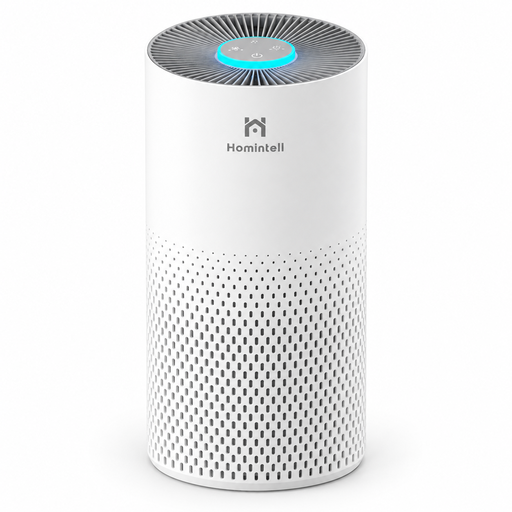
Why this choice suits this profile : Its compact design makes it suitable for a bedroom or home office of less than 18 m². It features touch controls and a timer that can be set for 2, 4 or 8 hours.
The coverage area is limited and clearly defined, so you are less likely to choose it by mistake for a large room.
Stated CADR of 130 m³/h, 3-in-1 filter and circular air-quality indicator.
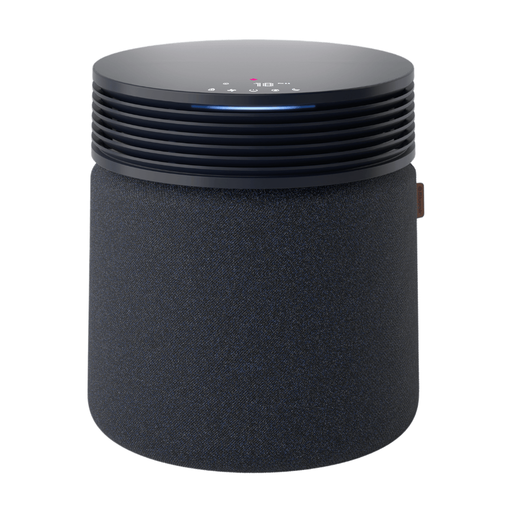
Why this choice suits this profile : It is designed for large spaces and can be controlled via an app or by voice. Its airflow automatically adjusts according to the sensor data.
The stated capacity, above 700 m³/h, is considered alongside the coverage area and air-refresh time.
Stated HEPASilent and OdorFence technologies, night mode, interactive display and a filter that needs replacing approximately every 6 to 9 months.
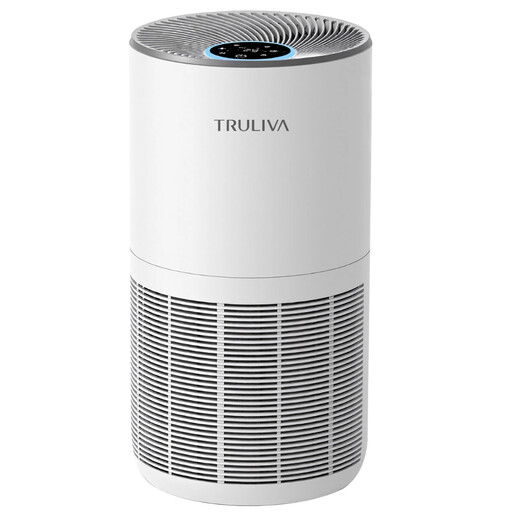
Why this choice suits this profile : With a stated CADR of 450 m³/h and 360° air intake, it may be suitable for rooms of 32 to 55 m², depending on the conditions of use.
The three filtration stages are clearly detailed: pre-filter, HEPA H13 and activated carbon. This is far more than a generic claim.
PM2.5 display, 24-hour timer, sleep mode and child lock.
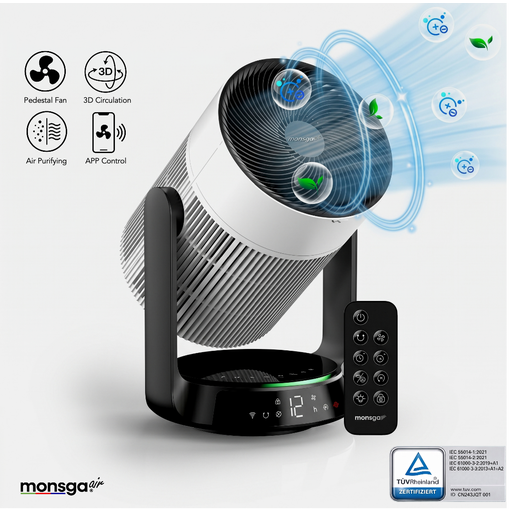
Why this choice suits this profile : This appliance combines air circulation and purification. Its multi-directional oscillation makes it suitable for a living room, home office or air-conditioned room.
The product details distinguish the circulation function from the stated purification CADR of 280 m³/h: this is not simply a fan.
Stated sleep mode at 25 dB, Tuya app, remote control and 360° oscillation.
We have brought together a complete, real-time selection of products that meet these demanding criteria while complying with European safety regulations.
Place the air purifier on a stable surface and leave the recommended space around the grilles. Keep it away from curtains and furniture positioned against the appliance, and avoid damp areas such as the bathroom. In a bedroom, activate night mode and position the appliance a reasonable distance from the bed to maintain good air circulation.
Regularly dust the exterior and the pre-filter if it is washable. Never rinse a HEPA or activated carbon filter unless the instructions explicitly allow it. Unplug the appliance before carrying out any maintenance and replace the filter according to the indicator or the manufacturer’s recommendations.
Install it in an unobstructed location, taking care not to block the air inlets and outlets. Positioning it near a source of pollution, such as a window overlooking a busy road, may be worthwhile. However, avoid exposing it directly to moisture.
It depends on the room’s volume, the CADR and the air quality. Continuous operation at low speed may provide more consistent filtration than occasional use at full power. Automatic mode and the timer allow you to adapt operation to your routine.
Add together the electricity consumption and the cost of the filters. Compare the power rating in watts, the stated service life of consumables and their availability in France. A connected model can make monitoring easier, but ease of maintenance is just as important.