
Livraison le jour même ou le lendemain

Qualité garantie

Débloquez vos offres de bienvenue: Livraison GRATUITE | Jusqu'à -80 % | 30 jours d'essai gratuits à JoyPlus
Téléchargez l'application
Dust, pollen, cooking fumes, stubborn odours or pet hair: an air purifier can make your home more comfortable, provided it is suited to the size of the room. Marketing claims are not everything. Airflow, filter type, noise level and the cost of replacement consumables will have a much greater impact on your day-to-day use.
A claim such as “up to 130 m²” may be based on just one air change per hour. That is not comparable with a device capable of several air changes. To get a clearer picture, look instead at the CADR, meaning the clean air delivery rate, expressed in m³/h.
For a bedroom measuring 10 to 20 m², a moderate airflow may be enough. In an open-plan lounge or a large room, look for a model offering around 250 to 450 m³/h. Also consider ceiling height: with the same floor area, a 30 m² room with a 2.5 m ceiling contains more air than a room with a sloping ceiling.
A HEPA air purifier captures airborne particles such as dust, pollen and certain fine particles. Odours and some gaseous compounds, on the other hand, require a sufficiently thick layer of activated carbon.
In a home with pets, smokers or an open-plan kitchen, a filter combining a pre-filter, HEPA filter and activated carbon will therefore be more versatile. As for advertised performance figures such as “99.97%”, they must always be considered in context: the size of the particles tested, the measurement conditions and the operating speed all matter.
A powerful appliance can quickly become noisy when running at full speed. In a bedroom, check the noise level in night mode, but also the level measured at higher speeds. A quiet air purifier should be able to run for several hours without disturbing your sleep or your working day at home.
The filter is not always washable, and its lifespan depends on operating time, indoor pollution and the presence of pets. Before placing your order, check the price and availability of the replacement cartridge.
CADR is generally more meaningful than the “up to” room size highlighted on the packaging. Compare appliances at equivalent speeds and check whether the technical specifications indicate several air-change rates. The Jafända JF268N, for example, claims a CADR of 268 m³/h, with different room sizes depending on the number of air changes per hour.
In a large room, a very powerful appliance may be the simplest choice. In a home with several separate rooms, two well-positioned appliances may circulate air more effectively than one oversized model. In all cases, do not place it behind a sofa, against a curtain or in an enclosed corner.
For dust, pollen, smoke and pet dander, check for a HEPA filter or a clearly detailed filtration technology. For odours, look specifically for an activated carbon filter and, where the information is available, the amount of carbon used.
The pre-filter captures hair and larger dust particles. Regular cleaning helps protect the main filter. Some appliances, such as the Homintell Kilo, combine a pre-filter, H11 HEPA filter and activated carbon in a three-in-one cartridge. However, its product information recommends using it in a room smaller than 18 m².
An air purifier with a PM2.5 sensor can monitor changes in air quality and automatically adjust its speed. Coloured indicators are useful for a quick glance, but they are not a substitute for regulated air-quality measurements.
A connected air purifier will generally let you schedule operating times, receive an alert when the filter needs replacing or control the appliance remotely. This is useful for starting filtration before you get home, but these features should not overshadow the essentials: airflow, noise and maintenance.
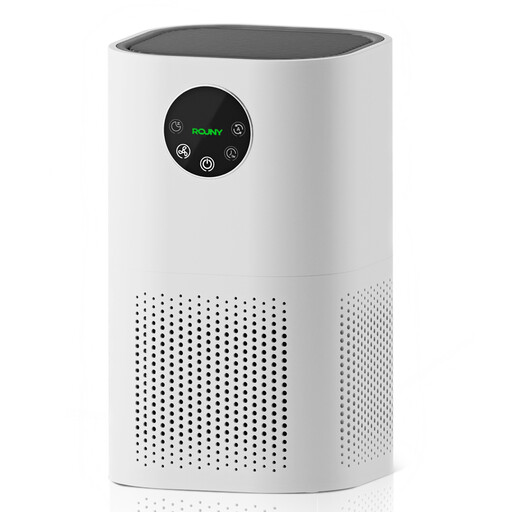
Why this model suits this profile: with a CADR of 150 m³/h and stated coverage of 20 to 50 m², it can suit a flat, bedroom or home office without complicating your daily routine.
The specifications state the CADR, four speeds and a night mode of up to 25 dB. This lets you compare airflow and noise in practical terms, rather than relying on a simple room-size claim.
H13 filter, air-quality display, 2-, 4- or 8-hour timer, and replacement recommended every 6 to 8 months depending on use.
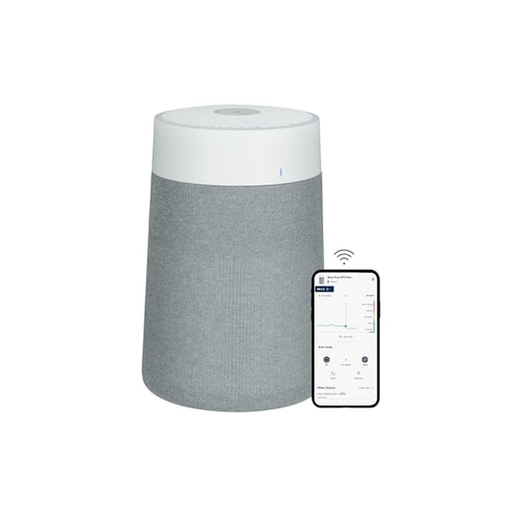
Why this model suits this profile: its compact design, night mode and app control are well suited to the demands of a bedroom, nursery or home office.
The specifications distinguish between a noise level of 19 to 48 dB and stated coverage of up to 43 m². That makes it easier to choose a suitable appliance without necessarily opting for an oversized model.
CADR of 212 m³/h, HEPASilent filtration advertised as removing 99.97% of particles down to 0.1 micron, child lock and filter alerts in the app.
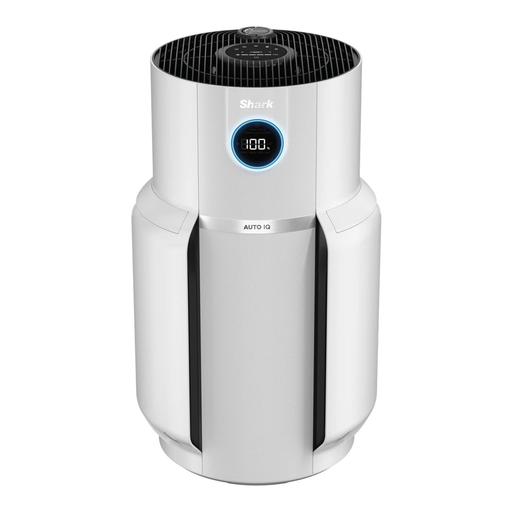
Why this model suits this profile: its design and stated coverage are aimed at lounges, open-plan spaces and homes where filtration needs to run regularly.
The specifications distinguish between coverage of up to 130 m² with one air change per hour and 28 m² at 4.8 air changes. This makes the claim much easier to interpret.
Four-layer filtration, automatic mode, LED display and a NeverChange5 filter rated to last up to five years according to the product information.
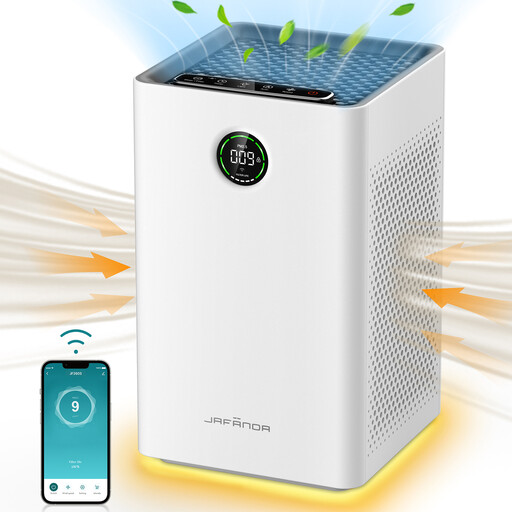
Why this model suits this profile: its PM2.5 sensor, activated carbon filter and Wi-Fi connectivity are ideal for a home with pets or a living space occupied throughout the day.
The specifications distinguish between 238, 595 and 1,190 ft² depending on the number of air changes, equivalent to approximately 22, 55 and 111 m². Its capabilities therefore cannot be summed up by a single figure.
CADR of 260 m³/h, H13 HEPA filter with an activated carbon layer, night mode rated at 23 dB, five speeds and control via the app or a voice assistant.
Explore an updated selection of products that meet these selection criteria and the compliance requirements applicable in France.
Yes, if the instructions permit it and night mode remains sufficiently quiet. Close doors and windows while filtering, then air the home regularly. An air purifier does not replace ventilation, removing the source of odours or regular cleaning.
It depends entirely on the model and your environment. For example, the product information consulted states 6 to 8 months for the ROUNY, 6 to 9 months for several Blueair appliances and up to five years for the Shark HP300EU filter. These timeframes are indicative: rely on the indicator light, the app and the manufacturer’s recommendations.
A HEPA filter primarily deals with particles. For odours, choose an appliance equipped with activated carbon and clean the pre-filter regularly. The result depends on the amount of carbon, airflow, the source of the odours and the air exchange rate in the room.