
Livraison le jour même ou le lendemain

Qualité garantie

Débloquez vos offres de bienvenue: Livraison GRATUITE | Jusqu'à -80 % | 30 jours d'essai gratuits à JoyPlus
Téléchargez l'application
Dust, pollen, cooking smells, smoke or pet hair: an air purifier can make a real difference to your everyday comfort. But product specs don't always tell the full story. A large coverage area doesn't necessarily guarantee sufficient air exchange, while a particularly efficient filter can push up running costs.
Before you reach for your card, focus on three key criteria: the actual airflow delivered, the composition of the filtration system, and the noise level. This is what separates a unit suited to a bedroom from one capable of handling a large living space.
Manufacturers sometimes quote an impressive coverage area, calculated on the basis of just one air change per hour. This figure gives a general idea of the unit's capacity, but it doesn't necessarily match the needs of a home exposed to dust, pollen or smoke.
It's far better to compare the CADR, expressed in m³/h, and look at the recommended number of air changes. A room of 20 to 30 m² that's used every day isn't the same as an open-plan living area of 60 m².
Not all purifiers with a HEPA filter are created equal. An H13 HEPA filter generally provides mechanical particle filtration, but it doesn't automatically replace a pre-filter or an activated carbon layer.
For pet hair and dust, the pre-filter catches the larger particles and stops the main filter from clogging up too quickly. For odours and certain gaseous compounds, activated carbon can make all the difference. Also check whether the filter is washable, replaceable and sold separately.
A unit that's described as quiet can become noticeably louder when running at full power. Yet effective purification often requires several hours of operation. So check the noise level in night mode, but also at maximum power: a single reading printed in small type isn't enough.
The cost of a purifier isn't just its purchase price. You also need to factor in replacement filters, electricity consumption and how often it needs servicing. As for the claimed lifespan, treat it as an estimate: it depends on usage and the quality of your indoor air.
The CADR is a handy indicator for comparing units. The higher it is, the faster the purifier treats a given volume of air. In an office or bedroom, a compact model may be sufficient. For a large room, go for a unit with a higher airflow and well-positioned air intakes.
Avoid placing the purifier behind a sofa, against a curtain or in a tight corner. Follow the clearance recommended in the manual around the air inlets and outlets.
To choose an anti-dust air purifier or one suited to allergies, look for a combination that includes:
Any performance figures should always be cross-referenced with the manufacturer's spec sheet. By way of example, Blueair claims, according to product information, to capture at least 99.97% of particles down to 0.1 micron with its HEPASilent technology. Meanwhile, TRULIVA claims 99.97% down to 0.3 micron with its H13 HEPA filter. These figures are not a medical guarantee and remain dependent on usage conditions.
A quiet air purifier with a night mode fits more easily into a bedroom. An air quality sensor or PM2.5 display also lets you track changes caused by cooking, airing the room or dust build-up.
Connectivity adds handy features: scheduling, remote control, filter replacement alerts and automatic adjustment. However, it's not essential if you're simply after a unit that's easy to switch on and maintain.
The units below are presented based on the specifications provided by their manufacturers. Before buying, check the manual, dimensions and availability of replacement filters.
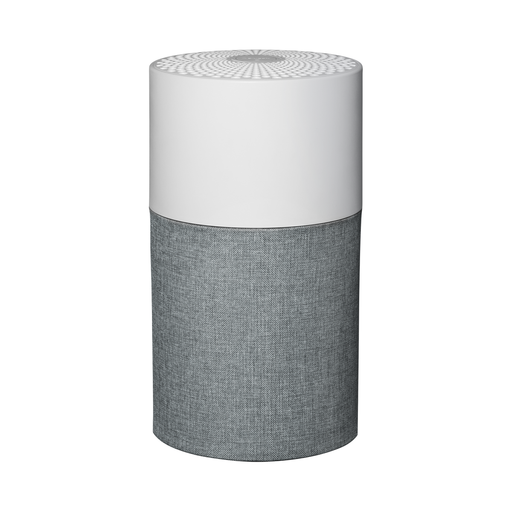
Why it suits this profile: At 34 × 20 × 20 cm with a touch control, it fits neatly into a bedroom, small room or office without complicating things.
The spec sheet details noise levels from 24 to 49 dB and breaks down the stated coverage areas according to the air change rate.
Blueair's claimed HEPASilent technology, featherlight weight of 1.69 kg and filter supplied already installed.
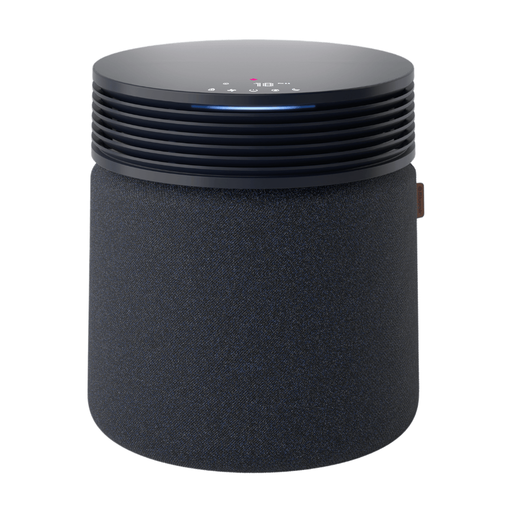
Why it suits this profile: It's aimed at open-plan homes and large living rooms, with a connected control and automatic adjustment.
Its claimed airflow, over 700 m³/h, and differentiated coverage areas help you better interpret the manufacturer's promise.
Laser sensor, mobile app, voice control, night mode and HEPASilent filtration claimed at 99.97% down to 0.1 micron.
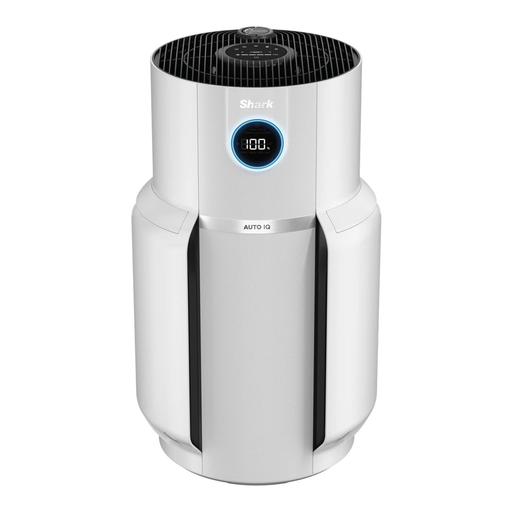
Why it suits this profile: Its claimed coverage, up to 130 m² with one air change per hour, makes it suitable for large spaces. However, you need to consider the actual filtration rate you're after.
The spec sheet distinguishes coverage at 1 air change per hour from that at 4.8 air changes. So you can't reduce its performance to a single surface figure.
Claimed four-layer filtration, automatic mode, LED display and NeverChange5 filter said to last up to five years.
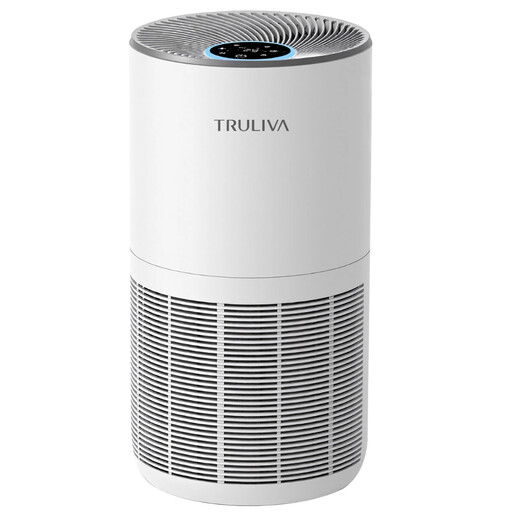
Why it suits this profile: With a claimed CADR of 450 m³/h and a PM2.5 display, it can suit rooms of 32 to 55 m², depending on the stated usage conditions.
The combination of a pre-filter, H13 HEPA filter and activated carbon addresses several needs, rather than relying solely on the HEPA label.
Night mode, 24-hour timer, child lock and PM2.5 sensor as claimed by the manufacturer.
We've put together a comprehensive, real-time updated selection of products that meet these selection criteria as well as European safety requirements.
Place the unit on a stable surface, away from water and heat sources. Never block the intake or outlet grilles. In a bedroom, activate night mode before you go to sleep and set the timer if continuous operation isn't needed.
Dust the exterior regularly and clean the pre-filter when it's designed for it. A composite HEPA filter should generally not be washed or reused, unless the manual says otherwise. Always unplug the unit before servicing it and replace the cartridge following the unit's indicator or the manufacturer's recommendations.
Position it away from walls, curtains and furniture, leaving enough space around the grilles. Avoid placing it directly behind the headboard or in a narrow walkway. A central, open spot helps air circulate properly.
It all depends on the level of indoor pollution, the number of hours of use and whether you have pets. Some manufacturers claim several years for specific filters, while others recommend more frequent replacement. Rely on the unit's indicator and its manual rather than a theoretical lifespan that applies to all situations.
Consumption varies depending on the unit's power and how long it runs. Automatic modes and low speeds can reduce consumption, but always check the wattage stated on the spec sheet. Multiply this figure by your daily usage time for a more realistic cost estimate.