
Livraison le jour même ou le lendemain

Qualité garantie

Débloquez vos offres de bienvenue: Livraison GRATUITE | Jusqu'à -80 % | 30 jours d'essai gratuits à JoyPlus
Téléchargez l'application
Dust, pollen, cooking fumes, odours, pet hair… Indoor air quality can deteriorate quickly. However, choosing an air purifier is not simply a matter of selecting the model that promises the largest coverage area.
Marketing claims sometimes mix theoretical coverage, airflow and actual filtration capacity. Some appliances are even presented as solutions for dust mites when they merely treat airborne particles. Here are the criteria to consider before choosing a model for a bedroom, living room, home office or home with pets.
The area specified by a manufacturer often depends on the number of air changes per hour, ceiling height and operating speed. An appliance advertised as suitable for a large room may therefore prove much less effective in silent mode.
To compare two models, it is better to look at the CADR, expressed in m³/h. This value indicates the volume of purified air delivered. The larger the room, the higher the CADR needs to be to ensure regular air renewal.
The terms True HEPA, HEPA H13 and HEPASilent do not describe exactly the same design. Check the stated filtration fineness, the type of pre-filter and whether activated carbon is included.
An air purifier with a HEPA filter can capture particles such as dust and pollen. Activated carbon helps reduce certain odours and volatile organic compounds. However, none of these technologies replaces ventilating your home.
An appliance that is affordable to buy may require proprietary filters that are difficult to find, or need replacing more often than expected. Before placing your order, check the filter reference, its price, stated service life and maintenance instructions.
A washable or dust-removable pre-filter can slow down clogging of the main filter, but it does not make it last forever. A saturated filter may reduce airflow while increasing electricity consumption.
For a bedroom or home office, start by measuring the floor area, then take the ceiling height into account. A compact model such as the Blueair Blue Pure 511 claims to treat up to 432 square feet in 30 minutes according to its product information, equivalent to approximately 40 m² under the conditions specified by the manufacturer.
For an open-plan living room or for treating several rooms, an appliance with a higher CADR will generally be more suitable. The Blueair Signature Large claims a CADR of over 700 m³/h according to the information provided. However, it should be installed in the main room without obstructing its air inlets or outlets.
A quiet air purifier should be assessed at different speeds. The noise level stated for night mode may bear little relation to the level measured at full power. In a bedroom, also check whether you can switch off the indicator lights, set a timer and activate a child lock.
Decibel ratings are only genuinely comparable when they relate to the same mode and measurement method. Maximum power can be useful after cooking or during a pollution episode, but it is not always compatible with a good night’s sleep.
For an air purifier for allergies, choose a model equipped with a pre-filter for larger dust particles, a HEPA filter and, if odours are a concern, an activated carbon layer. If you are looking for an air purifier for pets, also check that the pre-filter is easy to clean and that replacement filters remain available.
Claims such as “99.97%” or “99.9%” need to be considered in context: particle size, laboratory conditions and filter type all matter. They do not mean that every particle in an entire room will be removed instantly.
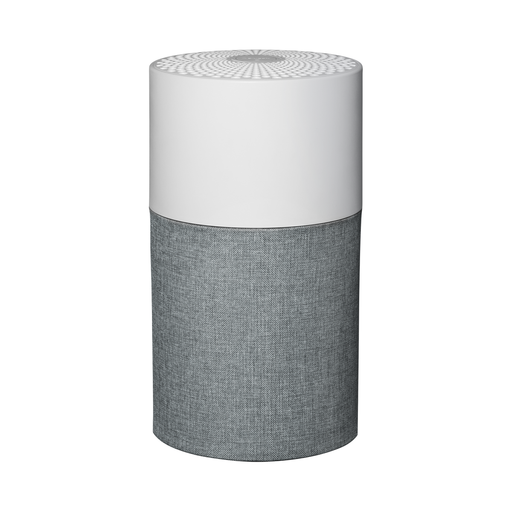
Why it suits this type of user : Its compact design and touch controls make it particularly well suited to a first installation in a bedroom, nursery or home office.
The product information states a noise level of 24 to 49 dB depending on the speed and confirms that the filter is pre-installed. You should still check the replacement cost.
HEPASilent technology, 1.69 kg weight and dimensions of 34 × 20 × 20 cm.
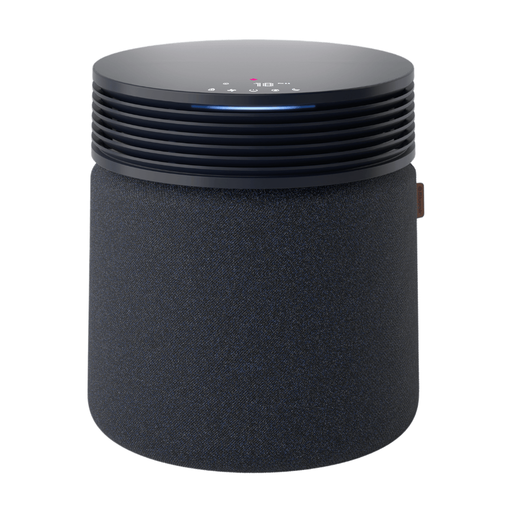
Why it suits this type of user : It is designed for large living rooms and for users who want to control air purification via an app or by voice.
Its automatic mode uses sensors. However, keep the inlets clear and follow the recommended filter replacement schedule, stated as approximately every 6 to 9 months.
CADR of over 700 m³/h according to the product information, mobile app, compatibility with Alexa and Google Home.
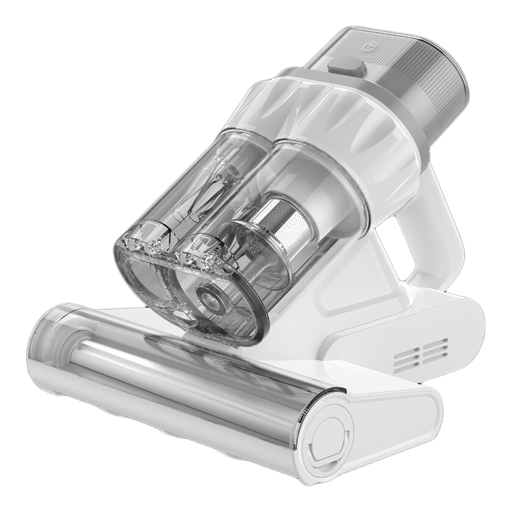
Why it suits this type of user : This appliance complements an air purifier by treating mattresses, sofas and other textiles exposed to dust, pet hair and debris.
It does not claim to replace whole-room filtration: it is designed for targeted use on textile surfaces, and the dust container must be emptied after every use.
Rated power of 300 W, suction power of 12 kPa, dust separation in a dual compartment and hot air at 65 °C.
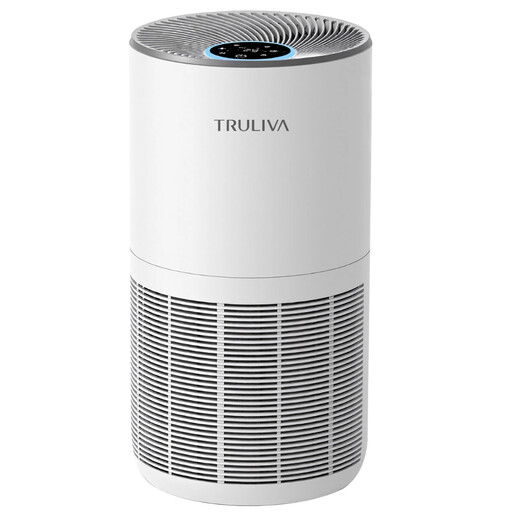
Why it suits this type of user : Its 360° airflow and PM2.5 indicator are well suited to a living room or family room where air quality changes regularly.
The product information distinguishes between the pre-filter, H13 HEPA filter and activated carbon. The child lock and filter-change reminder make everyday use easier for families.
Three-stage filtration, stated CADR of 450 m³/h, PM2.5 display, 24-hour timer and night mode.
We have brought together a complete, real-time updated selection of products that meet these demanding criteria and European safety standards.
An air purifier acts on the air circulating in the room. It can reduce the amount of airborne particles, but it does not directly clean a mattress or carpet. For these surfaces, it is better to use a mattress dust mite vacuum cleaner.
Models combining suction, vibration, hot air or a UV-C lamp must be used in accordance with their instructions. Never look directly at a UV-C lamp, and never use it on a person or animal. Regularly vacuuming textiles, washing bed linen and ventilating your home remain essential steps to take alongside air purification.
Place it on a stable surface, leaving enough space around the air inlets and outlets. Keep it away from curtains, radiators, damp areas and overly confined corners. Positioning it near the area to be treated may be useful, but avoid directing the airflow straight at your face.
It depends on the amount of dust, the number of hours of use and the fan speed. Some manufacturers specify a replacement interval, while others rely on a connected indicator. Never wash a composite or HEPA filter unless the instructions explicitly permit it.
Consumption varies according to the rated power and operating time. An appliance rated at 35 to 60 W and used for several hours a day will have different running costs depending on the setting selected and the electricity tariff. Automatic and night modes can limit the amount of time spent operating at full power. For a reliable estimate, check the technical specifications rather than relying solely on the claim “energy-efficient”.