
Livraison le jour même ou le lendemain

Qualité garantie

Débloquez vos offres de bienvenue: Livraison GRATUITE | Jusqu'à -80 % | 30 jours d'essai gratuits à JoyPlus
Téléchargez l'application
Dust, pollen, cooking fumes, stubborn odours and pet hair: an air purifier can complement the daily ventilation of a bedroom, home office or living room. However, understanding the technical specifications is essential. A large stated coverage area does not guarantee fast purification, while a quiet mode may come with a significantly lower airflow rate.
Here are the criteria to consider before buying, the mistakes to avoid and a selection of models suited to different needs.
The area stated on the packaging often corresponds to a limited number of air changes per hour. An appliance may therefore cover a large room with just one air change per hour, but require a higher airflow rate to purify the air quickly.
To compare two models, look for the CADR, expressed in m³/h, as well as the stated coverage area for a given number of air changes. A large open-plan room, a living room with a kitchen or a home near a busy road will generally require more airflow than a small, enclosed bedroom.
A figure such as 99.97% generally refers to the appliance’s stated ability to capture certain particles under specific conditions. It does not mean that all the air in the room will be purified instantly, nor that the purifier will remove every substance present.
A HEPA air purifier primarily targets particles. To reduce odours and certain gaseous compounds, check for an activated carbon filter and, where the information is available, the amount of carbon used. It gradually becomes saturated, so replacing it remains essential.
A purifier that is too noisy may end up being switched off at night. Conversely, the noise level stated for the lowest setting does not necessarily reflect that of the most powerful mode. Check the full decibel range rather than focusing only on the most flattering figure.
The filter is also a recurring expense. Before placing your order, check its reference, availability in France and replacement frequency. A washable or dustable pre-filter can capture hair and larger particles, but it does not replace the main filter.
The CADR indicates the volume of air actually treated by the appliance. For a meaningful comparison, consider the volume of the room rather than just its floor area: with a high ceiling, there is more air to purify.
A model with 360° air intake can be positioned more easily in the centre of a room. Conversely, an appliance with front air intake will need clear space around its air inlets and outlets. For an air purifier for large rooms, prioritise a high CADR and check the figures relating to the number of air changes per hour.
A common combination includes:
The terms “H13”, “True HEPA” and “HEPASilent” are not necessarily interchangeable. Check the precise specifications, including the particle sizes covered, the measurement method used and the operating conditions.
In a bedroom, a quiet air purifier with a night mode may be more comfortable than a more powerful model that remains audible at all times. Appliances with adjustable displays or switchable indicator lights are also better suited to sleep.
A connected air purifier may offer air-quality monitoring, scheduling, remote control or compatibility with Alexa and Google Assistant. These features can be useful, but they come after the essentials: airflow, filtration quality, noise level and the price of consumables.
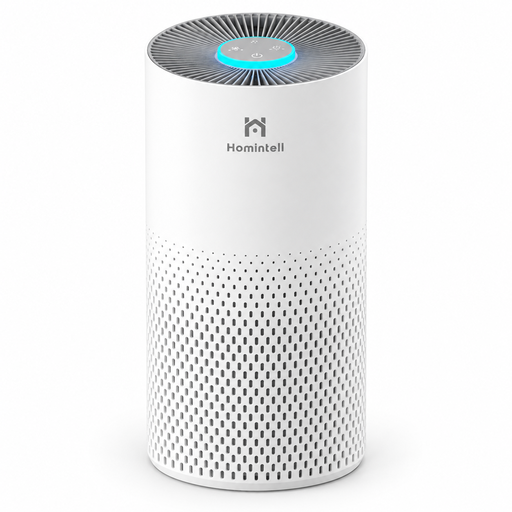
Why it suits this profile : Its compact design, three speeds, timer and touch panel make it an appealing choice for a small room or a first purchase, without unnecessary connected features.
The product information states coverage of up to 16 m² and a filter combining a pre-filter, HEPA filter and carbon. It is therefore best suited to an appropriately sized space rather than being expected to handle an oversized room.
Stated CADR of 130 m³/h, PM2.5 sensor, automatic and night modes, and a 2-, 4- or 8-hour timer.

Why it suits this profile : This model is designed for large spaces and users who want to combine high airflow, automation and remote control.
The product information distinguishes between coverage of up to 154 m² with one air change per hour and an area of 64.4 m² treated in approximately 12.5 minutes. This is a useful distinction when sizing the appliance correctly for your needs.
Stated CADR of over 700 m³/h, laser sensors, automatic mode, app, voice control and night mode.
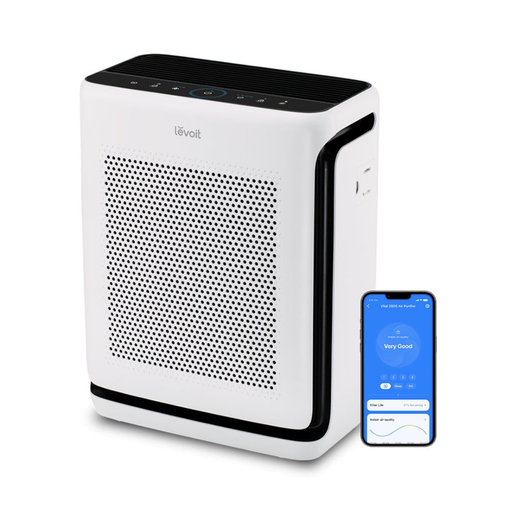
Why it suits this profile : Its air-quality sensor, app and stated airflow of 425 m³/h make it suitable for regular use in a living room, home office or spacious bedroom.
The product information states a noise level of between 23 and 54 dB and recommends replacing the filter according to usage, generally every 6 to 8 months. It is therefore worth planning for the maintenance budget in advance.
Three-stage filtration, automatic mode, real-time monitoring, scheduling and compatibility with Alexa and Google Assistant.
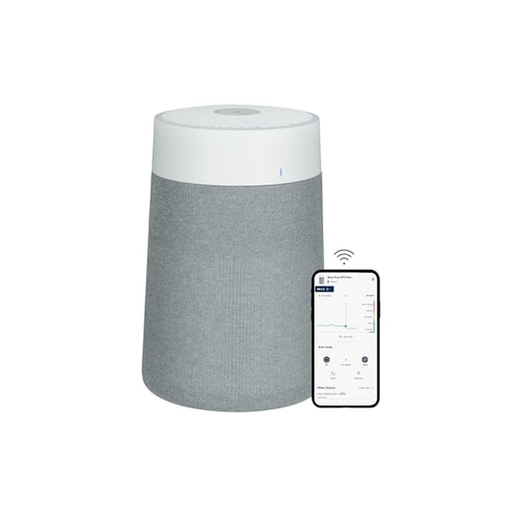
Why it suits this profile : Its compact design, night mode and app control make it easy to use in a bedroom, nursery or small home office.
The stated noise level ranges from 19 to 48 dB, while night mode dims the lighting. However, compare the noise at the speed you will actually use, rather than relying solely on the minimum figure.
Stated CADR of 212 m³/h, HEPASilent technology, PM2.5 monitoring in the app, scheduling and child lock.
We have put together a complete, real-time updated list of products that fully meet these strict selection criteria and European safety regulations.
Place the appliance on a stable surface, leaving the amount of clearance specified in the instructions around the air inlets and outlets. Keep it away from curtains, furniture positioned too close, damp areas and radiators.
To maintain its performance:
An air purifier does not replace ventilation, home maintenance or medical treatment. Stated performance depends on the model, the selected setting, the room and the condition of the filter.
It depends on the room and the level of pollution. Continuous operation at a low speed can help limit fluctuations, while automatic mode adjusts the airflow when a sensor is built in. To estimate running costs, also take electricity consumption and filter prices into account.
Manufacturers often state a lifespan of several months, but this varies depending on the amount of dust and pollen, the presence of smoke or pets, and daily usage time. The replacement indicator and the instructions should take precedence over any generic lifespan.
A HEPA filter primarily targets particles. To choose an air purifier for odours, look for an activated carbon layer. Its effectiveness nevertheless depends on the amount of carbon, the airflow, the source of the odour and how saturated the filter is.