
Livraison le jour même ou le lendemain

Qualité garantie

Débloquez vos offres de bienvenue: Livraison GRATUITE | Jusqu'à -80 % | 30 jours d'essai gratuits à JoyPlus
Téléchargez l'application
Breathing healthier air at home has become a priority for many of us. Whether it's to soothe pollen allergies, control the spread of pet dander, or simply freshen up your living room, the air purifier has become a powerful ally. The problem: faced with an overwhelming market and often vague marketing claims, it's easy to get lost and make the wrong choice.
As the Head of Product Recommendations at Joybuy, my mission is to guide you. Let's forget the technical jargon and get straight to the point. This guide breaks down the pitfalls to avoid and gives you the keys to choosing a device that is truly suited to your needs and your home.
The market is flooded with models making tempting promises. But be careful, some highlighted features are actually deceptive, or even counterproductive. Here are the points to keep in mind.
The Myth of High CADR at All Costs: The CADR (Clean Air Delivery Rate) is a key indicator. Expressed in cubic metres per hour (m?/h), it measures the volume of air the device can process. A high CADR is often presented as a guarantee of absolute performance. The catch? This figure, impressive on paper, corresponds to the fan's maximum speed. A speed that is often deafening and therefore unbearable for daily use, especially in a bedroom. A slightly oversized unit, running quietly on a low setting, will be much more effective and pleasant than a small model forced to run at full blast constantly.
The Hidden Costs of Filters: The purchase price is just the tip of the iceberg. The cost and lifespan of replacement filters can quickly drive up the bill. Some manufacturers require proprietary filters that are expensive and sometimes hard to find. Our advice: before you check out, always verify the price and availability of consumables. A washable pre-filter is also a major plus for extending the time between main filter replacements.
The Confusion Around Ionisers: The "ioniser air purifier" function is often promoted for its ability to "stick" airborne particles together. While the technology can be a bonus, beware of entry-level models that can generate ozone. Ozone is a gas that irritates the lungs: the height of irony for a device meant to clean the air! It's better to opt for reputable brands or, at the very least, ensure that this function can be disabled.
To avoid making a mistake, focus on these three essential criteria. They are what will make all the difference in your purifier's real-world effectiveness.
The golden rule: the CADR must be appropriate for the size of the room where the device will be used. Aim for a model capable of cycling the room's air at least 2 to 3 times per hour.
To calculate your room's volume: Area (m?) × Ceiling Height (m) = Volume (m?). Then, multiply this volume by the desired number of air changes per hour (e.g., 3 for someone with allergies).
The quality of filtration is the heart of the system. Today, a high-performance system relies on a combination of three layers:
An air purifier is useless if it's too noisy to run while you're present. The noise level, expressed in decibels (dB), is therefore a crucial criterion, especially for a bedroom air purifier.
Our advice: always check the advertised noise level for the lowest setting (often called "Night" or "Sleep" mode) before you decide.
To help you see more clearly, here is our selection of models that tick all the right boxes, for different needs and budgets.
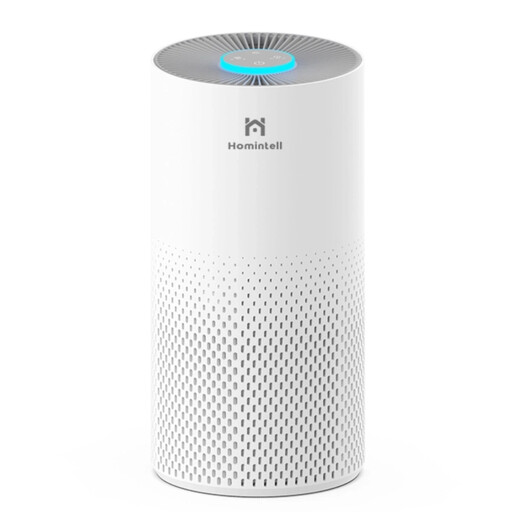
Why it's a great fit: Perfect for a bedroom, office, or studio up to 18 m?. Its compact size and accessible price make it an excellent entry point for anyone looking to purify their personal space without breaking the bank.
Its CADR of 150 m?/h is perfectly sized for small rooms, avoiding unnecessary oversizing. It uses a standard composite filter that is easy to find, making maintenance costs predictable.
3-in-1 filtration (pre-filter, HEPA, activated carbon) and a convenient timer (2/4/8h). The 7-colour ambient light is a nice bonus.
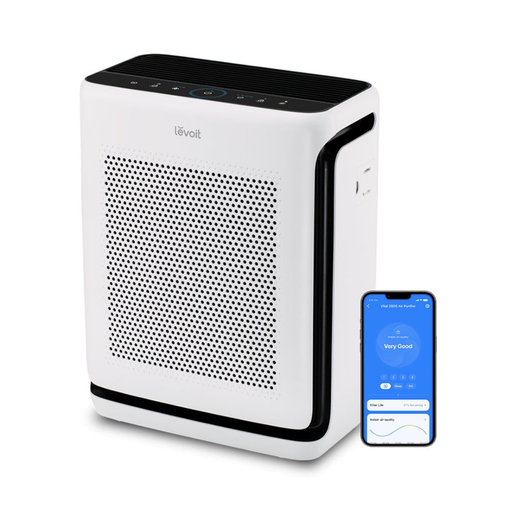
Why it's a great fit: With its air quality sensor and auto mode, this smart air purifier is perfect for families. It adjusts its power on its own, ensuring continuously healthy air without you having to think about it. Its high CADR is effective in living spaces up to 36 m?.
The smart auto mode solves the noise problem: it only increases the speed when necessary. The VeSync app allows you to track filter wear and anticipate its replacement, avoiding unpleasant surprises.
CADR of 425 m?/h, 3-stage HEPA filtration, and a very quiet night mode (23 dB). Compatibility with voice assistants is a plus for hands-free use.
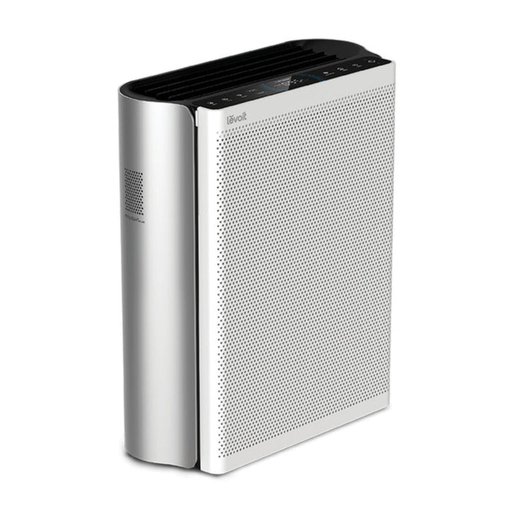
Why it's a great fit: Designed for very large volumes like open-plan living rooms or large offices, this model offers impressive purification power. Its advanced sensors (PM1.0, PM2.5, PM10) make it a top-tier choice for those who want to make no compromises on air quality.
Despite its power, its night mode is designed to be discreet. The washable pre-filter is a major asset for reducing long-term maintenance costs by extending the life of the main filter.
A very high CADR of 612 m?/h, ultra-precise particle sensors, and adjustable air outlets to direct the purified airflow where it's needed most.
Our complete selection brings together the best models of the moment, all tested and approved according to our strict criteria and current safety regulations.
1. How long does a HEPA filter last and how much does a replacement cost? A HEPA filter's lifespan varies from 6 to 12 months, depending on your usage frequency and your air's pollution level. Most modern purifiers have an indicator light to notify you. The cost of a replacement filter can range from €20 to over €60 depending on the brand and model. Remember to check this cost before purchasing to budget for annual maintenance.
2. Where should I place an air purifier for maximum efficiency? For optimal performance, place your purifier in a spot where air can circulate freely. Avoid tucking it into a corner, behind furniture, or against a wall. Leave a space of at least 30 to 50 cm around the device. In a bedroom, a position a few metres from the bed is often a good compromise. In a large living area, place it in the zone where you spend the most time.
3. Is an air purifier really effective against pollen allergies? Yes, absolutely. A purifier equipped with a true HEPA filter (H13 or H14 standard) is incredibly effective at capturing pollen grains floating in your home. By running it with the windows closed, especially during seasonal peaks, you will significantly reduce your exposure to allergens and relieve your symptoms at home.