
Livraison le jour même ou le lendemain

Qualité garantie

Débloquez vos offres de bienvenue: Livraison GRATUITE | Jusqu'à -80 % | 30 jours d'essai gratuits à JoyPlus
Téléchargez l'application
Breathing healthier air at home has become a priority, whether to soothe allergies, get rid of stubborn odours, or simply for our well-being. But with an overwhelming number of options on the market, choosing the right air purifier often turns into a headache. Spec sheets promise the world, but how do you separate fact from fiction?
As product experts at Joybuy, our mission is to help you cut through the noise. We've identified three common pitfalls that most buyers fall into:
This guide gives you all the keys to decode spec sheets and choose a device that truly fits your needs.
The number one technical specification to check is the CADR (Clean Air Delivery Rate). Expressed in cubic metres per hour (m?/h), it measures the volume of air the device can actually clean.
The higher the CADR, the faster and more effectively the device cleans the air in your room. For tangible results, especially for allergy sufferers, we recommend a complete air change three to five times per hour.
How to interpret it? For a 20 m? room with a standard ceiling height of 2.5 m (a volume of 50 m?), a device with a CADR of 150 m?/h will change the air three times per hour (150 ÷ 50 = 3). This is a good baseline for a bedroom or office. For a large living room, you'll need to aim for a much higher CADR.
A purifier's effectiveness depends entirely on its filters. Most models combine several layers, each with a specific target.
To help you see how these criteria apply in practice, here are a few options that meet specific needs while avoiding the pitfalls we mentioned.
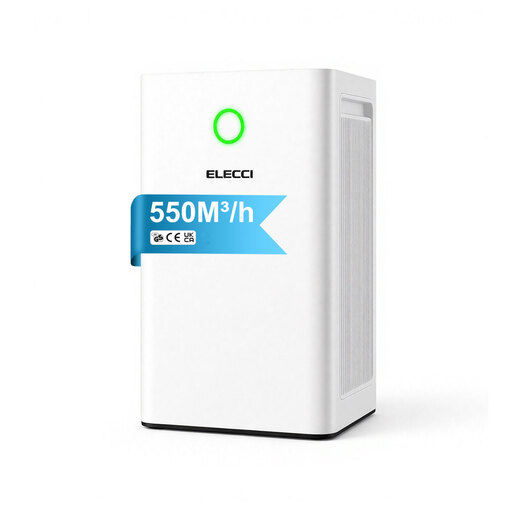
Why it stands out: Perfect for large living rooms or open-plan living areas, its powerful CADR ensures rapid and effective air renewal, even in very large volumes.
Its CADR of 550 m?/h is clearly stated and consistent with its promise to cover large areas. No misleading marketing here.
Serious firepower to quickly purify rooms up to 120 m?. Its washable pre-filter helps extend the life of the main filters and keep costs under control.
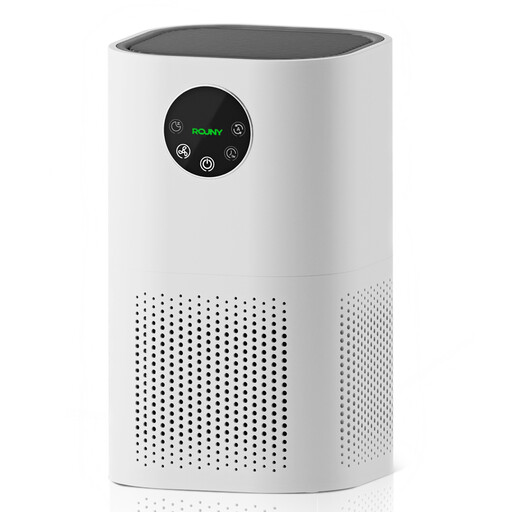
Why it stands out: Ideal for a bedroom or office, it combines high-performance HEPA H13 filtration with an ultra-quiet sleep mode, specially designed not to disturb your sleep.
The noise level in sleep mode is clearly specified at ≤ 25 dB, which is as quiet as a whisper. This precise data stands in sharp contrast to the vague promises of "silent" devices.
Its sleep mode is virtually inaudible, and its real-time air quality display provides simple and convenient visual feedback.
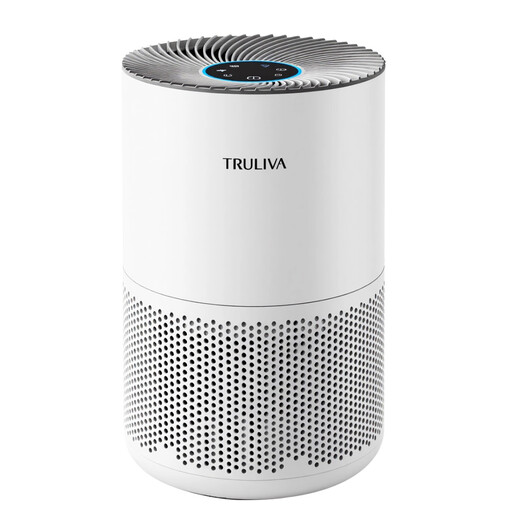
Why it stands out: It features a multi-layer filtration system specifically designed for pet owners, making it incredibly effective at capturing hair, dander, and the odours that come with them.
Its multi-layer filtration system is explicitly designed for pet allergens, going far beyond a simple generic HEPA filter.
Targeted filtration for pet allergens and a washable pre-filter for simpler, more cost-effective maintenance.
A purifier is only as good as its filters. A crucial step before any purchase is to check the availability and cost of consumables. Brands like Xiaomi with its Smart Air Purifier 4 or Homintell offer filters that are easy to find and reasonably priced. Using genuine filters is the only way to guarantee the advertised performance and the longevity of your device.
Discover our complete range of purifiers and filters, rigorously selected for their performance and reliability.
The lifespan of a filter depends on your environment and how often you use it. As a general rule, a HEPA filter and an activated carbon filter should be replaced every 6 to 12 months. Don't worry, most modern devices have an indicator light that tells you when it's time.
Absolutely. A purifier equipped with a True HEPA filter is incredibly effective at capturing airborne pollen. By running it with the windows closed during allergy season, you will significantly reduce your exposure to allergens at home.
Place it in the room where you spend the most time (bedroom, living room). To ensure proper airflow, leave at least 20-30 cm of free space around it. Most importantly, don't tuck it away in a corner or behind furniture, as this would negate its effectiveness.