
Livraison le jour même ou le lendemain

Qualité garantie

Débloquez vos offres de bienvenue: Livraison GRATUITE | Jusqu'à -80 % | 30 jours d'essai gratuits à JoyPlus
Téléchargez l'application
Whether you're keeping your PC cool during an intense gaming session or breathing healthier air in your living room, choosing the right fan or air purifier can quickly become a headache. Between marketing jargon and indecipherable spec sheets, a purchasing mistake is never far off. As a product specialist at Joybuy, my mission is to help you see things more clearly and find the device that truly meets your needs.
Before you pull out your credit card, beware of these common mistakes that too often turn a good deal into a disappointment.
To sort through the options, focus on these few technical specifications. They determine whether a device is high-performing and, most importantly, whether it's right for you.
Improving indoor air quality rests on two pillars.
A high-performance CPU cooler is key to the longevity and stability of your components.
Every need is unique. Here are solutions that cater to specific uses, based on the criteria we've just discussed.
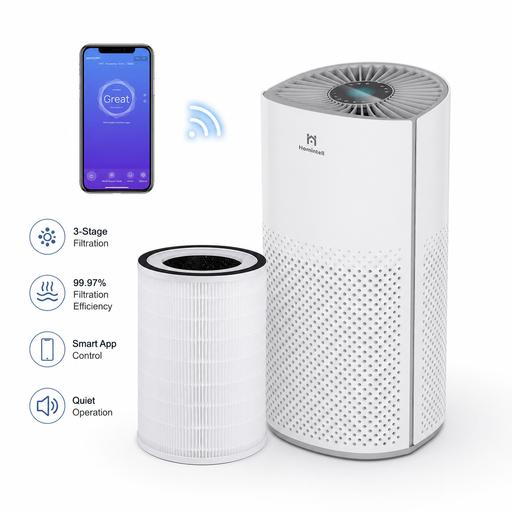
Why this choice? Perfect for a living room or bedroom up to 25 m?. It effectively targets allergens, dust, and pollutants with its comprehensive filtration, while offering convenient remote control for parents.
It clearly states a CADR of 200 m?/h and HEPA H13 filtration—precise data that cuts through vague promises. The night mode noise level is specified at 20 dB: a concrete and reassuring figure.
Its 3-in-1 filtration (with activated carbon) and smart features (air quality sensor, Wi-Fi control) make it a solution that is as comprehensive as it is modern.
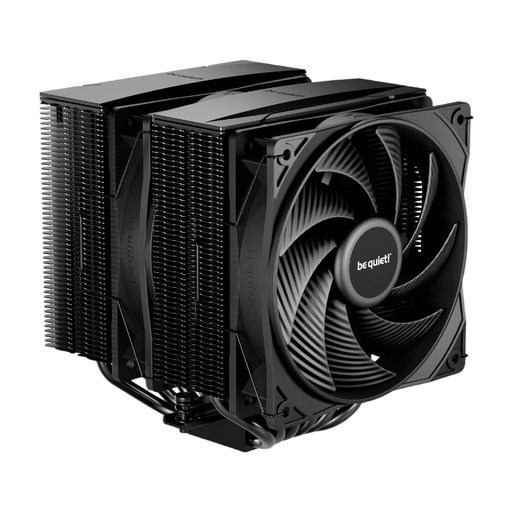
Why this choice? Built for powerful rigs and overclocked processors, this CPU cooler offers enormous cooling capacity while remaining discreet. An absolute priority for gamers and content creators.
Here, there are no empty promises. The brand provides a verifiable figure: 34.8 dB(A) at full speed. Its dissipation power, delivered by a 6-heatpipe architecture, is built for the most demanding processors.
The perfect balance between extreme cooling and quiet operation, thanks to its two Pure Wings 3 fans. Its asymmetrical design ensures excellent compatibility with high-profile RAM modules.
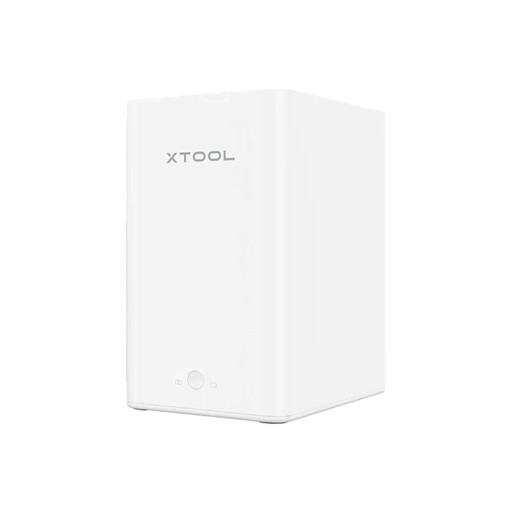
Why this choice? Note, this is not a conventional air purifier. It's a smoke extractor designed specifically for laser engravers—an essential tool for DIY hobbyists and professionals who work with these machines.
It avoids the "one-size-fits-all" trap by being highly specialized. Its role isn't to purify the air in a room, but to capture and filter harmful fumes and particles directly at the source, where the danger lies.
Its 3-stage filtration is specifically designed for laser engraving fumes, ensuring a safer and more breathable work environment.
We have put together a complete selection of products that meet our performance criteria and current safety standards.
Generally, a HEPA filter should be replaced every 6 to 12 months, depending on the intensity of use and the ambient air quality. Most modern devices, like the Homintell Mercury purifier, include an indicator light that alerts you (for example, after 2200 hours of operation) when it's time for a change.
Not necessarily. A cooler's performance primarily depends on its design quality: the number and material of the heatpipes, the surface area of the fins, and the efficiency of the fans. A well-designed compact model, like the be quiet! PURE ROCK PRO 3 Slim, can provide excellent CPU cooling in a tight case while ensuring compatibility with RAM modules.
No, although it's an essential indicator for judging purification speed and coverage area. The filtration type (HEPA, activated carbon) determines what the device filters (allergens, odours, VOCs), while the noise level in decibels (dB) is crucial for your daily comfort, especially in a bedroom or office.