After cleaning, vacuuming or cooking, start by reducing emissions, airing the room and keeping the ventilation running. ADEME and Anses recommend prioritising these steps. A filtration-based air purifier can complement them to meet a specific need in a particular room, provided you choose an appropriate airflow rate, allow for filter maintenance and don’t assume it will remove every pollutant.
Who is this option for?
Households concerned about air quality after cleaning
If you’re concerned about stirred-up dust or cleaning products, start by airing the room after cleaning and vacuuming, as ADEME recommends. Then consider an appliance for a specific room and need, without treating it as a substitute for airing the space.
People bothered by cooking smells
If smells linger after cooking, consider the airflow rate suited to the room separately from the type of filter on offer. It’s worth checking whether the appliance has activated carbon, but this doesn’t guarantee that it will remove all volatile organic compounds.
People who care about noise and maintenance
For regular use, particularly in a bedroom, check the noise level at the setting you plan to use and the maintenance guidance for the compatible filter. A quiet mode doesn’t, on its own, tell you how much air the appliance processes at that speed.
What should you check before buying?
For everyday household activities, reducing emissions and airing the room should come before choosing an appliance. If you still have a specific need, first identify the pollutant you want to target and the room where you’ll use it.
Reduce emissions and air the room
When: After cleaning, vacuuming or cooking, including when you’re using an air purifier.
Bear in mind: Airing a room depends on outdoor conditions and the comfort of your home; it doesn’t continuously filter particles in the room.
Filtration-based air purifier
When: As a complement, to target particles in a particular room or explore filtration designed to tackle certain smells.
Limitation: Results vary depending on the pollutant, room and condition of the filter. UFC-Que Choisir notes that its test results differ from one pollutant to another.
Other air treatment technologies
When: If you’re considering a technology based on ionisation, ozonation, plasma or photocatalysis, check the evidence for your intended use before choosing.
Limitation: Anses says the data it reviewed did not demonstrate both the effectiveness and safety of these devices under real-world conditions of use.
| Criterion |
What to check |
Which consumers? |
| Air exchange and emissions |
Be wary of any claims that an appliance can replace airing or ventilation; define the role it will play as a complement. |
Before buying, I want to know whether my steps after cleaning or cooking already meet my needs. This could be the priority for around 29% of consumers. |
| Particles and room size |
Compare the clean air delivery rate (CADR), in m³/h, and the stated room coverage for the exact model, taking the room where you’ll use it into account. |
After vacuuming, I’m mainly looking for particle filtration suited to the room where the appliance will run. Around 36% of consumers might put getting the right size first. |
| Cooking smells |
Check for a filter medium designed to tackle smells, such as activated carbon, without assuming this means it will work against all gases. |
If cooking smells linger, I want to understand what the filter is actually designed to target before relying on it. Smells could be the main concern for around 21% of consumers. |
| Noise and maintenance |
Check the noise level at the speed you need, as well as the filter reference and replacement instructions. |
If the appliance will run near me regularly, I want to be comfortable with its noise level and keep up with maintenance. This could be the top criterion for around 14% of consumers. |
Mistakes to avoid
-
Buying an appliance so you no longer have to air the room
An air purifier doesn’t replace airing the room or ventilation. ADEME recommends airing after cleaning and vacuuming, among other steps, while Anses also prioritises reducing emissions at source.
Keep these steps as your starting point, then define the specific need an appliance might help with.
-
Assuming stated filtration performance means every pollutant is removed
Results for particles don’t automatically apply to smells or chemical pollutants. UFC-Que Choisir reports different results for different pollutants in its air purifier tests.
Identify the pollutant you’re concerned about and read the test conditions behind the manufacturer’s claims.
-
Forgetting about replacement filters
Using an appliance with a filter means keeping up with regular maintenance. Dyson and Rowenta provide replacement guidance for the specific filters in their ranges.
Before choosing a model, find the reference for its compatible filter and check the relevant maintenance instructions.
-
Relying on the stated room coverage alone
The stated room coverage doesn’t, by itself, tell you the airflow rate or the conditions in which the appliance will be used. These specifications vary between models.
Compare the CADR, stated room coverage and noise level at the speed you plan to use with the room where you’ll place the appliance.
Brands to consider
Philips
Philips’ air purifier range offers different formats and stated airflow rates to compare for a particular room.
- Philips offers models that combine a HEPA filter with activated carbon.
- Check the airflow rate, stated room coverage and filter composition for the exact model; these specifications don’t demonstrate effectiveness against every household pollutant.
Rowenta
Rowenta’s Pure Air Mini is a compact model worth considering for a small room.
- Rowenta describes this range as having a filter that combines a pre-filter, particle filtration and activated carbon.
- A compact design doesn’t mean you can skip checking whether the stated capacity suits your room; follow the maintenance guidance for the filter in the model you choose.
Dyson
Dyson ranges may appeal if you’re considering combined functions and checking that replacement filters are compatible.
- Dyson lists a replacement filter combining HEPA and activated carbon for compatible models.
- Dyson recommends replacing the filter mentioned every 12 months; check compatibility and the guidance for the appliance you’re considering.
Air purifiers to compare on Joybuy
These filtration-based models are worth considering as a complement to airing the room after cleaning, vacuuming or cooking. Compare their stated specifications with the room and pollutant behind your choice.
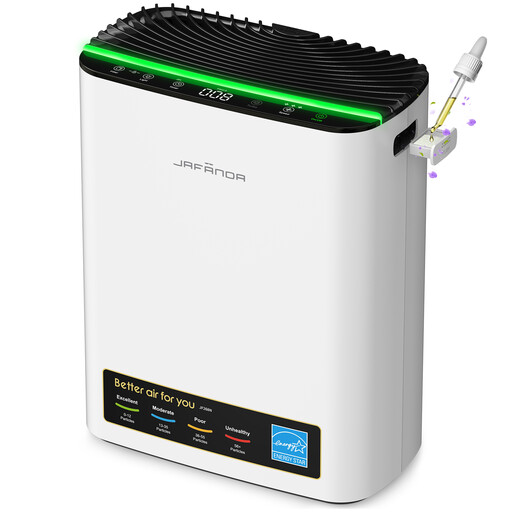 Image unavailable
Jafända True HEPA with PM2.5 display, up to 1226 ft²
Worth considering if you’re looking to tackle particles after cleaning and also want to compare filters designed for smells.
The product listing states that it has a True HEPA filter, a PM2.5 display and a 20 dB sleep mode. Compare the stated coverage with your room and check the replacement filter reference.
View on Joybuy
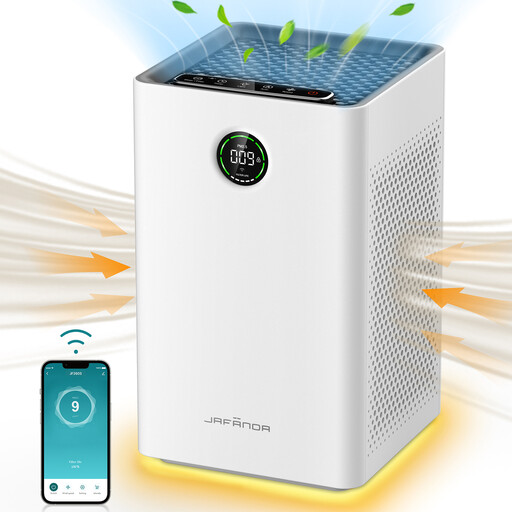 Image unavailable
Jafända H13 True HEPA with activated carbon, up to 1190 ft²
Worth comparing for a room where particles are the main concern, but some smells matter too.
The product listing states that it has an H13 True HEPA filter, activated carbon and Wi-Fi control with Alexa. Check the airflow rate and noise level at the setting you’ll use: the noise specifications in the listing aren’t clearly consistent.
View on Joybuy
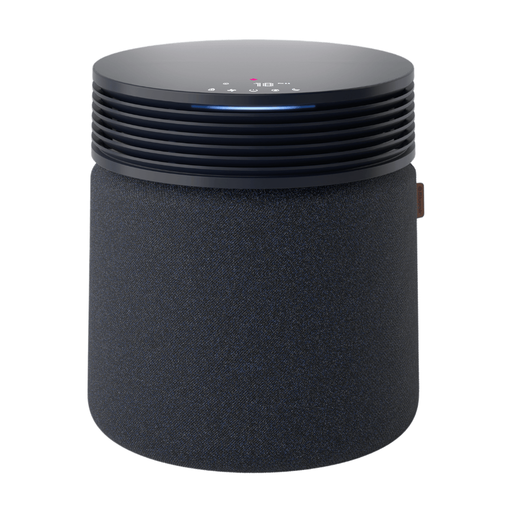 Image unavailable
Blueair Blue Signature Large, HEPASilent, 154 m²
Worth considering for a large room if you can compare the stated coverage with your intended conditions of use.
The product listing mentions HEPASilent technology and coverage of 154 m². For the stated functions against smells, ask for evidence relating to the pollutants and conditions of use in question, as well as more details about noise levels.
View on Joybuy
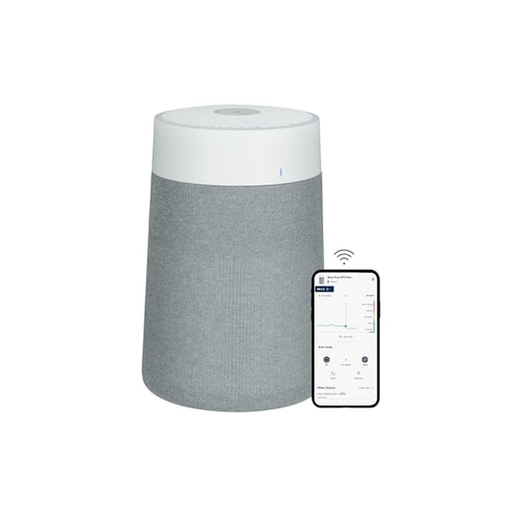 Image unavailable
Blueair Blue Pure 511i Max, HEPASilent, 43 m²
Worth comparing for particle filtration in a room that matches the stated coverage, especially if noise matters to you.
The product listing states that it has HEPASilent technology and covers 43 m². Check the airflow rate at the noise level you plan to use; if smells are the reason you’re buying, look separately at the filtration designed to tackle them.
View on Joybuy
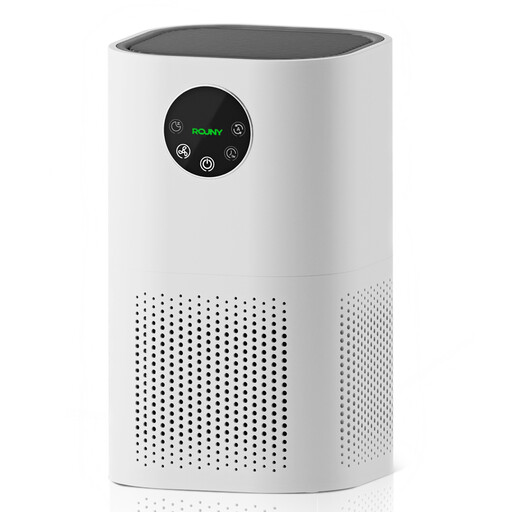 Image unavailable
ROUNY AP-T1, H13 HEPA, CADR 150 m³/h
Worth considering for targeting particles in a room whose size you can compare with the stated airflow rate.
The product listing states a CADR of 150 m³/h, coverage of 20 to 50 m² and a sleep mode rated at ≤25 dB. Check the conditions for this room-size range and the compatible filter before choosing.
View on Joybuy
Frequently asked questions
Can an air purifier replace airing the room after cleaning or cooking?
No. An air purifier can complement airing and ventilation, but it doesn’t replace them. ADEME recommends airing the room after cleaning and vacuuming, while Anses also prioritises reducing emissions at source.
How do you choose an air purifier for a particular room?
Start by comparing the CADR in m³/h and the stated room coverage for the exact model with the room where it will run. Then check the filter type and noise level at the setting you need: a claim about the percentage of particles captured isn’t enough to determine the right size of appliance.
Does activated carbon remove all cooking smells and chemical pollutants?
No. The presence of activated carbon doesn’t guarantee this. Check the test conditions for the pollutant you’re concerned about and continue to air the room; UFC-Que Choisir reports varying results for different pollutants in its air purifier tests.
When should you maintain or replace the filter?
Follow the instructions for the exact model and filter. For the references mentioned by the brands, Dyson recommends replacing its filter every 12 months, while Rowenta recommends cleaning the Pure Air Mini pre-filter every 2 to 4 weeks, depending on use, and replacing the filter after 12 months or when the indicator lights up. These intervals don’t apply to every appliance.


