
Livraison le jour même ou le lendemain

Qualité garantie

Débloquez vos offres de bienvenue: Livraison GRATUITE | Jusqu'à -80 % | 30 jours d'essai gratuits à JoyPlus
Téléchargez l'application
Dust, pollen, cooking fumes, pet hair or lingering odours: an air purifier can make the air in your home more pleasant, provided you choose a model that suits the room. However, there are many different devices on the market, with claims that can sometimes be difficult to compare.
Before you buy, check the area the purifier can actually cover, its airflow rate, the filters it uses and the cost of upkeep. Here are the key things to consider to avoid any nasty surprises.
A claim such as “for large rooms” doesn’t tell you enough. Some manufacturers calculate coverage based on just one air change per hour, while others use much higher figures. For a bedroom or living room, it’s better to compare the CADR (clean air delivery rate), measured in m³/h.
A device advertised for 100 m² might suit a large open-plan room, but only if you’re happy with a fairly slow air change rate. If you want faster purification, the area it can effectively cover may be considerably smaller.
The HEPA air purifier label may be reassuring, but it doesn’t tell you everything. Check the filter grade and the whole filtration system: an H11 filter doesn’t offer the same performance as an H13 filter. A pre-filter is also useful for trapping hair, fibres, pet hair and larger dust particles before they reach the main filter.
Retention rates should be treated as technical product specifications, not as a guarantee of the same results in every home.
An air purifier can quickly become expensive if replacement filters are hard to find or cost a fortune. Check their expected lifespan, availability and how easy they are to replace. For a bedroom, also check the noise level in night mode: the noise stated for maximum speed won’t necessarily reflect how loud the quiet mode is.
Measure the room and take the ceiling height into account. For a study or small bedroom, a device with an airflow rate of around 130 to 150 m³/h may be suitable, depending on the layout. For an open-plan living room, look for a higher airflow rate and check the stated number of air changes per hour.
An air purifier for large rooms should have an airflow rate that suits the total volume of air to be treated, not just the floor area highlighted on the product page.
A common set-up includes:
Activated carbon is no substitute for ventilation or removing the source of unpleasant odours. If you’re looking for an odour eliminator, check how much carbon the filter contains and how often it needs replacing.
An air purifier with automatic mode adjusts its speed based on readings from its sensor. A PM2.5 indicator can show the concentration of particles detected by the device, but the reading depends on where it’s placed and how accurate the sensor is.
App control, a timer, a child lock and night mode can all be useful in a family home. However, a connected air purifier should still be easy to use from its control panel, especially if your Wi-Fi goes down.
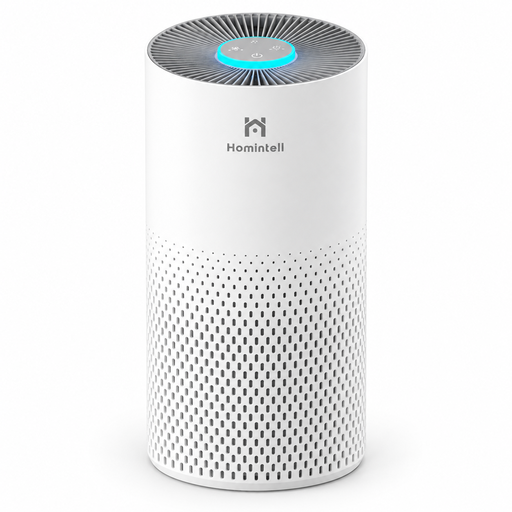
Why it suits this type of user : its compact design and stated suitability for rooms of 16 to 18 m² make it a good fit for a bedroom, study or small living room.
The product page gives a CADR of 130 to 150 m³/h and specifies the area it’s designed for, making it easier to compare the device with the size of your room.
3-in-1 filtration with a pre-filter, HEPA and activated carbon, a 2-, 4- or 8-hour timer, a PM2.5 sensor and touch controls.
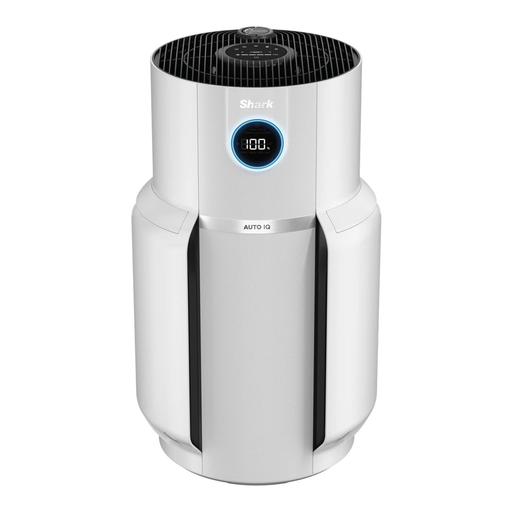
Why it suits this type of user : this model is designed for larger spaces and features an air quality display and automatic adjustment.
The product page gives separate coverage figures: up to 130 m² with one air change per hour, compared with 28 m² at 4.8 air changes per hour.
Filter life of up to 5 years according to the manufacturer, depending on use; automatic mode, quiet operation and four-layer filtration.
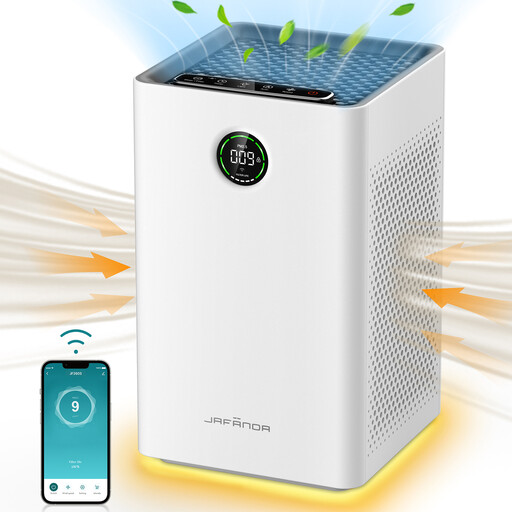
Why it suits this type of user : it’s designed for people who want to control their purifier remotely, whether it’s in a living room, bedroom or workspace.
The product page gives a CADR of 260 m³/h and provides separate capacity figures according to the number of air changes per hour.
H13 filtration with activated carbon, a PM2.5 sensor, five speeds, automatic mode, Wi-Fi control and a night mode rated at 23 dB, according to the product page.
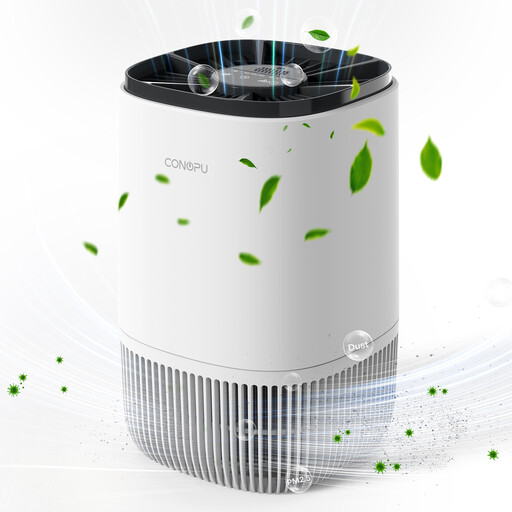
Why it suits this type of user : its portable design makes it easy to move from a bedroom to a study or living room, as needed.
The product page details three-stage filtration and an H13-grade filter, rather than simply offering a ventilation function.
Pre-filter, H13 HEPA and activated carbon, three modes, a 24-hour timer and compact dimensions of 170 × 170 × 260 mm.
Place the device on a stable surface, leaving enough space around the air inlets and outlets. Avoid very damp rooms, heat sources and places where the filter could quickly become clogged with grease.
To maintain good airflow:
An air purifier is no substitute for effective ventilation. Air fresheners and fragrance diffusers can mask an odour without tackling its source. Use them as directed on the label, especially around children or people who are sensitive to fragrances.
Keep it away from walls, curtains and furniture, and make sure its grilles aren’t blocked. An uncluttered spot helps air circulate. At night, use night mode or a low speed, after checking the stated noise level.
Its lifespan depends on how much dust, pollen and smoke is in the air, as well as how many hours a day you use it. Some models are rated for several thousand hours, while others claim longer lifespans under specific conditions. Keep an eye on the replacement indicator and watch for any drop in airflow.
It depends on its power rating and the speed setting you choose. A 20 to 35 W model used for several hours a day will generally use far less energy than a heater. The actual cost depends on your electricity tariff and how long you run it. Automatic mode can avoid running at full power for long periods when measured air quality improves.