
Livraison le jour même ou le lendemain

Qualité garantie

Débloquez vos offres de bienvenue: Livraison GRATUITE | Jusqu'à -80 % | 30 jours d'essai gratuits à JoyPlus
Téléchargez l'application
Dust, pollen, cooking smells, smoke and pet hair can quickly make indoor air feel uncomfortable. But buying an air purifier isn’t simply a matter of choosing the model with the biggest room-size figure on the box.
Some marketing claims have real limitations: a stated coverage area with no clear information about airflow, a HEPA filter that’s expensive to replace, or quiet operation that’s only available at the lowest speed. To make the right choice in France, it’s worth looking at a few technical details and considering the room where you’ll use the purifier.
A device might claim to cover 50, 100 or 130 m², but this figure depends on how many air changes per hour you want. In a bedroom, home office or room used by someone with allergies, the ability to circulate enough air matters more than the stated floor area alone.
CADR, or clean air delivery rate, is measured in m³/h. The higher it is, the faster the device can treat a given volume of air. So compare the CADR with the size of your room, especially if you’re looking for an air purifier for a large room.
A HEPA air purifier can capture a large proportion of fine particles, but its overall effectiveness also depends on airflow, how well the filter compartment is sealed and the condition of the filter. An H13 filter won’t magically turn an underpowered device into a suitable solution for a large living room.
A pre-filter is also a real advantage: it catches hair, pet fur and larger dust particles before they reach the main filter. To tackle odours, look for a substantial activated carbon filter. As the amount of carbon isn’t always stated, check the product details carefully.
The purchase price is only part of the overall cost. Check that replacement filters are available and find out how much they cost, how often they should be changed and how much electricity the device uses. A model that runs for several hours a day won’t cost the same to use as one that’s only switched on occasionally.
Never wash a composite or HEPA filter unless the manufacturer clearly says you can. If the pre-filter is designed to be cleaned, you may be able to dust it or clean it separately.
Measure the floor area, then take the ceiling height into account. An open-plan room connected to the kitchen or hallway will generally need a higher airflow than an enclosed bedroom. For a small space, a device rated at 117 to 150 m³/h may be suitable, depending on the layout. In a living room or large space, models rated at 260, 425 or 450 m³/h offer more headroom, as long as you follow the manufacturer’s guidance.
If you’re looking for an air purifier for allergies, choose a model with both a pre-filter and a HEPA filter. If you have pets, look for an air purifier for pets with an air intake designed to handle fur and a layer of activated carbon to help reduce odours.
Activated carbon is particularly useful for smoke and cooking smells. However, it’s no substitute for airing your home and shouldn’t be presented as a medical solution or a replacement for ventilation.
To assess whether an air purifier is quiet, check its noise level in night mode as well as the speed needed to treat your room properly. A device rated at 20 or 23 dB on its lowest setting may be noticeably louder at higher power.
An air purifier with a PM2.5 sensor can display real-time readings and adjust its airflow automatically. This makes everyday use easier, but the reading comes from the built-in sensor and isn’t a substitute for an independent measuring device.
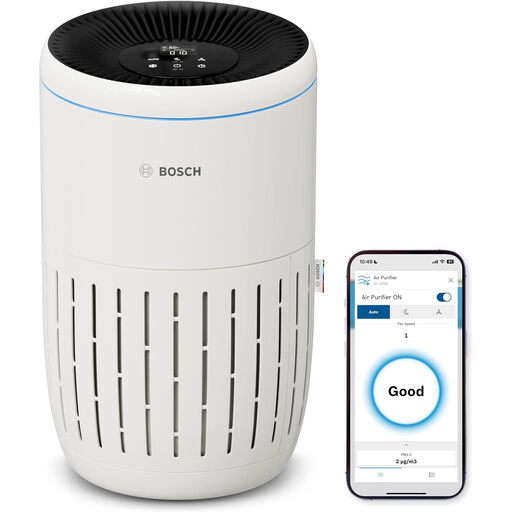
Why it suits this profile : Its stated CADR of 180 m³/h and recommended coverage of up to 37.5 m² make it suitable for home use in a bedroom, home office or moderately sized living room.
The coverage area and airflow are listed separately, making it easier to compare the product objectively than relying on a coverage claim alone.
3-in-1 filtration with pre-filter, HEPA and activated carbon, plus auto mode, a timer and app control, according to the product listing.
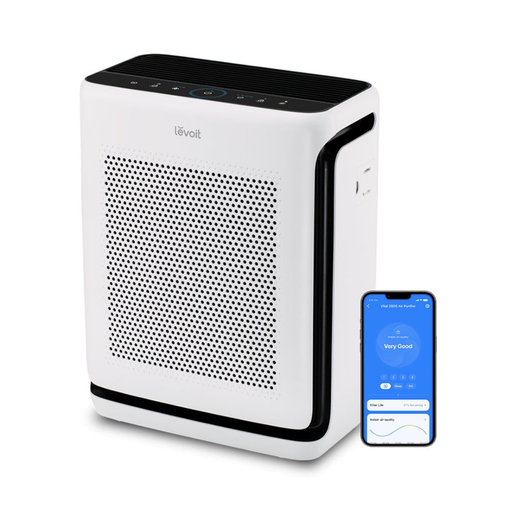
Why it suits this profile : It’s designed for households that want to automate the purifier and monitor air quality through an app or compatible voice assistant.
Its stated CADR of 425 m³/h is matched with several coverage areas, depending on the number of air changes per hour, rather than one figure without context.
Air quality sensor, auto mode, VeSync app, voice control and a stated noise level of 23 to 54 dB.
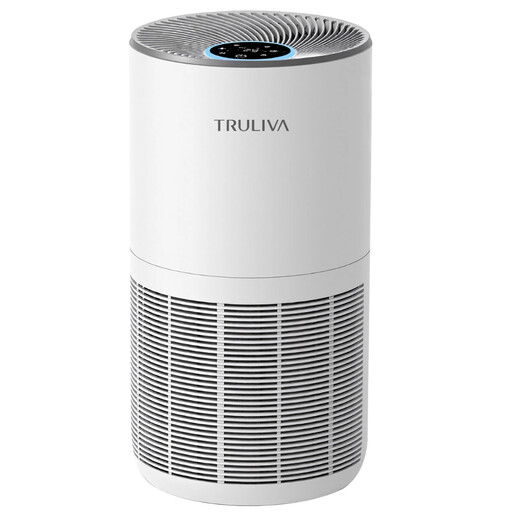
Why it suits this profile : Its stated airflow makes it a good fit for anyone looking for strong air circulation in a living room, shared living space or communal area.
The product listing gives a coverage range of 32 to 55 m², a CADR of 450 m³/h and a stated maximum noise level of 66 dB : these figures help you weigh up power against noise.
Three-stage filtration, PM2.5 display, 360-degree airflow, 24-hour timer and child lock, according to the product description.
We’ve put together a complete range, updated in real time, of products that meet these strict selection criteria and European safety requirements.
Place the device on a stable surface, leaving the recommended space around the air inlets and outlets. Keep it clear of curtains, furniture placed right up against it and damp areas such as bathrooms. In a bedroom, switch on night mode and turn off the indicator lights if the device has this feature.
Dust the grille regularly and keep an eye on the filter replacement indicator. Filter life varies depending on indoor pollution, whether you have pets and how many hours a day you use the purifier. A saturated filter can reduce airflow while increasing electricity consumption.
Energy use depends on the device’s power rating, the speed you select and how many hours you use it for. Auto or night mode can reduce the time spent running at full power. Check the power rating in watts and estimate the cost based on your electricity tariff.
Place it away from walls and fabrics that could obstruct airflow. Avoid putting it right next to the bed if the air blowing out feels uncomfortable. A clear position, with the inlets and outlets unobstructed, will help it run consistently.
Follow the device’s indicator and the guidance in the manual. Depending on the model, you may need to replace the filter after a few months or several years. However, heavy exposure to dust, smoke or pet hair can shorten its lifespan.