
Livraison le jour même ou le lendemain

Qualité garantie

Débloquez vos offres de bienvenue: Livraison GRATUITE | Jusqu'à -80 % | 30 jours d'essai gratuits à JoyPlus
Téléchargez l'application
Dust, pollen, smoke, cooking odours or pets: an air purifier can complement daily ventilation, provided you choose a model suited to the room and its intended use. Product pages often highlight a HEPA filter, a mobile app or extensive room coverage. However, these details are not always enough to compare devices effectively.
The selection below, prepared by the Joybuy Product Recommendation Officer, focuses primarily on the available technical data and the practical constraints of homes in France.
A coverage figure expressed in square metres does not always reflect the same usage conditions. Some manufacturers calculate capacity based on one air change per hour, while others use several air changes per hour in a smaller room. As a result, a device advertised for 100 m² may prove less suitable for a 20 m² bedroom if its clean air delivery rate remains limited.
The HEPA designation says nothing about air delivery rate, noise levels or filter lifespan. A HEPA air purifier should be assessed based on its clean air delivery rate, often indicated by the CADR, as well as the possible presence of a pre-filter and activated carbon filter.
An H13 filter can be a useful comparison criterion. It does not, however, turn the device into a medical product and can never replace adequate ventilation.
An affordable device can ultimately become expensive if its filter needs frequent replacement or is difficult to source. Check the consumable’s reference, its price at the time of purchase and the replacement procedure. Unless otherwise specified by the manufacturer, filters should generally not be washed.
The CADR, expressed in m³/h, indicates the volume of air filtered per hour under defined conditions. The larger the room, the higher the required airflow. For an initial estimate, calculate the room’s volume — floor area multiplied by ceiling height — and compare it with the advertised airflow.
For a bedroom or home office, a compact model may be more than sufficient. In an open-plan living room connected to a kitchen, it is generally better to choose a device with a higher CADR. Open doors, high ceilings and interconnected rooms also make simple coverage figures far less reliable.
Multi-stage systems do not all perform the same function:
For an air purifier for odours, the presence of activated carbon therefore deserves particular attention. In homes with pets, the pre-filter and airflow matter just as much: a HEPA filter alone is not enough to capture visible fur that settles on furniture.
A quiet air purifier intended for a bedroom should specify a noise level measured in night mode or at the minimum speed. At full power, the noise level can rise significantly. An air-quality sensor and automatic mode can adjust ventilation as needed, but also take the time to check which pollutants are detected: PM2.5, PM10 or other particles.
App-based control lets you schedule operating times, receive alerts and, in some cases, monitor air quality. However, it requires a connection to your home network and may involve creating an account. For a straightforward experience, a display and physical controls may be perfectly adequate.
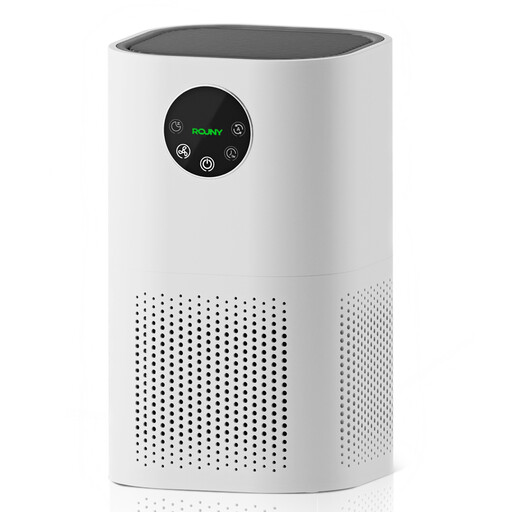
Why this model fits: its format is suitable for a bedroom, home office or small room measuring 20 to 50 m², according to the supplied specifications. It is also particularly straightforward to use.
The advertised CADR of 150 m³/h and stated maximum noise level of 52 dB provide more meaningful benchmarks than a simple room-size claim.
Advertised H13 filter, night mode down to 25 dB, four speeds and a 2-, 4- or 8-hour timer.
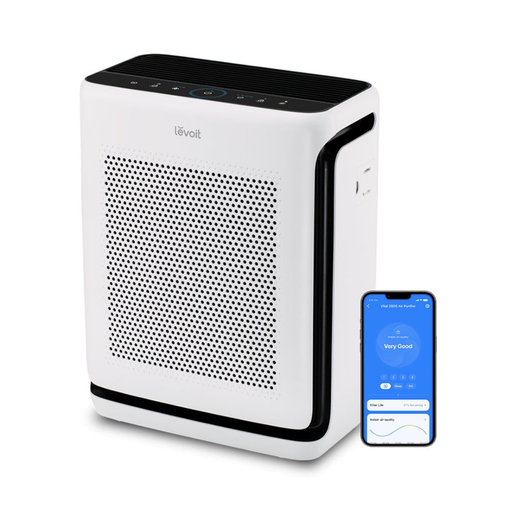
Why this model fits: it combines the VeSync app, an air-quality sensor, automatic mode and voice controls for monitoring a living room or bedroom remotely.
The advertised CADR of 425 m³/h gives a clearer indication of its intended use than the vague description “large room”.
Three-stage filtration, real-time sensor, 425 m³/h airflow and a stated noise level of 23 to 54 dB.
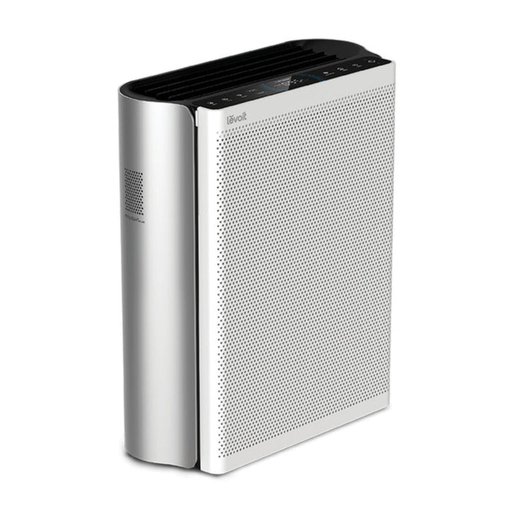
Why this model fits: its vertical design and advertised airflow are suited to large living rooms, open-plan spaces or homes where a compact device would quickly reach its limits.
The product page specifies a CADR of up to 612 m³/h, along with PM1.0, PM2.5 and PM10 sensors, making better use of automatic mode possible.
Washable pre-filter, replaceable main filter, VeSync app and adjustable airflow direction.
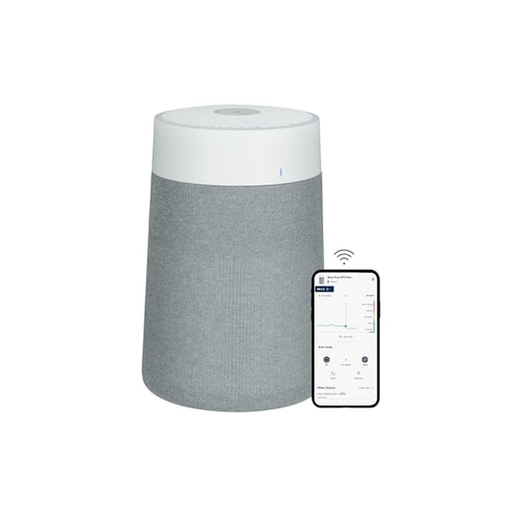
Why this model fits: its compact design and night mode are made for a bedroom, nursery or home office where noise and footprint need to be kept to a minimum.
The product page specifies a CADR of 212 m³/h for advertised coverage of up to 43 m², with noise levels varying according to the selected speed.
Advertised HEPASilent technology, minimum noise level of 19 dB, app control, scheduling and child lock.
We have brought together an up-to-date selection of products suited to different home air-purification needs, along with the technical criteria to check before buying.
Place the air purifier on a stable surface and leave approximately 30 to 50 cm of clearance around the air inlets and outlets. Keep it away from curtains, enclosed furniture and heat sources, and avoid very humid rooms such as bathrooms. If you have pets, regularly remove fur that has accumulated around the pre-filter.
Ventilate your home when outdoor conditions are suitable and never block the device’s grilles. Filter replacement frequency depends on the amount of dust, the presence of smoke and how long the device is used. An integrated alert is convenient, but it does not replace regularly checking the filter’s condition visually.
Yes. A correctly sized device can be a valuable addition to a bedroom, particularly if it offers a night mode, a dim display and a controlled noise level. However, check the noise at the speed you will actually use and place the device far enough from the bed without obstructing airflow.
Lifespan varies according to the model and the environment. Product pages often state a lifespan of six to twelve months, but heavy exposure to smoke, pets or dust can accelerate clogging. Before buying, check the filter reference and the manufacturer’s recommendations.
Activated carbon can help reduce certain odours, but its effectiveness depends on the quantity used, air circulation and the source of the problem. Charcoal bags designed for cupboards, cars or shoes work locally: they cannot replace an air purifier equipped with a fan and particle filter.