
Livraison le jour même ou le lendemain

Qualité garantie

Débloquez vos offres de bienvenue: Livraison GRATUITE | Jusqu'à -80 % | 30 jours d'essai gratuits à JoyPlus
Téléchargez l'application
Breathing healthier air at home has become a priority, whether to soothe an allergy, live with pets, or simply limit the effects of pollution. But with an overwhelming number of options on the market, choosing the right air purifier can quickly become a headache. Our mission: to help you see things more clearly by decoding marketing claims to focus only on what truly matters.
Before we unveil our top picks, let's review the 3 most common pitfalls that lead to buyer's remorse.
To avoid these pitfalls, simply focus on a few objective technical specs. Here are the three points to check systematically before you buy.
CADR, or Clean Air Delivery Rate, is the benchmark performance indicator. It measures the volume of air (in cubic metres) that a device can purify in one hour (m?/h).
To choose the right CADR, the rule is simple: the device should be able to cycle the air in your room at least 3 times per hour.
Room Area (m?) × Ceiling Height (m) × 3For example, for a 15?m? bedroom with a 2.5?m ceiling height, the calculation is: 15 × 2.5 × 3 = 112.5. You would therefore need a device with a CADR of at least 115?m?/h.
The quality of purification depends directly on the filters inside. Most effective models combine several layers:
Acoustic comfort is non-negotiable, especially for a device intended for a bedroom or office. A truly silent air purifier should offer a night mode below 30?dB, the equivalent of a whisper. Always check the noise generated at a useful speed, not just the minimum value advertised, which is often flattering, if not misleading.
To help you find the right model for your needs, we've matched typical user profiles with devices that check all the boxes for performance and ease of use.
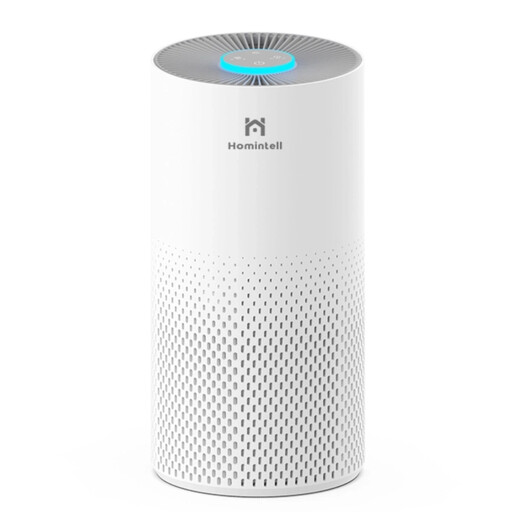
Ideal for a bedroom, office, or studio apartment. Its compact design and 150 m?/h CADR are perfectly calibrated for rooms up to 18 m?, offering an effective and discreet solution for a controlled budget.
Its CADR is clearly stated and consistent with small room sizes, avoiding the trap of an undersized unit. No unpleasant surprises—you know exactly which room it's designed for.
An effective triple-layer filtration (pre-filter, HEPA, activated carbon) in an ultra-compact form factor. Its touch controls and timer make it very easy to use day-to-day.
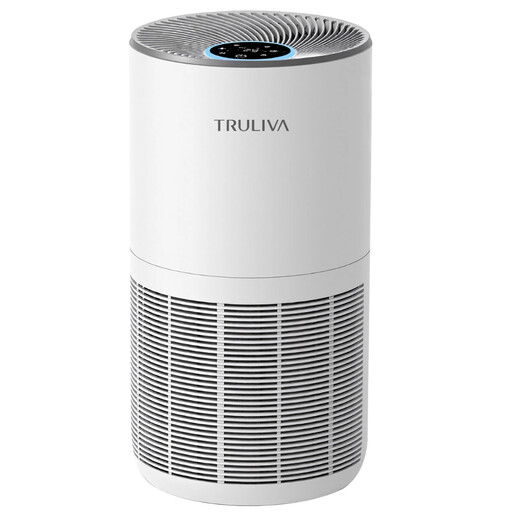
With its powerful 450 m?/h CADR, this model is built for large living rooms or open-plan spaces (up to 55 m?). Its H13 HEPA filter is a formidable ally against allergens like pet dander and pollen.
Its power ensures effective purification even in a large space, where a smaller model would struggle. Its sleep mode ensures it remains completely discreet at night.
Its 360° intake ensures even coverage of the room. The real-time PM2.5 particle display allows you to tangibly see the improvement in air quality.
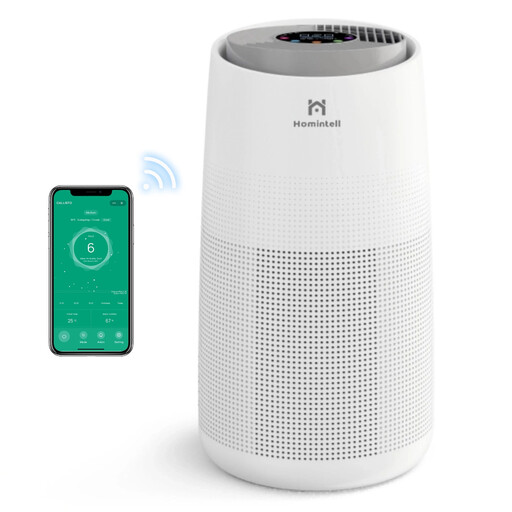
For those who love to control everything from their smartphone, this smart air purifier offers full control via Wi-Fi. Its 300 m?/h CADR is suitable for rooms up to 36 m?, and its smart features optimise daily comfort.
The auto mode adjusts the fan speed based on detected pollution, striking the perfect balance between efficiency and silence without you having to think about it. No more non-stop jet engine noise!
App control, temperature and humidity display, and an ultra-quiet sleep mode at 26 dB. It even includes bonus features like UV sterilisation and an ioniser.
We have put together a complete selection of products that meet our strict performance criteria.
A filter's lifespan depends on the model, your usage frequency, and the ambient pollution level. Generally, a replacement is recommended every 6 to 12 months. Most recent devices include an indicator light that alerts you when the time comes, making maintenance much simpler.
For optimal results, place the device in the room where you spend the most time (living room, bedroom). Leave at least 30 to 50 cm of free space around it to ensure proper air circulation. Above all, avoid tucking it into a corner or behind furniture.
The noise depends on the fan speed. For nighttime use, a silent air purifier with a "night" or "sleep" mode under 30?dB is essential. Higher speeds are naturally more audible, but they are designed for a quick, powerful burst of purification, for example, after cooking or during a pollen peak.