
Livraison le jour même ou le lendemain

Qualité garantie

Débloquez vos offres de bienvenue: Livraison GRATUITE | Jusqu'à -80 % | 30 jours d'essai gratuits à JoyPlus
Téléchargez l'application
Dust, pollen, cooking smoke, lingering odours and pet hair can quickly make indoor air less pleasant day to day. An air purifier can help filter certain airborne particles, but not every model meets the same needs. Room size, airflow, noise levels and filter costs often matter more than the promises displayed on the packaging.
A coverage area of 100 or 130 m² may correspond to just one air change per hour. That does not necessarily mean the appliance is suitable for a large room that is occupied all the time. To compare two models, look at the CADR, expressed in m³/h, as well as the recommended number of air changes.
An air purifier that claims to cover a large area but has modest airflow may have to run for long periods at high power. For a bedroom, home office or medium-sized living room, a correctly sized appliance will often be more suitable than an oversized model.
Commercial descriptions can cover very different levels of filtration. Check for an H13 HEPA filter, a pre-filter and, if you want to reduce odours, a layer of activated carbon. The pre-filter captures hair, pet hair and visible dust, while the fine filter deals with smaller particles.
The claim ‘up to 99.97%’ should be understood as a performance level stated under the specific conditions given in the manufacturer’s product details, rather than as a guarantee of identical results in every home. It does not remove the need to ventilate, clean regularly or eliminate the source of pollution.
A saturated filter gradually reduces airflow and can increase electricity consumption. Before ordering, check whether replacement filters are available, how much they cost and how often they should typically be changed. Depending on the model, this may range from a few months to several years, depending on usage and air quality.
The stated noise level in night mode does not necessarily match that of the maximum speed. An ultra-quiet air purifier intended for a bedroom should therefore be assessed using both figures: minimum and maximum noise levels.
CADR indicates the volume of air filtered per hour. For practical guidance, the product details for this selection include:
For an air purifier for a large room, prioritise high airflow and check the coverage area associated with the number of air changes. An open door, open-plan kitchen or high ceiling may also make a more powerful model the better choice.
For dust, pollen, smoke and pet dander, look for a system combining:
An air purifier for pets should also be easy to dust, as pet hair can quickly clog the pre-filter. Claims relating to allergens, viruses or gaseous compounds should be considered in light of the information provided by the manufacturer. No appliance replaces medical care or advice from a healthcare professional.
An air purifier with an air quality sensor can automatically adjust its speed as particle concentrations change. A light indicator makes it easy to spot a variation, but it does not necessarily measure every pollutant present in a home.
Connecting to an app can be useful for scheduling operating times, monitoring a particle indicator or receiving an alert when the filter needs replacing. It is worthwhile if you are looking for a smart air purifier, but remains entirely optional for basic use.
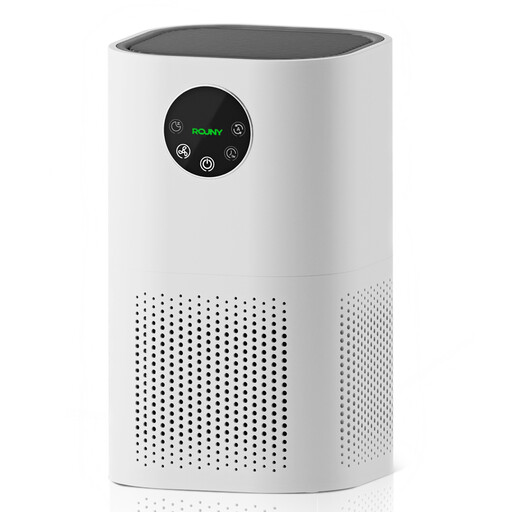
Why this choice suits this type of user : With a stated CADR of 150 m³/h, four speed settings and a three-colour indicator, this model is easy to use in a bedroom, home office or medium-sized room.
The product details specify the airflow, coverage range and noise level in night mode, rather than making a general promise.
Stated H13 filter, night mode down to 25 dB and a 2-, 4- or 8-hour timer.

Why this choice suits this type of user : This model is designed for large spaces, with a stated CADR of over 700 m³/h, a dedicated app and automatic mode.
The product details distinguish between airflow, stated coverage and the recommended filter replacement interval.
Laser sensor, app control, voice control and stated HEPASilent filtration.
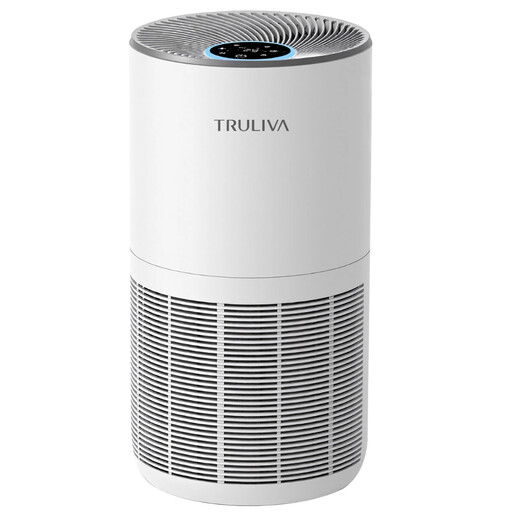
Why this choice suits this type of user : With a stated CADR of 450 m³/h, a 360° air intake and a combined filter, it is suitable for rooms of 32 to 55 m² according to the product details.
The stated coverage area is linked to a precise airflow figure, rather than a simple promise to purify the whole home.
Three-stage filtration, PM2.5 display, 24-hour timer and child lock.
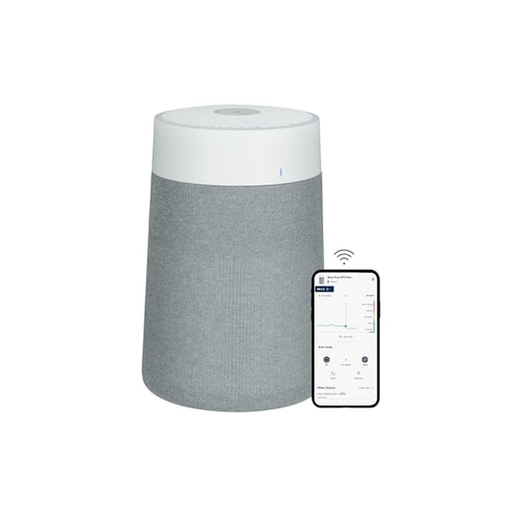
Why this choice suits this type of user : Its stated CADR of 212 m³/h, coverage of 43 m² and stated noise level from 19 dB make it an appealing option for people who are sensitive to noise.
The product details clearly distinguish the quietest mode from the maximum speed, stated at up to 48 dB.
Stated night mode, app, scheduling and child lock.
We have compiled a complete, real-time updated list of products that fully meet these strict selection criteria and European safety regulations.
Place the air purifier on a stable surface, leaving enough space around the air inlets and outlets. Keep it away from curtains, furniture pushed up against the appliance and damp areas such as the bathroom. In a bedroom, night mode can be used while you sleep, provided the airflow is appropriate for the size of the room.
Before using the appliance for the first time, remove the filter packaging. Then unplug the appliance before moving it, cleaning it or replacing the filter. Vacuum or dust the pre-filter when recommended, but do not wash a composite filter if the instructions advise against it. Running costs mainly depend on electrical power consumption, operating time and the price of consumables.
Not necessarily. Running it for extended periods at low speed can be convenient in a bedroom or living room, but scheduling may be enough for some uses. Automatic mode can adjust the airflow when the appliance has a compatible sensor. Remember to ventilate your home when outdoor conditions allow.
Its lifespan varies depending on the model, how often it is used and the amount of dust, smoke or pet hair in the room. The product details consulted often state a lifespan of six to nine months, while some filters claim to last longer. Follow the replacement indicator and the manufacturer’s instructions.
A filter with activated carbon can help reduce certain odours, while a HEPA filter primarily targets airborne particles. The result depends on the source, ventilation and the appliance’s airflow. When dealing with smoke or persistent odours, eliminating the source and ventilating the room remain essential.