
Livraison le jour même ou le lendemain

Qualité garantie

Débloquez vos offres de bienvenue: Livraison GRATUITE | Jusqu'à -80 % | 30 jours d'essai gratuits à JoyPlus
Téléchargez l'application
Dust, pollen, cooking fumes, lingering odours and pet hair can quickly make indoor air less pleasant, especially in a bedroom, home office or poorly ventilated living room. An air purifier can help reduce certain airborne particles, provided you choose a device suited to the room and maintain it correctly.
Product listings are often packed with promises that can be difficult to compare. Here are the main pitfalls to avoid before placing your order.
A maximum floor area is only meaningful when accompanied by an airflow rate and a number of air changes per hour. A device advertised as suitable for large rooms may certainly operate there, but the air will be refreshed more slowly. For a 15 to 20 m² bedroom, a compact model may be sufficient. In an open-plan living area, it is generally better to look for a high CADR and efficient air circulation.
The presence of a HEPA filter does not tell you everything about how the device is designed. A well-designed system will often combine a pre-filter to trap hair and dust, a high-efficiency filter for fine particles, and a layer of activated carbon intended to reduce certain odours and gaseous compounds.
The term H13 HEPA filter can be a useful indicator, but it does not by itself guarantee identical performance from one model to another. Also check the airflow rate, the price of replacement filters and the conditions under which the efficiency rates were measured.
The filter should be replaced according to usage, indoor pollution levels and the manufacturer’s recommendations. Some models refer to a few months, while others promise a longer lifespan. In practice, everything depends on the environment. Before buying, check the price of a compatible filter and make sure it is readily available.
CADR, or clean air delivery rate, is expressed in m³/h. The higher it is, the more quickly the purifier can treat a given volume of air. To compare two devices, consider their CADR in relation to the volume of your room rather than relying solely on the maximum floor area highlighted by the manufacturer.
As a general guide, a model rated at 150 m³/h will be more suited to a small room or prolonged operation. A device rated at 425 or 550 m³/h will be more suitable for a living room or intensive use. Furniture layout, ceiling height and whether doors are left open or closed will also affect the results.
An air purifier with an activated carbon filter can help reduce certain household odours, particularly cooking smells, stale tobacco smoke and pet odours. However, the amount of carbon used and the filter design matter far more than simply seeing the word ‘carbon’ in the technical specifications.
For dust, pollen, pet dander and fine particles, choose a multi-layer system that is clearly described. Figures such as ‘99.97%’ should be considered alongside the testing protocol, the size of the particles concerned and the source of the information. This is a performance claim made in the product listing, not a medical guarantee.
In a bedroom, it is best to choose a quiet air purifier with a sleep mode that can reduce fan speed and indicator brightness. Pay attention to the stated noise levels: a figure measured at the lowest speed does not reflect the noise produced at full power.
A smart air purifier that can be controlled via Wi-Fi or an app can simplify scheduling, air quality monitoring and filter replacement reminders. However, this feature requires a connection to your home network and the installation of a dedicated app.
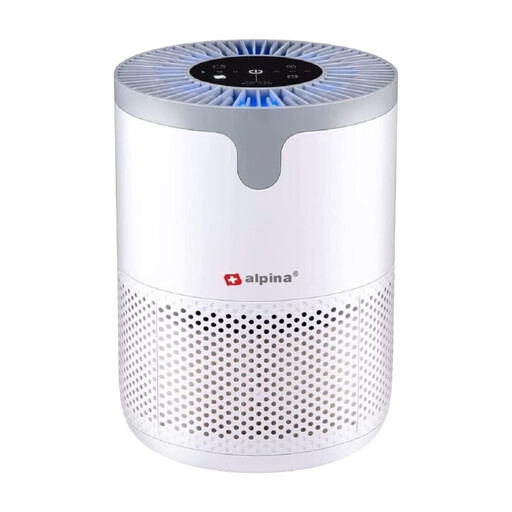
Why this choice suits this profile : Its compact design and 60 m³/h airflow rate make it suitable for small rooms of 5 to 10 m², such as a bedroom or home office.
The stated coverage is limited and clearly indicated, helping you avoid choosing it by mistake for a large living room.
H13 HEPA filter indicated, timer, sleep mode and three speeds.
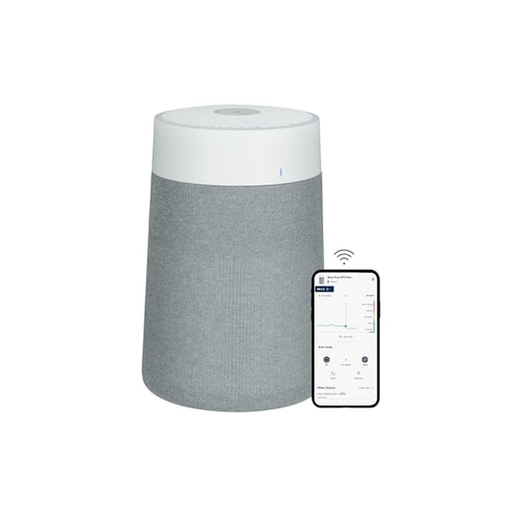
Why this choice suits this profile : Compact and easy to place, it combines a mobile app with a sleep mode – a practical pairing for a bedroom or home-working space.
The 212 m³/h CADR and stated coverage of 43 m² provide more concrete benchmarks than a simple general promise.
Stated noise level of 19 to 48 dB, app control and child lock.

Why this choice suits this profile : With an airflow rate of more than 700 m³/h and connected features, it is designed for large living spaces.
The stated capacity is supported by a measurable CADR and coverage guidance linked to the rate of air renewal.
Automatic air quality monitoring, app, voice control and sleep mode.
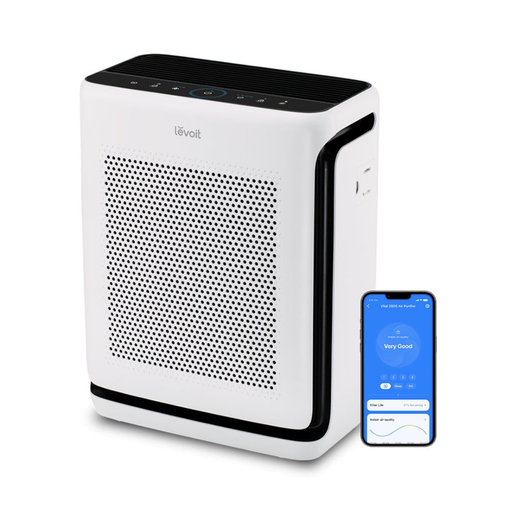
Why this choice suits this profile : Its stated CADR of 425 m³/h, air quality sensor and app make it an appealing choice for homes with pets or frequently used rooms.
The sensor adjusts the speed automatically, while the app displays air quality and reminds you when the filter needs maintaining.
Three-stage filtration, voice control, automatic mode and a stated noise level of 23 to 54 dB.
We have brought together a complete selection, updated in real time, of products that meet these demanding criteria and European safety standards.
It can help reduce certain airborne particles in an enclosed room, particularly dust and pollen. Choose a model with a clearly stated noise level in sleep mode and leave sufficient space around the grilles.
It depends on the model, how long it is used and the quality of the indoor air. Product listings often recommend replacing the filter every six to eight months, while some devices state a longer lifespan. If the device has one, rely on the indicator light or app, while also following the manufacturer’s recommendations.
The cost depends mainly on the electrical power, the number of hours of use and the price of replacement filters. A 20 to 60 W device may use less electricity than a more powerful model, but the total cost should also include filter replacements and periods of operation at high speed.