
Livraison le jour même ou le lendemain

Qualité garantie

Débloquez vos offres de bienvenue: Livraison GRATUITE | Jusqu'à -80 % | 30 jours d'essai gratuits à JoyPlus
Téléchargez l'application
Breathing healthier air at home has become a priority for many families. Between outdoor pollution, seasonal pollen, and indoor allergens, the air purifier is proving to be a valuable ally. But be warned: faced with a jungle of offers and marketing promises, it's easy to get lost and make the wrong choice.
As a product expert at Joybuy, my mission is to help you read between the lines of spec sheets to identify the criteria that truly make a difference. This guide is designed to arm you against marketing traps and help you choose a device that is perfectly suited to your needs.
The marketing for air purifiers is often misleading. Certain features, highlighted as selling points, are not always a guarantee of effectiveness. Here are the three most common mistakes to avoid.
To make an informed choice, you need to rely on objective data. Here are the three technical indicators that don't lie.
The CADR (Clean Air Delivery Rate) is the number one performance metric. Expressed in cubic metres per hour (m?/h), it measures the volume of air the device can process in one hour. To be effective, a purifier must be able to circulate the entire volume of air in the room at least three times per hour.
A good purifier combines several filtration stages for comprehensive air treatment:
An air purifier is meant to run for hours on end, sometimes all night. Its noise level is therefore not just a detail: it's a crucial comfort criterion, especially for a bedroom.
Rather than an endless catalogue, here is our selection of models that check all the right boxes, each meeting a specific need and validated against the objective criteria we've just defined.
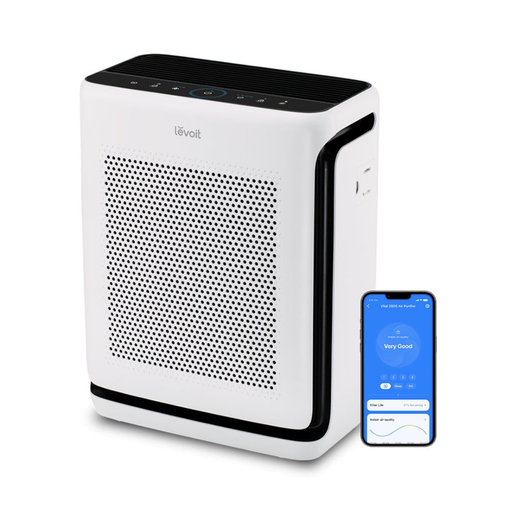
Why it stands out: Perfect for large living areas (living rooms, open-plan spaces), this model combines a powerful CADR (425 m?/h) with smart features. Its auto mode adjusts fan speed based on real-time air quality, making it ideal for "set-it-and-forget-it" family use.
Its high CADR is clearly stated and consistent with its promise for large areas, avoiding the undersizing trap. It features a 3-stage HEPA filtration system, with no misleading marketing jargon.
This is a true smart air purifier, controllable via the VeSync app and compatible with voice assistants. Its particle sensor continuously optimises the performance-to-energy consumption ratio.
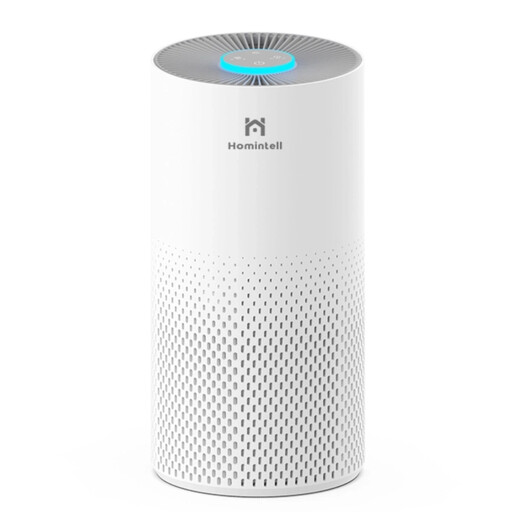
Why it stands out: With a CADR of 150 m?/h, it's perfectly sized for a bedroom or office up to 18 m?. Its compact design and essential features (timer, 3 speeds) make it a smart and affordable choice for purifying a specific room.
It advertises a realistic CADR and coverage area, without overselling its capabilities. Its triple-layer filtration effectively combines a HEPA filter and activated carbon for complete treatment.
Its ultra-quiet sleep mode is a real plus for undisturbed sleep. The seven-colour ambient light is a nice little bonus for a bedroom.
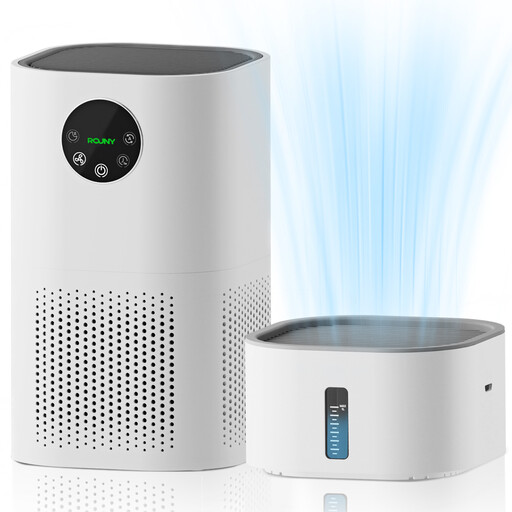
Why it stands out: This air purifier with humidifier kills two birds with one stone: it cleans the air while combating ambient dryness, which often causes respiratory discomfort in winter. An ideal 2-in-1 solution for people with sensitive throats or for a child's room.
It includes a True HEPA H13 filter, a guarantee of high-performance filtration. Its 150 m?/h CADR is advertised for rooms up to 20 m?, a consistent and trustworthy figure.
Its 2-in-1 function is obviously its main asset. The sleep mode at ≤ 25 dB makes it particularly silent for nighttime use, and its air quality sensor with a visual colour code lets you check its effectiveness at a glance.
We have curated a complete selection of products that meet our performance criteria and current safety standards.
The lifespan of an air purifier filter varies depending on the model and usage. On average, a HEPA and activated carbon filter should be replaced every 6 to 12 months. Fortunately, most modern devices include an indicator light to alert you. As for the pre-filter, if it's washable, cleaning it every 2 to 4 weeks is sufficient.
For optimal air circulation, place your device in an open area, leaving at least 30 to 50 cm of free space around it. Above all, do not wedge it in a corner, behind a sofa, or behind curtains. In a bedroom, the ideal placement is a few metres from the bed.
Yes, and it's one of their greatest strengths. A HEPA air purifier is incredibly effective at reducing the concentration of indoor pollen. By trapping these airborne particles, it helps to significantly reduce allergy symptoms (sneezing, itchy eyes, runny nose) during seasonal peaks. For best results, let it run continuously with the windows securely closed.