
Livraison le jour même ou le lendemain

Qualité garantie

Débloquez vos offres de bienvenue: Livraison GRATUITE | Jusqu'à -80 % | 30 jours d'essai gratuits à JoyPlus
Téléchargez l'application
Dust, pollen, cooking fumes, lingering odours or pet hair: an air purifier can complement the daily ventilation of your home. However, you need to be able to compare appliances on a like-for-like basis. A small bedroom, an open-plan living room connected to the kitchen or a home with several pets will all have different requirements.
Here are the key criteria to consider before buying, along with a selection of models suited to different uses in France.
The maximum floor area highlighted by a manufacturer does not necessarily indicate how quickly the appliance renews the air in a room. The most useful criterion is the clean air delivery rate, or CADR, expressed in m³/h. Also check the conditions under which the stated floor area was calculated.
A model advertised as suitable for a large room but with a limited airflow rate may need to run continuously without renewing the air as effectively as a more powerful appliance. If the room opens onto a kitchen, hallway or another part of the home, allow some headroom rather than choosing a model that only just matches the stated floor area.
Claims such as “99.97%” should be viewed with some caution. They generally refer to a particular particle size and specific test conditions, detailed in the product information. On their own, they do not tell you how quickly the air will be purified in your home.
A HEPA air purifier primarily targets fine particles: dust, pollen, smoke or pet dander. To tackle odours, also look for a sufficiently thick or generously sized activated carbon filter. A simple pre-filter cannot perform the same function.
The filter is a consumable item. Its lifespan depends on how often the appliance is used, the amount of dust in the home and whether pets are present. Before placing your order, check the reference number and price of the replacement filter, as well as the recommended replacement interval.
An appliance that is inexpensive to buy may ultimately cost more if its filters are scarce or difficult to find. Conversely, some models have a washable pre-filter or claim that their filter can be used for several years. In all cases, the manufacturer’s replacement indicator remains the best guide.
The CADR provides a more practical indication of the volume of air treated. As a guide, the appliances in this selection offer airflow rates ranging from 117 to more than 700 m³/h, depending on the model. A compact appliance may be suitable for a bedroom or home office, while a higher airflow rate is better suited to a spacious living room.
When choosing an air purifier for a large room, also look at the stated number of air changes. Some product descriptions distinguish between the floor area covered with one air change per hour and the area covered with several air changes. These figures therefore do not represent the same level of performance.
For an air purifier for allergies or an anti-pollen appliance, prioritise a combination comprising:
Results vary depending on maintenance, the filter seal and the selected speed. An air purifier does not replace cleaning, suitable ventilation or removing the source of an odour or smoke.
In a bedroom, a quiet air purifier should state its noise level in decibels, ideally for several speeds. Night mode generally reduces ventilation and switches off the indicator lights, but it may also reduce the airflow rate.
A connected air purifier lets you monitor air quality in an app, schedule operating periods or use a compatible voice assistant. These features are useful for automating the appliance, but they remain optional for straightforward everyday use.
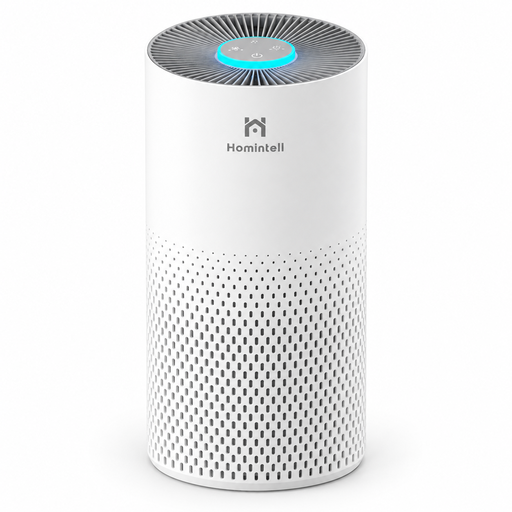
Why this choice suits this profile : its compact design and touch controls fit easily into a bedroom, home office or small room. The product information specifies a three-in-one filter combining a pre-filter, H11 HEPA filter and activated carbon.
The product information specifies the appliance’s capacity for small spaces and offers 2-, 4- or 8-hour timers. This helps you avoid choosing an undersized model without any airflow guidance.
Stated CADR of 150 m³/h, three speeds, timer and a filter combining HEPA and activated carbon.

Why this choice suits this profile : with a stated airflow rate of more than 700 m³/h, it is designed for large living spaces. The app, compatible voice control and automatic mode meet the needs of a connected home.
The product information clearly distinguishes between airflow rate, covered floor area and filtration system. It also recommends replacing the filter approximately every 6 to 9 months.
Coverage of up to 154 m² under certain conditions, laser sensors, automatic mode and app control.
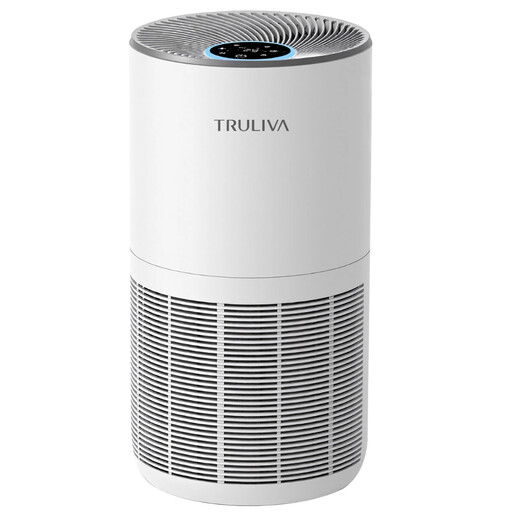
Why this choice suits this profile : its stated CADR of 450 m³/h and 360° air intake may suit a living room, a home with pets or a property exposed to smoke and cooking odours.
The product information states the CADR, covered floor-area range, maximum noise level and composition of the H13 filter with activated carbon.
CADR of 450 m³/h, three-stage filtration, PM2.5 particle display, sleep mode, 24-hour timer and child lock.
We have put together a complete, real-time updated list of products that meet these demanding selection criteria and European safety standards.
Install the air purifier on a stable surface, leaving enough space around the air inlets and outlets. Avoid placing it behind furniture, near a heat source or in a damp room. In a bedroom, position it away from the bed so that the airflow is not directed straight at the occupant.
Always remove the filter packaging before switching the appliance on for the first time. Clean the casing with a suitable cloth and unplug the appliance before carrying out any work. Unless the instructions state otherwise, the HEPA filter and activated carbon filter must not be washed or reused.
Not necessarily. Automatic mode adjusts the fan speed according to the sensor readings, while a timer lets you restrict operation to certain times. If there is pollen or smoke, however, you can leave it running for longer, depending on the situation and the recommendations in the instructions.
This varies depending on the model and the environment. The product information consulted often mentions a lifespan of 6 to 9 months, although some appliances claim a longer service life. Monitor the replacement indicator, any drop in airflow or visible dust build-up. Before buying, always check the reference number of the compatible filter.
It all depends on the appliance’s electrical power and how long it is used. To estimate the cost, multiply its power in kW by the number of hours it operates, then by your electricity tariff. Also remember to factor in the cost of replacement filters: for a small appliance used at a low speed, this expense can eventually cost more than the electricity consumed.