
Livraison le jour même ou le lendemain

Qualité garantie

Débloquez vos offres de bienvenue: Livraison GRATUITE | Jusqu'à -80 % | 30 jours d'essai gratuits à JoyPlus
Téléchargez l'application
Breathing healthier air at home has become a priority for many families. Between pollution spikes, seasonal allergies, and pet dander, the air purifier stands out as a go-to solution. However, faced with an overwhelming number of options and often opaque marketing, it's easy to get lost and end up with buyer's remorse.
As a product expert at Joybuy, my mission is to bring you clarity. Let's forget the technical jargon and focus on the essentials to make an informed choice. Here's a breakdown of the pitfalls to avoid and the criteria that truly matter to find the perfect device for your needs.
The market is full of promises, but not all are created equal. An unsuitable device is, at best, ineffective and, at worst, a waste of money.
To avoid these pitfalls, focus on three key points that determine an air purifier's real performance.
The CADR, expressed in cubic metres per hour (m?/h), is the number one criterion. It indicates the device's capacity to circulate and purify the air in a room. To keep it simple, here's a rule of thumb:
Always check the manufacturer's recommended coverage area, which is directly linked to the CADR.
A high-performance filtration system almost always relies on three stages:
An air purifier is designed to run for hours, even continuously. Its quiet operation is therefore crucial, especially if it's intended for a bedroom.
To move from theory to practice, here are a few models that check all the right boxes, each meeting a specific need.
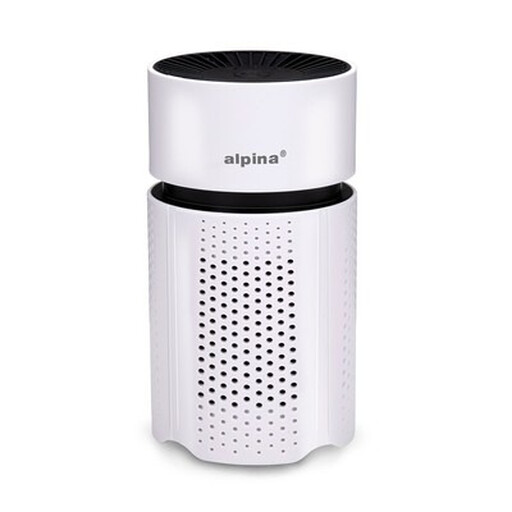
Why this model? Perfect for individual use, this compact model is designed for a desk, a bedside table, or even a car. Its USB power supply makes it very versatile, and its low energy consumption allows for continuous use without running up the electricity bill.
This purifier doesn't claim to clean an entire living room. Its purpose is clear and focused on personal space, thus avoiding the trap of being undersized and leading to disappointed expectations.
Ultra-portable and very energy-efficient. Quiet operation suitable for a work or rest environment.
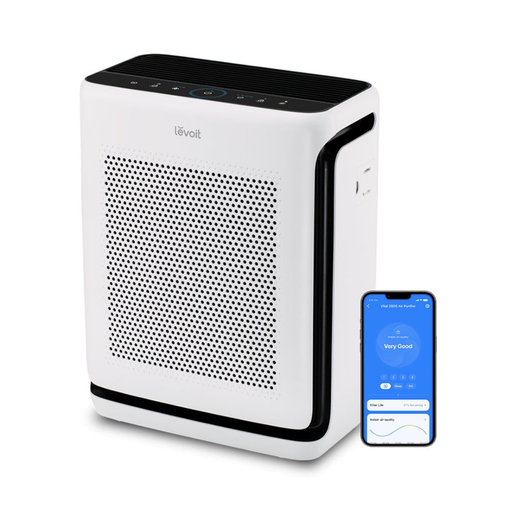
Why this model? This is an excellent all-rounder for living spaces. Its H13 HEPA filter is a benchmark for capturing allergens (pollen, dust mites, pet dander). Its 425 m?/h CADR is suitable for rooms up to 36 m?, and its auto mode adjusts the fan speed based on detected pollution, optimising daily efficiency and energy consumption.
It doesn't bet everything on gadgets. Its connected features (app, voice) are a plus, but its performance relies on an H13 HEPA filter and an air quality sensor that make its auto mode truly intelligent.
High-performance H13 HEPA filtration. Smart auto mode based on a particle sensor. Very low noise level in night mode (23 dB).
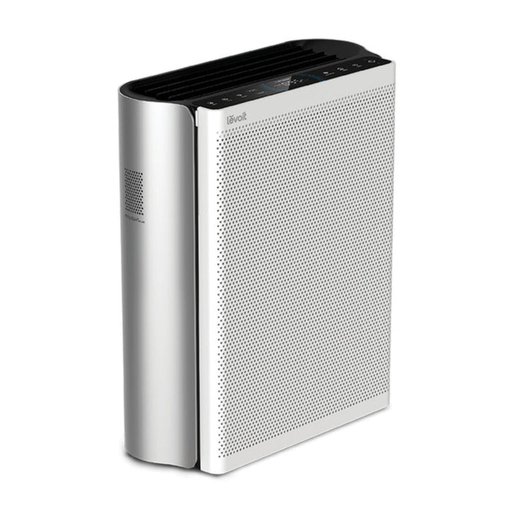
Why this model? Designed for performance in large volumes, this model boasts an impressive 612 m?/h CADR, capable of handling areas up to 130 m?. Its advanced sensors (PM1.0, PM2.5, PM10) provide a precise air analysis and a highly responsive auto mode, all manageable remotely via the VeSync app.
It clarifies the maintenance issue by offering a washable pre-filter that protects and extends the life of the main filter. This optimises costs without falling for the false promise of a "fully washable" filter.
Very powerful CADR for large, open spaces. Multiple particle sensors for a precise auto mode. Washable pre-filter for simplified maintenance.
Explore our complete selection of air purifiers, all tested and approved by our editors based on these same strict criteria.
Where should I place an air purifier for maximum efficiency? Ideally, in the room where you spend the most time (bedroom, living room). Leave a space of at least 30 to 50 cm (12-20 inches) around the device to avoid obstructing airflow. Above all, avoid sticking it in a corner or behind furniture.
How long should an air purifier run? To maintain good air quality, continuous operation at a low speed (or in auto mode) is the best solution. For occasional use, let it run for at least 1 to 2 hours with the windows closed to ensure a complete air purification cycle for the room.
What is the annual maintenance cost of an air purifier? The main cost comes from replacing the filters (HEPA and activated carbon). The frequency varies from 6 to 12 months depending on the model and your usage. Expect to pay between $20 and over $60 for a set of replacement filters. This is a point you should absolutely check before confirming your purchase.