
Livraison le jour même ou le lendemain

Qualité garantie

Débloquez vos offres de bienvenue: Livraison GRATUITE | Jusqu'à -80 % | 30 jours d'essai gratuits à JoyPlus
Téléchargez l'application
Breathing healthier air at home has become a priority, whether to soothe allergies, neutralise pet odours, or protect against pollution. But with a plethora of options on the market, choosing the right air purifier can be a real headache. Marketing often highlights gimmicks over essentials, leading to frequent disappointment.
Our mission? To help you see things more clearly. Forget the marketing jargon: we're going to break down the criteria that truly matter and identify the pitfalls to avoid, so you can make an informed choice that fits your needs and your budget.
Before you even start comparing models, it's crucial to be aware of the common misconceptions that can render a device ineffective, or even costly to run.
To avoid these traps, focus on three performance indicators that don't lie. This is the foundation of a truly effective air purifier.
The CADR, or Clean Air Delivery Rate, is the most important indicator. Expressed in cubic metres per hour (m?/h), it measures the volume of air the device can genuinely process in one hour. For optimal efficiency, especially for an anti-allergy air purifier, the goal is to exchange the room's air 3 to 5 times per hour.
A simple rule of thumb to estimate the CADR you need: CADR (m?/h) ≈ Floor Area (m?) × Ceiling Height (m) × 4 (air changes/h)
For example, for a 15?m? bedroom with a 2.5?m ceiling, a CADR of around 150?m?/h (15 × 2.5 × 4) is the bare minimum. For a large-room air purifier in a 40?m? space, you'll need to aim for a CADR of at least 400?m?/h.
A high-performance filtration system almost always relies on three stages:
An air purifier is designed to run for hours, or even continuously. Its quietness is therefore not an option, especially in a bedroom. A quiet air purifier worthy of the name should offer a night mode below 30 decibels (dB), which is equivalent to a whisper. Always check this value, which corresponds to the lowest fan speed.
Here are a few models that cater to different user profiles, based on the objective criteria we've just discussed.
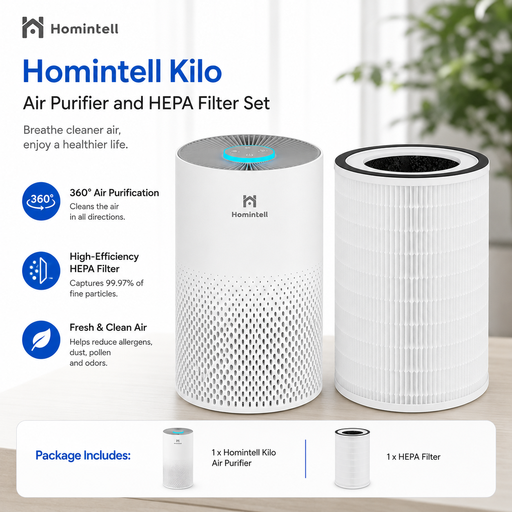
Its profile: Perfect for a bedroom, office, or studio up to 18 m?. Compact and simple with its touch controls, it gets straight to the point: efficiently purifying the air without taking up much space.
This model advertises a CADR of 150 m?/h, an honest value that's perfectly calibrated for the recommended area. No fanciful promises of purifying a living room: it avoids the trap of over-the-top marketing.
Its three-layer filtration (pre-filter, HEPA, activated carbon) is comprehensive. The 7-colour night light function is a nice bonus for a child's room.
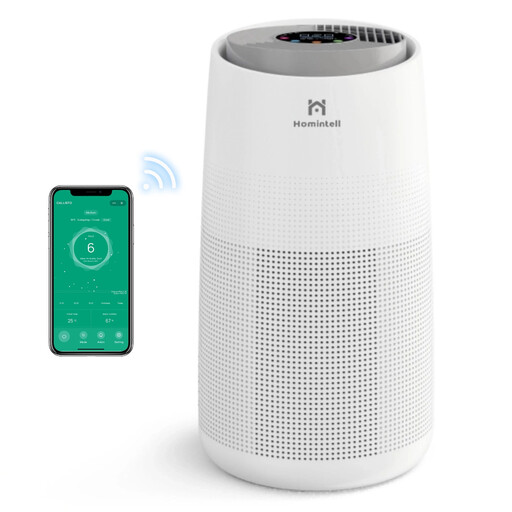
Its profile: Capable of handling rooms up to 36 m?, it's perfect for a living room or master bedroom. As a smart air purifier, it can be controlled remotely via an app, which is ideal for starting the purification process before you get home.
It focuses on genuinely useful features (auto mode, air quality sensor) that optimise the work of the HEPA H13 filter, without being cluttered with gimmicks. The filter change reminder (every 2200 hours) helps you manage your maintenance budget.
Its excellent performance-to-price ratio for the coverage area. The sleep mode at 26 dB ensures quiet nights.
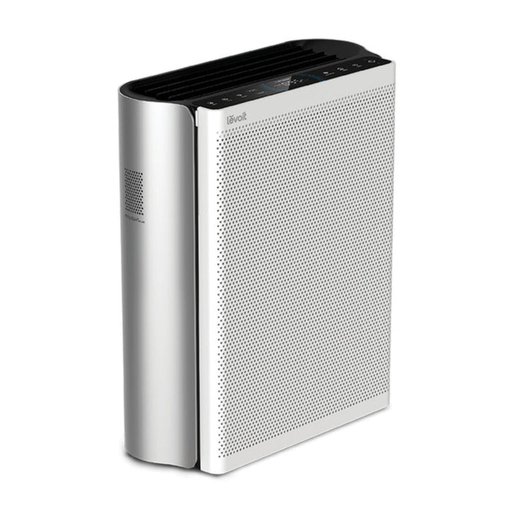
Its profile: Built for very large spaces like lofts, open-plan living rooms, or open-concept offices. Its sheer power ensures ultra-fast air exchange, a decisive factor for those with severe allergies.
Its CADR of 612 m?/h isn't just an empty promise; it's a raw figure that justifies its performance. Its washable pre-filter is an excellent feature for reducing the long-term cost of consumables.
Exceptional processing power, coupled with highly accurate particle sensors (PM1.0, PM2.5, PM10) for automatic and intelligent fan speed adjustment.
Discover our full selection of purifiers that meet our criteria for performance and common sense.
A HEPA filter generally lasts between 6 and 12 months, depending on your air pollution levels and how often you use it. No need to worry—most recent models, like those from Homintell, include an indicator light or an in-app notification to let you know when the time has come. Impossible to forget!
Absolutely. A HEPA air purifier is incredibly effective at capturing airborne pollen. For maximum relief during allergy season, choose a device with a CADR appropriate for your room and let it run continuously (with windows closed) to maintain an environment that is nearly free of allergens.
That's the whole point! To ensure healthy air while you sleep, opt for a quiet air purifier with a "Night" or "Sleep" mode. This reduces the fan speed to its absolute minimum (usually under 30?dB) and turns off indicator lights so it won't disturb your sleep.