
Livraison le jour même ou le lendemain

Qualité garantie

Débloquez vos offres de bienvenue: Livraison GRATUITE | Jusqu'à -80 % | 30 jours d'essai gratuits à JoyPlus
Téléchargez l'application
Pollen, pollution, pet dander, dust... The air in our homes is rarely as pure as we imagine. To restore a healthier environment, the air purifier stands out as an effective solution for trapping these unwanted particles. But with an overwhelming number of options on the market, how do you navigate them all? This guide is here to help you decode the spec sheets and identify the essential criteria to find the device that will perfectly meet your needs.
To make the right choice, you first need to understand what separates a good model from a gimmick. Here are the three key points to check before any purchase.
The CADR (Clean Air Delivery Rate) is the number one performance indicator. Expressed in cubic metres per hour (m?/h), it measures the volume of air the device can process. For optimal efficiency, choose an air purifier with a CADR that matches the size of your room. As a general rule, a device is considered effective if it can circulate the air in the room at least two to three times per hour. A model designed for a 20?m? bedroom will logically struggle in a 50?m? living room, which is why it's crucial to check this data, especially if you're looking for an air purifier for a large room.
The filtration system is the heart of the machine. The highest-performing devices combine several stages:
A high-performance device must combine these three stages to ensure complete purification.
Since an air purifier is meant to run for hours on end, its noise level is a non-negotiable comfort factor, especially if it's intended for a bedroom or office. A truly silent air purifier will offer a "night" or "sleep" mode under 30 decibels (dB), the equivalent of a whisper.
Smart features and other options, meanwhile, can make your daily life easier. A Wi-Fi-connected air purifier allows for remote control via an app, scheduling operating times, or even checking the air quality in real time.
Based on these criteria, our editorial team has selected three models that stand out, each meeting a specific need.
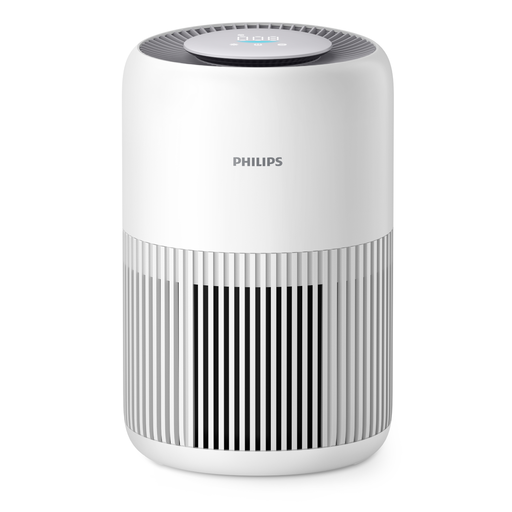
Why it stands out: This Philips model is an excellent balance of performance and discretion. Its dual-layer filtration system (HEPA and activated carbon) is designed to eliminate up to 99.97% of fine particles. Its AeraSense technology continuously analyses the air and automatically adjusts the fan speed, optimising both purification and energy consumption.
Key features:
Who is it for? Ideal for those seeking an effective and nearly inaudible solution for a bedroom, office, or medium-sized living room, and who prioritise ease of use over all-out connectivity.
See details for the Philips AC0920/10
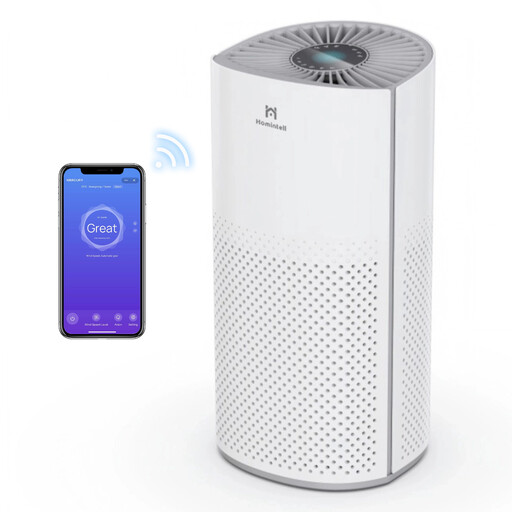
Why it stands out: The Homintell goes all-in on smart features. In addition to its 3-in-1 filtration (pre-filter, H13 HEPA, activated carbon), it includes a UV sterilisation lamp and an ioniser for even more thorough purification. Its real strength lies in its mobile app, which allows you to control everything remotely.
Key features:
Who is it for? Perfect for tech enthusiasts who want total control over their device and precise data on air quality, for rooms up to 25?m?.
Discover the Homintell purifier
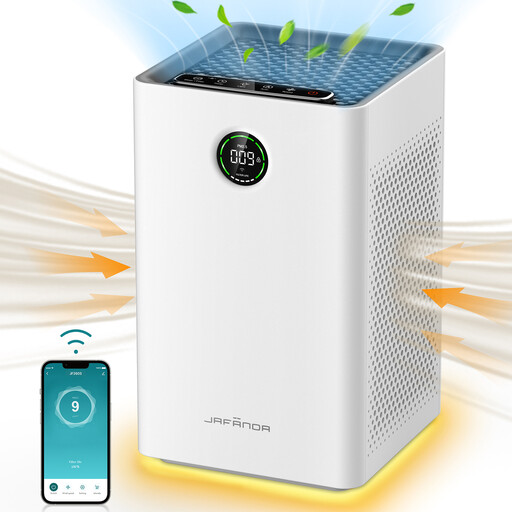
Why it stands out: The Jaf?nda JF260S is built for large volumes. With a 260?m?/h CADR, it can effectively treat rooms up to 110?m? (ensuring one complete air change per hour). It combines this power with modern connectivity, as it is compatible with Alexa and Google Assistant voice assistants.
Key features:
Who is it for? Recommended for those with large spaces to purify who appreciate integrating their devices into a smart home ecosystem.
Explore the Jaf?nda JF260S model
Our selection is just a starting point. The market is filled with models to suit every budget, room size, and requirement. If you haven't found the perfect purifier yet, feel free to browse our full catalogue to discover a much wider range.
An air purifier filters the air to capture suspended particles (dust, pollen, etc.) and gases using its filters (HEPA, activated carbon). Its goal is to clean the air by physically removing pollutants. In contrast, an air freshener (spray, diffuser, etc.) merely masks bad odours by releasing a fragrance, but it does not clean the air.
The lifespan of a filter depends on the model, frequency of use, and the ambient pollution level. Generally, a HEPA filter and an activated carbon filter should be replaced every 6 to 12 months. Most modern devices are equipped with an indicator light that alerts you when it's time.
Absolutely. An air purifier with a true HEPA filter is one of the best allies for allergy sufferers. By capturing pollen particles floating in your home, it drastically reduces exposure to allergens and thus relieves symptoms during seasonal peaks.