
Livraison le jour même ou le lendemain

Qualité garantie

Débloquez vos offres de bienvenue: Livraison GRATUITE | Jusqu'à -80 % | 30 jours d'essai gratuits à JoyPlus
Téléchargez l'application
Breathing clean air at home has become a top priority for many families. Between pollen, outdoor pollution that creeps indoors, pet dander, and the notorious volatile organic compounds (VOCs), our homes are often far more polluted than we imagine. In light of this, the air purifier stands out as an excellent solution. But the market is flooded with marketing claims that are often vague, or even misleading.
As the Head of Product Recommendations at Joybuy, my mission is to help you cut through the noise. Here's a breakdown of the 3 common pitfalls to avoid and the criteria that truly matter for making the right choice.
Many product sheets proudly display a coverage area in square metres (e.g., "for 50 m?") without specifying the conditions. On its own, this data is meaningless. In practice, a device might "cover" 50 m? by circulating air at a snail's pace, rendering it completely ineffective against a pollen surge or cooking odours. The real performance indicator is the CADR.
Beware of vague terminology. A "HEPA-type" or "HEPA-like" filter is not a certified HEPA filter. The European standard EN 1822-1 is very clear and precisely defines filtration classes. A true HEPA (High-Efficiency Particulate Air) filter guarantees the capture of an extremely high percentage of fine particles. For home use, especially against allergens, an H13 grade filter is an excellent benchmark: it is designed to capture at least 99.95% of particles as small as 0.3 microns.
An air purifier is a long-term investment. The initial purchase price can sometimes hide an exorbitant running cost if the air purifier filter is expensive and hard to find. An essential step before you buy: check the price and availability of consumables. A filter change indicator is a real bonus, so you don't have to keep track of it yourself.
To avoid these pitfalls, simply focus on objective data. Here are the three technical indicators that make all the difference.
The CADR, or Clean Air Delivery Rate, is the most reliable measure of a purifier's effectiveness. Expressed in cubic metres per hour (m?/h), it indicates the volume of air the device can genuinely clean in one hour.
How to interpret it? For effective purification (meaning 3 to 5 air changes per hour), the CADR must be suited to your room's volume. A simple rule of thumb is to multiply your room's volume (width x length x height) by 3 to get a suitable CADR.
bedroom (approx. 37.5 m?), a CADR of at least 112 m?/h is recommended.A good HEPA air purifier generally combines three stages of filtration for maximum efficiency:
pet dander. Often washable, it protects and extends the life of the subsequent filters.allergy air purifier.An air purifier is meant to run continuously, especially at night. Its noise level is therefore a non-negotiable comfort criterion. For a bedroom, a quiet air purifier isn't an option—it's a must.
Here are a few options that meet specific needs, based on the objective criteria we've just defined.
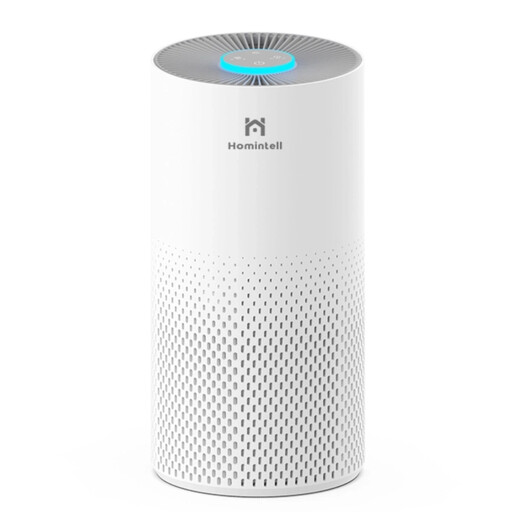
Why we chose it: With its compact design and a CADR of 130 m?/h, it's perfectly sized for a bedroom, office, or studio up to 16 m?. It's a simple and effective solution to get started without breaking the bank.
It clearly states a CADR of 130 m?/h for a consistent area (≤ 16 m?), avoiding over-performance marketing. Its 3-in-1 filter properly integrates a HEPA layer and activated carbon.
Its touch control panel is very intuitive. We also appreciate the timer (2/4/8h) and the 7-colour ambient night light, a nice little extra for a child's room.
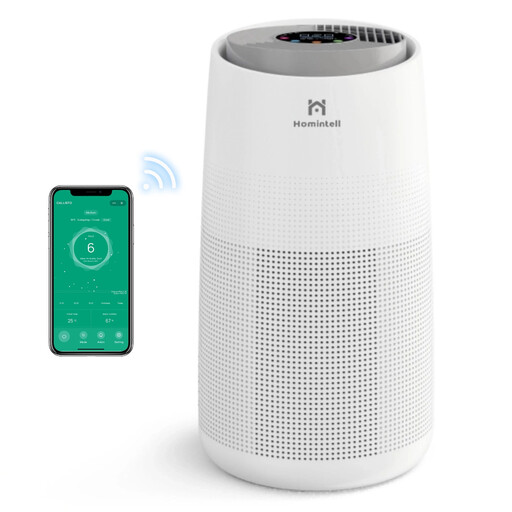
Why we chose it: Perfect for living spaces up to 36 m?. Its HEPA H13 filter is a true shield against allergens. Its smart features (Wi-Fi control, air quality sensor) and child lock make it a valuable daily ally.
It's upfront about its H13 grade HEPA filter, with none of the "HEPA-type" ambiguity. The filter change alert (after 2200 hours) lets you anticipate maintenance with peace of mind.
The winning trio: a high CADR (300 m?/h), top-tier H13 filtration, and genuinely useful smart features (Wi-Fi, air quality sensor, Temp/Humidity display).
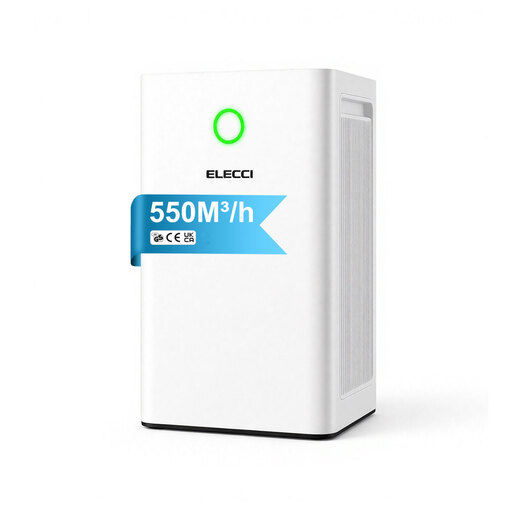
Why we chose it: Built for large areas, this powerhouse boasts a CADR of 550 m?/h, enough to purify the air in a large living room, a loft, or an open-plan office. It's the choice for raw performance for those who want zero compromises.
Here, performance is measured in CADR, not imaginary m?. Its washable pre-filter is a smart solution to extend the time between main filter replacements and control long-term costs.
Impressive power (CADR 550 m?/h) paired with an ultra-quiet night mode at just 24 dB. The ideal compromise between performance and peace.
We have selected a full range of products for you that meet our performance and safety criteria.
In theory, the lifespan of an air purifier filter ranges from 6 to 12 months. In practice, it all depends on your usage, the pollution level, and the model. Fortunately, most recent devices include an indicator light that alerts you at the right time, which greatly simplifies maintenance.
Not at all. A good quiet air purifier is specifically designed to offer an excellent compromise. Its "night" or "sleep" mode lowers the fan speed to achieve a nearly inaudible noise level (often ≤ 25 dB), while maintaining background filtration as you sleep. The higher, noisier speeds are simply there for intensive, short-term purification when noise isn't an issue.
To get the best performance, place your air purifier on a flat, clear surface (floor, coffee table...). Be sure to leave at least 20 to 30 cm of space all around it to avoid obstructing air circulation. Above all, don't box it into a corner or hide it behind a large piece of furniture. In a bedroom, positioning it a few metres from the bed is ideal to enjoy healthier air all night long.