
Livraison le jour même ou le lendemain

Qualité garantie

Débloquez vos offres de bienvenue: Livraison GRATUITE | Jusqu'à -80 % | 30 jours d'essai gratuits à JoyPlus
Téléchargez l'application
Breathing healthier air at home has become a priority, whether it's to soothe allergies, reduce the spread of pet dander, or simply get rid of everyday pollutants. With so many options on the market, it's easy to feel overwhelmed. As a product expert at Joybuy, I'm here to help you see things more clearly and decode the spec sheets to make a truly informed choice.
Before you dive in, let's review the common pitfalls to avoid so you don't regret your purchase.
To avoid these traps, rely on objective data. Here are the three performance indicators to examine closely.
CADR, or Clean Air Delivery Rate, is the number one performance indicator. Expressed in cubic metres per hour (m?/h), it measures the volume of air the device can actually clean in one hour. To choose the right CADR, the rule is simple:
Example: For a 15 m? bedroom with a 2.5 m ceiling (totaling 37.5 m?), a CADR of around 112 m?/h (37.5 × 3) is a good starting point. An air purifier for large spaces will logically require a much higher CADR.
The quality of filtration depends on the filters. The most effective and recommended combination is as follows:
An air purifier is meant to run continuously, especially at night. A noisy model, therefore, quickly becomes unbearable. For a quiet air purifier intended for a bedroom, silence is non-negotiable. Aim for a device with a night mode that operates below the 30 dB mark. For comparison, a whisper is around 20-25 dB.
To move from theory to practice, here are some concrete models that perfectly illustrate these criteria for different needs and budgets.
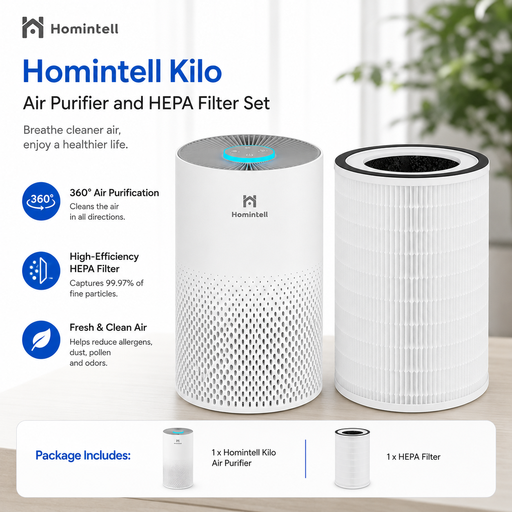
Why it's a great fit: Ideal for a first-time purchase or for a bedroom or office. Its compact footprint and 150 m?/h CADR are perfectly suited for rooms up to 18 m?, ensuring targeted purification without taking up too much space.
It avoids the trap of being undersized for small rooms. Its triple-layer filtration (pre-filter, H11 HEPA, activated carbon) guarantees effective capture of particles and odours, a far cry from gimmicks with questionable utility.
Its simple touch control panel and timer (2/4/8h) make it very easy to use daily. The replacement filter is included, a real bonus for managing your budget right from the start.
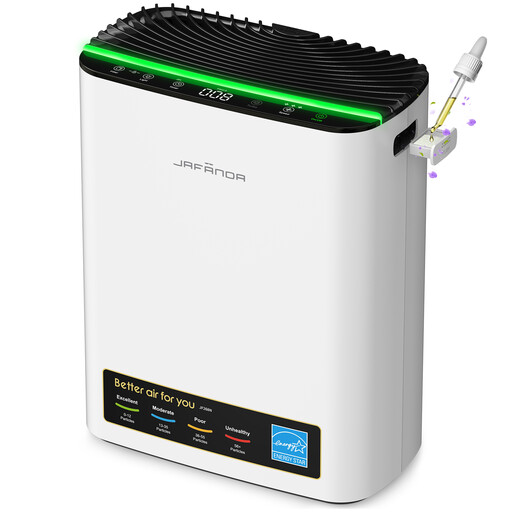
Why it's a great fit: With its 268 m?/h CADR and high-performance HEPA filtration, it's built for living areas where allergens (pet dander, pollen) accumulate. Its auto mode adjusts fan speed based on real-time air quality measurements.
It tackles the allergen problem head-on with its 3-in-1 filter. The PM2.5 particle sensor displays its effectiveness in real time, giving you confidence that the device is actually working.
Its sleep mode, nearly inaudible at 20 dB, allows it to run all night without disturbing sleep. The colour-coded air quality indicator is as simple as it is effective.
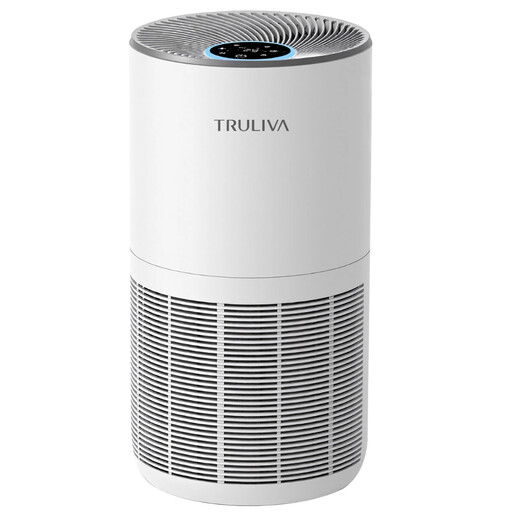
Why it's a great fit: Designed for large volumes, its robust 450 m?/h CADR ensures fast and effective purification of living spaces up to 55 m?. Its 360° air intake optimises circulation to treat the entire volume.
This is the perfect answer to undersizing. Its power is calibrated for large spaces, and its H13 HEPA filter guarantees top-tier filtration. The filter replacement indicator prevents unpleasant surprises and forgetfulness.
Its screen displays the real-time PM2.5 concentration, allowing you to tangibly see the air quality improve. The 24-hour timer and child lock are welcome daily features.
Our complete selection features products that meet these performance criteria and European safety standards.
The lifespan of an air purifier filter depends on the model, your usage frequency, and the ambient pollution level. Generally, manufacturers recommend a replacement every 6 to 12 months. Many devices, like the TRULIVA KJ450, include an indicator light to alert you: a real plus for hassle-free maintenance. The smart move before buying: check the availability and price of replacement filters, like the TRULIVA replacement filter for KJ450.
For optimal performance, place your purifier in the room where you spend the most time (bedroom, living room). Make sure to leave at least 20-30 cm of space around the unit to avoid obstructing the air inlets and outlets. Avoid tucking it into a corner or behind furniture.
It all depends on the fan speed. A quiet air purifier worthy of the name will offer a very discreet "night" or "sleep" mode, typically between 20 and 30 dB. At full power, it will inevitably be more audible, but this mode is only used occasionally for rapid purification. The ultimate tip for a bedroom: always check the decibel (dB) value of the slowest mode before you decide.