
Livraison le jour même ou le lendemain

Qualité garantie

Débloquez vos offres de bienvenue: Livraison GRATUITE | Jusqu'à -80 % | 30 jours d'essai gratuits à JoyPlus
Téléchargez l'application
Indoor air quality has become a key priority, especially in cities, for families, pet owners, and allergy sufferers. Between pollen, dust, pet dander, and invisible pollutants, breathing healthy air at home can sometimes be a challenge.
Our mission with this guide? To help you make a clear and informed decision. As the Head of Product Recommendations at Joybuy, I'm sharing my expert advice for choosing the air purifier that truly fits your needs—all without the unnecessary marketing jargon.
Before diving into our selection, let's review the key criteria that will guide your choice.
The CADR (Clean Air Delivery Rate) is the number one performance indicator. Expressed in cubic metres per hour (m?/h), it quantifies the volume of air the device can purify. For optimal efficiency, the CADR must be proportionate to the room's size. Rule of thumb: make sure the device can circulate the entire volume of air in the room at least two to three times per hour.
The filtration technology is the heart of the system. The HEPA (High Efficiency Particulate Air) filter is the gold standard for capturing the finest particles.
To combat odours (from cooking, tobacco) and volatile organic compounds (VOCs), a supplementary activated carbon filter is essential. This is a significant advantage, especially if you're looking for an air purifier that is effective against pet odours.
For a bedroom, silence isn't an option—it's a must. A quiet air purifier is therefore a prerequisite. Scrutinise the noise level (in decibels, dB) listed for night mode: below the 30 dB mark, the device will be virtually unnoticeable.
Some models offer a 2-in-1 design, also serving as a humidifier. This is a highly valuable feature in dry interiors, especially in winter when the heating is running at full blast.
Here are the models that caught our attention, each one tailored to a specific need.
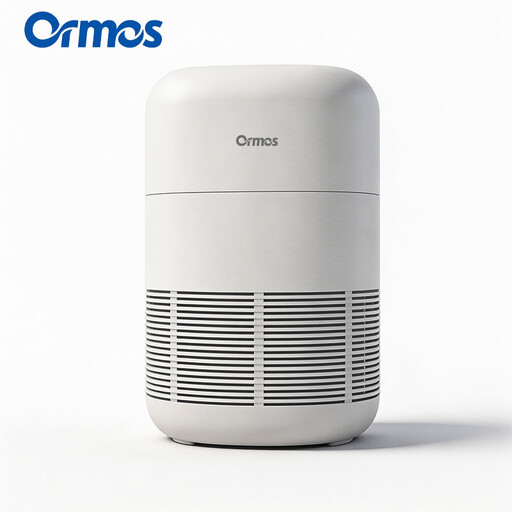
Its standout feature: Real-time display of VOC (volatile organic compounds) and PM2.5 levels. A rare function that lets you see the purification effectiveness live.
Key benefits:
Who is it for? Ideal for those who like to keep an eye on the data and want visible proof of their device's effectiveness. Perfect for a living room or an adult's bedroom.
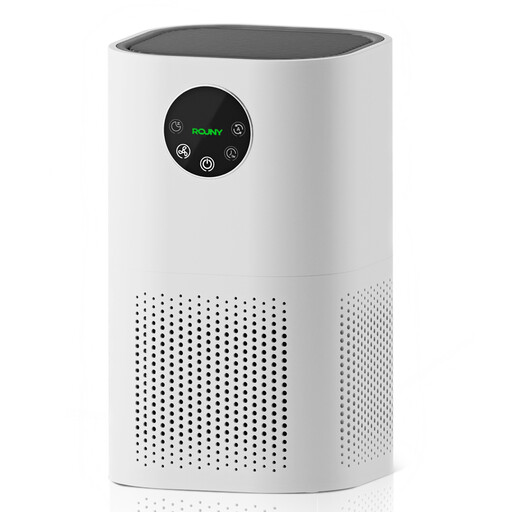
Its standout feature: Silence. With a night mode rated at just ≤25 dB and an H13 True HEPA filter, it combines absolute discretion with high-performance filtration. The perfect choice for sensitive sleepers.
Key benefits:
Who is it for? Essential for those who can't stand the slightest noise at night and are looking for an air purifier for their bedroom. Its H13 filtration also makes it an excellent choice for pet owners and allergy sufferers.
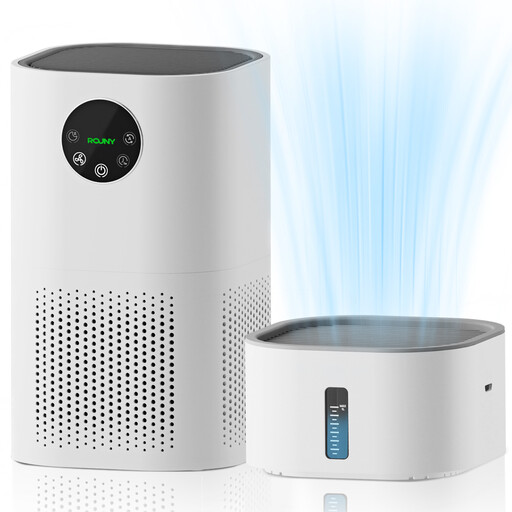
Its standout feature: The 2-in-1 design. It tackles both air pollution and ambient dryness by combining purification and humidification. Smart and effective.
Key benefits:
Who is it for? Perfect for those who live in a dry environment and want to both clean the air and improve their respiratory comfort with a single device.
This selection highlights a few key models, but the choice is vast. To explore other devices and accessories designed to improve your air quality, feel free to browse our dedicated air treatment category.
The difference comes down to the level of performance. A HEPA H12 filter captures a minimum of 99.5% of 0.3-micron particles. The more stringent HEPA H13 filter increases this to 99.97%. For those with severe allergies or respiratory sensitivities, the H13 standard offers a significant additional layer of protection.
Yes, absolutely. An air purifier equipped with a HEPA filter is specifically designed to capture airborne allergens like pollen, dust mites, and pet dander. By cleaning the air, it reduces their concentration in the room and can significantly alleviate allergy symptoms at home. Please note, it is a supplement to, not a substitute for, medical treatment.
For maximum effectiveness, it's best to let it run continuously, especially during pollution peaks or pollen season. Don't worry about your electricity bill: modern devices are designed to run 24/7. Their automatic modes adjust the fan speed based on air quality, thereby optimising energy consumption.