
Livraison le jour même ou le lendemain

Qualité garantie

Débloquez vos offres de bienvenue: Livraison GRATUITE | Jusqu'à -80 % | 30 jours d'essai gratuits à JoyPlus
Téléchargez l'application
Did you know we spend nearly 90% of our time indoors? Yet, the air we breathe inside is often far more polluted than the air outside. Between seasonal pollen, dust, pet dander, and urban pollutants that find their way into our homes, ensuring good air quality has become a major health concern for many households. In this context, the air purifier stands out as an effective solution for restoring healthy air day after day.
But with an overwhelming number of options available, how do you make the right choice? This guide is here to shed some light. We'll break down the essential criteria and marketing traps to help you find the device that truly meets your needs.
Before you begin, there are three key criteria to understand. They will determine the real-world effectiveness of your future device in your home.
The CADR (Clean Air Delivery Rate) is arguably the number one performance metric. Expressed in cubic metres per hour (m?/h), it measures the volume of air a device can effectively purify. For optimal efficiency, choose a model with a CADR that matches your room's size.
Simply put, an effective device should be able to circulate the entire volume of air in the room at least two to three times per hour. For example, for a large room of 50 m? with a 2.5 m ceiling height (which is 125 m?), a CADR of at least 250 m?/h is recommended.
The filtration system is the true heart of the device. Most high-performance models combine several stages:
An air purifier is designed to run for hours on end. A noisy model will quickly become a nuisance, especially in a bedroom. Opt for a quiet air purifier, ideally one with a night mode that doesn't exceed 30 decibels (dB).
Also, consider the long-term costs. Find out the replacement frequency and the price of the replacement filter. A washable pre-filter is a real bonus for reducing expenses and lowering the overall maintenance bill.
We've selected a few models that stand out for their performance and suitability for different uses.
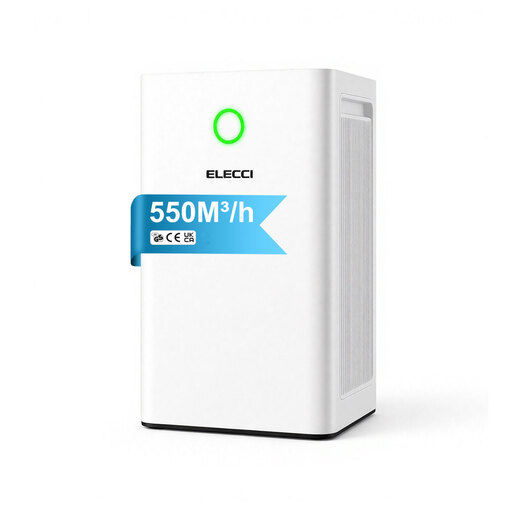
Key Selling Point: Built for large spaces. Its powerful CADR ensures rapid and effective purification of large living rooms or open-plan areas.
Key Features:
Who is it for? For those living in lofts, homes with large open spaces, or anyone looking for fast, no-compromise air purification.
See the ELECCI True HEPA product
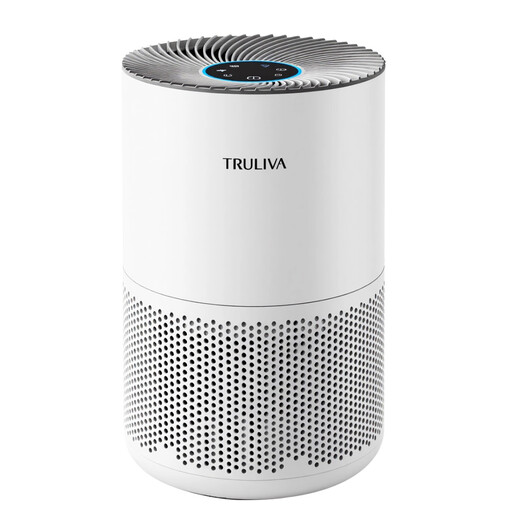
Key Selling Point: The perfect balance of performance, intelligence, and quiet operation. Its air quality sensor automatically adjusts the fan speed based on real-time needs.
Key Features:
Who is it for? The smart choice for a bedroom or office. Ideal for health-conscious families and fans of "smart" devices that manage themselves.
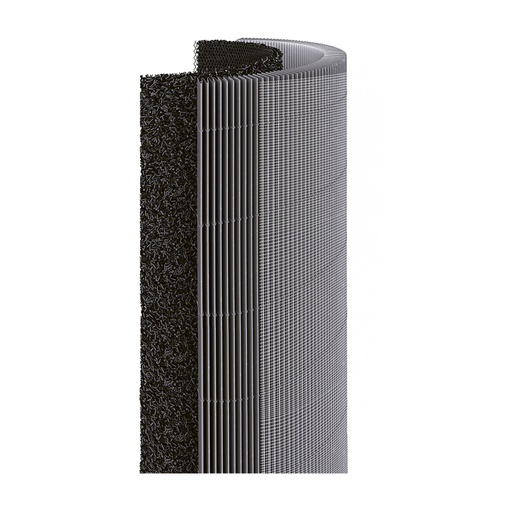
Why it's important: An air purifier is only as good as its filter. This 3-in-1 model for the Xiaomi 4 Compact/Lite ensures your device continues to perform at its peak.
Key Features:
Who is it for? Essential for all owners of the Xiaomi Smart Air Purifier 4 Compact or 4 Lite who want to maintain their device's peak efficiency.
See the Xiaomi replacement filter
If our selection doesn't check all your boxes, feel free to explore our full catalogue. There you'll find a wider range of devices to compare sizes, features, and price points.
Discover Our Full Range of High-Efficiency Particulate Air Filters
This depends on the model, your usage, and the ambient pollution level. As a general rule, a HEPA filter and an activated carbon filter should be replaced every 6 to 12 months. But don't worry: most modern devices have an indicator light that alerts you when it's time.
Yes, and it's one of its greatest strengths! A device equipped with a true HEPA filter is incredibly effective at capturing airborne allergens like pollen. By circulating the indoor air, it drastically reduces their concentration and provides relief for allergy sufferers. For best results, be sure to use it with the windows closed.
Absolutely. It's even recommended, especially if you have allergies or are sensitive to air quality. This is precisely where choosing a quiet air purifier with a night mode makes all the difference: the fan speed and indicator lights are minimized to avoid disturbing your sleep.