
Livraison le jour même ou le lendemain

Qualité garantie

Débloquez vos offres de bienvenue: Livraison GRATUITE | Jusqu'à -80 % | 30 jours d'essai gratuits à JoyPlus
Téléchargez l'application
Breathing healthier air at home has become a priority for many families. Whether it's to relieve a pollen allergy, reduce pet dander, or simply combat urban pollution, the air purifier is proving to be a valuable ally. However, faced with a market saturated with marketing promises, it's easy to get lost and make the wrong choice.
As a Product Expert at Joybuy, my role is to help you see things more clearly. Let's forget the complex jargon and superfluous features. This guide gets straight to the point, focusing on the essential criteria to help you choose a device that truly fits your needs and budget, while avoiding the most common pitfalls.
Marketing can be tricky. An appliance with an attractive entry-level price can turn out to be very expensive to maintain, while a feature-packed model isn't necessarily more effective. Here are the three mistakes to avoid.
The CADR (Clean Air Delivery Rate) is a key indicator, but it shouldn't be your only criterion. A very high CADR is often measured at the fan's maximum speed, which can be extremely noisy and energy-intensive. The real challenge is finding a device that offers a sufficient CADR for your room while remaining a silent air purifier in automatic or night mode. A device that's too noisy will eventually be turned off, rendering it completely useless.
This is the classic trap. A temptingly priced air purifier can hide high maintenance costs. Some manufacturers use proprietary filters that are expensive and sometimes hard to find after a few years. Before any purchase, check the price of the replacement filter and its estimated lifespan (usually between 6 and 12 months). A washable filter might seem economical, but its effectiveness often decreases after several washes.
A Wi-Fi smart air purifier with a mobile app sounds appealing on paper. However, if the device's automatic mode is ineffective or the air quality sensor is inaccurate, these features become mere gimmicks. What really matters is the quality of the filtration and the relevance of the automatic mode, which should adjust the speed based on actual pollution levels without you having to intervene.
To make an informed choice, focus on these three objective parameters. They determine 90% of your future device's effectiveness.
The CADR, expressed in cubic metres per hour (m?/h), measures the volume of air the device can purify. For optimal efficiency, the air in a room should be circulated 3 to 5 times per hour.
Simple Calculation to Find the Necessary CADR:Room Area (m?) × Ceiling Height (m) × 5 = Recommended CADR (in m?/h)
For a 15 m? bedroom with a 2.5 m ceiling, you would need a CADR of about 187.5 m?/h (15 × 2.5 × 5). Choosing a large-room air purifier with a 400 m?/h CADR for a 20 m? studio makes no sense; you'll be paying for power you'll only use at a low setting.
The quality of filtration is the heart of the system. A high-performance system relies on two main components:
Noise is a critical comfort factor, especially for use in a bedroom or office.
Always check the noise level indicated for the lowest speed, as this is the one you will use most often.
Rather than an exhaustive list, we've matched user profiles with products that meet the performance and common-sense criteria we've just discussed.
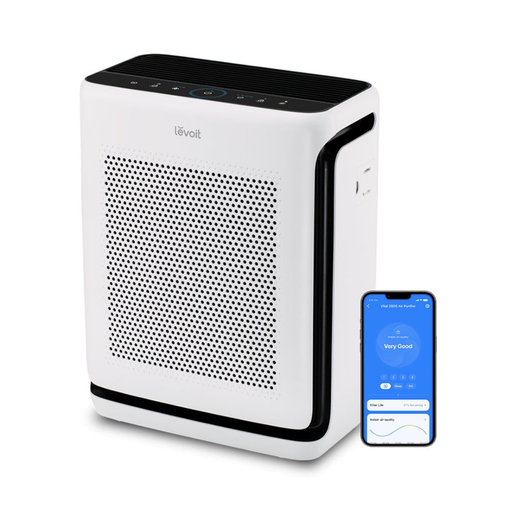
Why it's a great choice: With its high CADR of 425 m?/h, it effectively covers large living areas. Its real-time air quality sensor and responsive auto mode make it a "set it and forget it" device, perfect for a family that doesn't want to fuss with settings.
It doesn't rely solely on raw power. Its auto mode adjusts the fan speed to maintain healthy air without turning into a jet engine (starting at just 23 dB), avoiding the "unusable CADR" trap. The smart features are the icing on the cake, but the device is perfectly autonomous thanks to its accurate sensor.
3-Stage Filtration: Pre-filter, H13 HEPA filter, and activated carbon to tackle everything. Intelligent Auto Mode: True onboard intelligence that adapts to your air quality.
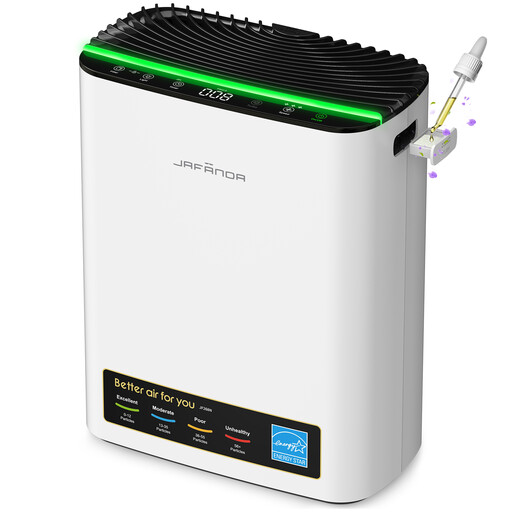
Why it's a great choice: Its main advantage is its ultra-quiet sleep mode at 20 dB, which makes it completely imperceptible at night. It's a sensible choice for a bedroom, where silence is non-negotiable for restful sleep.
It doesn't sacrifice performance for silence. Its 268 m?/h CADR is still very respectable for a medium-sized room, and its PM2.5 sensor ensures effective purification without having to run it at full blast. It's the perfect balance of efficiency and discretion.
20 dB Sleep Mode: Virtually inaudible, one of the quietest on the market. 3-in-1 HEPA Filtration: Effective against allergens and odours. Air Quality Indicator: To see your air quality at a glance.
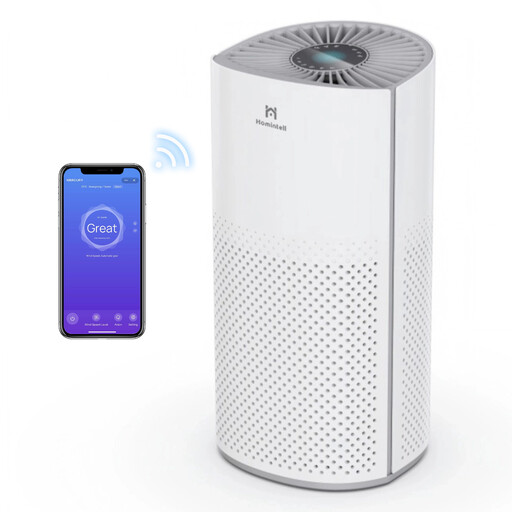
Why it's a great choice: It delivers the essentials, and does it well, for a reasonable price. Its 200 m?/h CADR is perfect for bedrooms, offices, or studios up to 25 m?. It includes key features without superfluous gadgets.
This model focuses on value for money. It avoids the expensive filter trap by using standard, affordable consumables, and it reminds you when to change them. No nasty surprises on the maintenance bill.
H13 HEPA Filter: The industry standard against allergens. Silent Sleep Mode (20 dB): Perfect for nighttime use. Filter Change Reminder: For hassle-free maintenance.
Explore our full collection of products, rigorously selected for their effectiveness and safety compliance.
Place your purifier in the room where you spend the most time (living room, bedroom). Ideally, position it in an open area, at least 30-50 cm away from walls and furniture, so air can circulate freely. Avoid tucking it into a corner or behind a sofa.
Most HEPA and activated carbon filters have a lifespan of 6 to 12 months, depending on your usage and the pollution level. Most recent models have an indicator light that alerts you when it's time to replace the filter. Failing to change it on time makes the device almost ineffective.
Yes, an air purifier equipped with a HEPA filter is incredibly effective at capturing pollen grains suspended in the indoor air. By running the device with the windows closed, especially during seasonal peaks, you can drastically reduce your exposure to allergens at home and thus relieve your symptoms.