
Livraison le jour même ou le lendemain

Qualité garantie

Débloquez vos offres de bienvenue: Livraison GRATUITE | Jusqu'à -80 % | 30 jours d'essai gratuits à JoyPlus
Téléchargez l'application
Indoor pollution, pollen allergies, pet dander... Breathing clean air at home has become a major concern. To tackle this, the air purifier is emerging as an increasingly popular solution. But with an overwhelming number of options and often-opaque technical specs, how do you find the right one? As a product expert at Joybuy, my mission is to help you cut through the noise. This guide breaks down the criteria that truly matter, so you can make an informed purchase and avoid the most common traps.
The market is flooded with models making tempting promises. But behind the marketing-speak, you'll often find ineffective devices or ones that become financial drains over time. Here are the three mistakes to avoid.
To avoid these pitfalls, you need to focus on objective data. Here are the three indicators that truly determine an air purifier's effectiveness.
The CADR (Clean Air Delivery Rate) is the most important performance indicator. Expressed in cubic metres per hour (m?/h), it measures the volume of air the device can clean in one hour.
For optimal efficiency, it's recommended that the purifier can cycle the air in the room at least 3 to 5 times per hour. The calculation is simple: CADR (m?/h) ≥ Room Area (m?) × Ceiling Height (m) × 3
For example, for a 15?m? bedroom with a 2.5?m ceiling height, the minimum required CADR would be 112.5?m?/h (15 × 2.5 × 3). A device with a CADR of 150?m?/h would therefore be a suitable choice. For stubborn pollutants like cigarette smoke or a large amount of pet dander, aim for 5 air changes per hour.
The quality of purification depends directly on the filters it uses. A high-performance system typically consists of three stages:
A quiet air purifier for the bedroom is a must-have. Check the noise level (expressed in decibels, dB) in night mode. A device operating below 30?dB is generally considered silent and will not disturb your sleep.
Other features can enhance the user experience:
To put theory into practice, here are three models that meet our performance criteria and are tailored to specific needs.
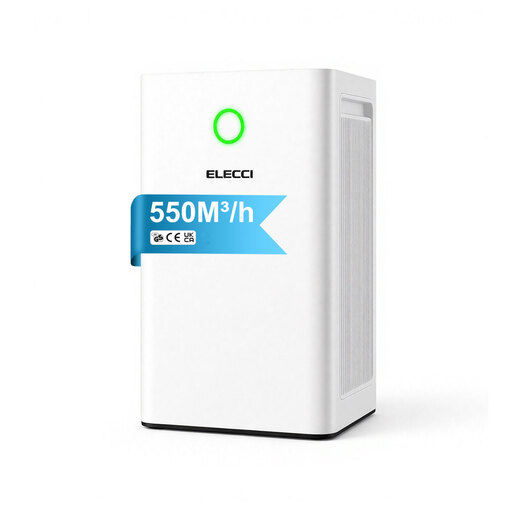
Why this model? Ideal for large living rooms, offices, or open-plan homes. Its power allows it to quickly process a large volume of air, a major advantage for families with pets or people living in dense urban areas.
With a CADR of 550 m?/h, it avoids the pitfall of being undersized by offering very wide coverage (up to 120 m?, according to the manufacturer), ensuring effective purification even in large spaces.
Its washable pre-filter captures the largest particles and helps extend the life of the HEPA filter, keeping long-term maintenance costs under control.
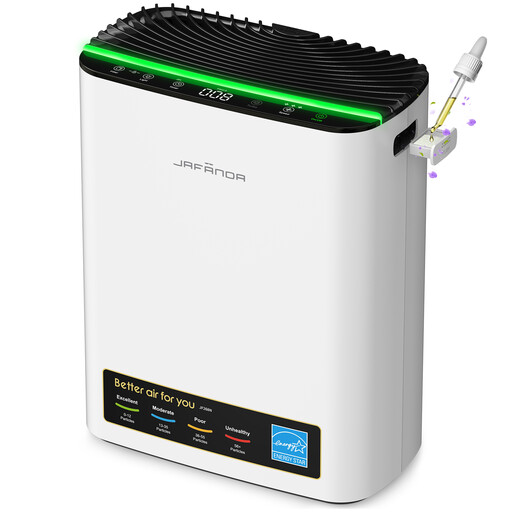
Why this model? Designed for those who prioritise quiet, especially in an adult's or child's bedroom. It combines effective filtration against nighttime allergens with nearly silent operation.
It perfectly counters the noise pitfall with an ultra-quiet sleep mode at just 20 dB—as quiet as a whisper. The device's lights can also be turned off to ensure undisturbed sleep.
The PM2.5 particle sensor and auto mode adjust purification in real-time, ensuring clean air without manual intervention, while its 268 m?/h CADR is perfectly sized for medium to large bedrooms.
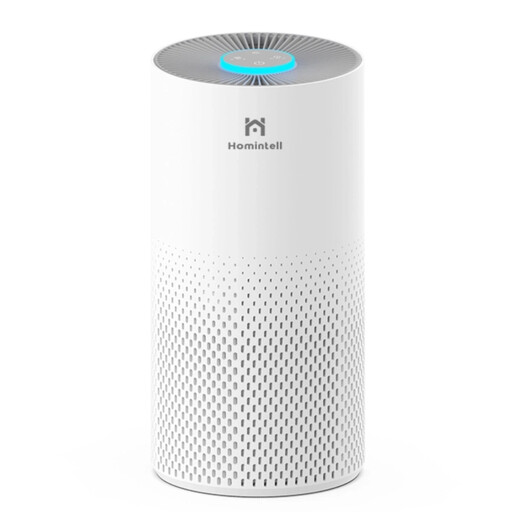
Why this model? An affordable and effective option for a first-time purchase or for purifying a small room like an office, a small bedroom, or a studio. Its compact design fits easily into any interior.
It avoids the pitfall of overspending. There's no need to pay for oversized power: its CADR of 150 m?/h is perfectly calibrated for rooms up to 18 m?, providing effective purification without wasting energy.
Its price-to-performance ratio is its best feature. It includes a triple filtration system (pre-filter, HEPA, activated carbon) and practical features (timer, 3 speeds) in a compact and affordable package.
Our full selection features products that meet our strict criteria and current safety standards.
1. How often should I change the filter on an air purifier? A filter's lifespan depends on usage and the pollution level of your environment. Generally, a HEPA and activated carbon filter should be replaced every 6 to 12 months. Many modern models have a light indicator that alerts you when it's time to change the filter.
2. Where should I place an air purifier for maximum effectiveness? Place the device in the room where you spend the most time (bedroom, living room). Make sure to leave at least 20 to 30?cm of free space around the unit to avoid obstructing the air inlets and outlets. Avoid tucking it into a corner or behind furniture.
3. Does an air purifier use a lot of electricity? Consumption is generally moderate. It depends on the motor's power and the selected fan speed. An air purifier in night mode or at low speed consumes very little (often less than 10?W). Even at full power, most home models have reasonable consumption, often equivalent to that of an LED light bulb (between 25 and 60?W).