
Livraison le jour même ou le lendemain

Qualité garantie

Débloquez vos offres de bienvenue: Livraison GRATUITE | Jusqu'à -80 % | 30 jours d'essai gratuits à JoyPlus
Téléchargez l'application
Air that is too dry in winter, condensation on the windows, laundry that takes ages to dry or lingering smells in a poorly ventilated room: an humidifier and a dehumidifier do not solve the same problem. Before comparing prices and features, start by identifying the real cause and checking the technical specifications that matter.
A 5 or 6-litre tank does not guarantee several days of use. Running time depends on the mist output, the humidity level in the room and the selected mode. Conversely, when a dehumidifier claims an extraction capacity of 16 or 20 litres per day, this figure generally applies to specific temperature and humidity conditions. These may not reflect the conditions in a typical French home.
Noise varies depending on the mode being used. A quiet humidifier advertised at 25 or 28 dB may be more noticeable at maximum power. With dehumidifiers, the compressor and fan can also produce different sounds throughout the cycle. So check the noise level in night mode, as well as the power and technology used.
A poorly cleaned humidifier can accumulate limescale and deposits in its tank. A dehumidifier with a clogged filter, meanwhile, circulates air less effectively and requires more maintenance. For extended use, a dehumidifier with a drainage hose means you do not have to empty the tank regularly, provided there is a drain positioned lower than the hose outlet.
For a bedroom, home office or medium-sized room, compare the mist output in ml/h and the stated coverage area. An ultrasonic humidifier generally produces a cool, discreet mist, but water quality can encourage mineral deposits on furniture. An evaporative model, such as the Philips NanoCloud, releases humidity without visible mist, according to the specifications provided by the manufacturer.
The humidity control function prevents the appliance from running continuously. Some models allow you to set a target, such as 40%, 50% or 60%. An independent hygrometer can be useful for comparing readings, as the sensor’s position has a direct effect on the measurement.
For a child’s bedroom or a baby humidifier, prioritise:
The humidifier with essential oils label also calls for a little caution. Never pour oils directly into the tank unless the manufacturer explicitly says that you can. Only use the compartment or holder provided for this purpose, and keep oils out of children’s reach.
For a home dehumidifier, extraction capacity and room size are the first two criteria to consider. An appliance rated at 10 l/day may be suitable for a room of around 16 m², depending on the conditions specified by the manufacturer. For a cellar, utility room or particularly damp home, a 16 to 20 l/day model offers more capacity, although it cannot replace suitable ventilation.
Also check:
An anti-mould dehumidifier does not resolve the cause of water ingress or poor insulation. It can reduce ambient humidity, but a leak, inadequate ventilation or a thermal bridge requires a specific solution. Models using R290 refrigerant must be installed in accordance with the instructions, away from heat sources and flammable products.

Why it suits this profile : its compact format makes it a good choice for a first installation in a bathroom, bedroom or small utility room. According to the product specifications, it features an LED display and humidity settings from 35% to 85%.
Its 2.1 L tank includes a full-tank alert, and the appliance accepts a hose for continuous drainage.
Extraction of up to 10 L/day, automatic defrosting, castors and a stated noise level from 44.5 dB.
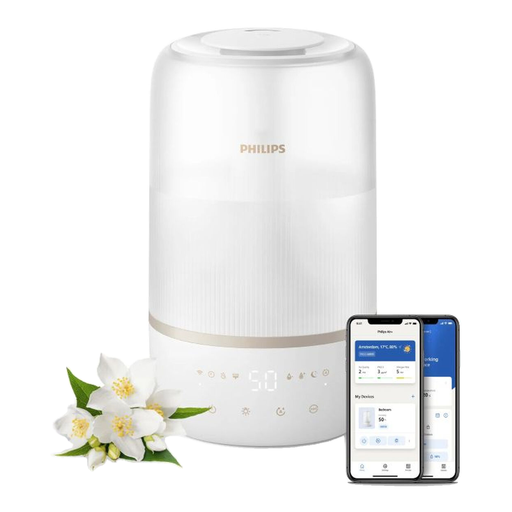
Why it suits this profile : it combines a humidity sensor, the Air+ app and scheduling. It is designed to control a bedroom humidifier from your phone.
Automatic adjustment from 40% to 70% prevents the appliance from running constantly once the target humidity level has been reached.
3 L tank, 275 ml/h output, sleep mode rated at 34 dB(A) and a timer adjustable from 1 to 12 hours.
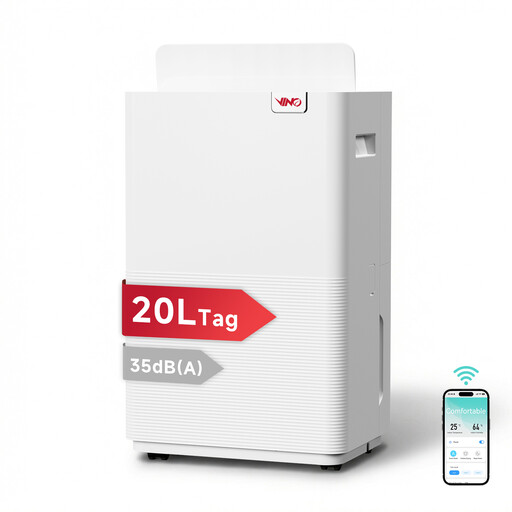
Why it suits this profile : with extraction of up to 20 L/day and coverage of up to 40 m², it is suitable for a utility room, basement or home exposed to high humidity levels.
Hose drainage reduces the need to empty the tank manually, while the laundry-drying mode is particularly useful during rainy periods.
App control, 24-hour scheduling, sleep mode rated at 35 dB and a 2.5 L tank.
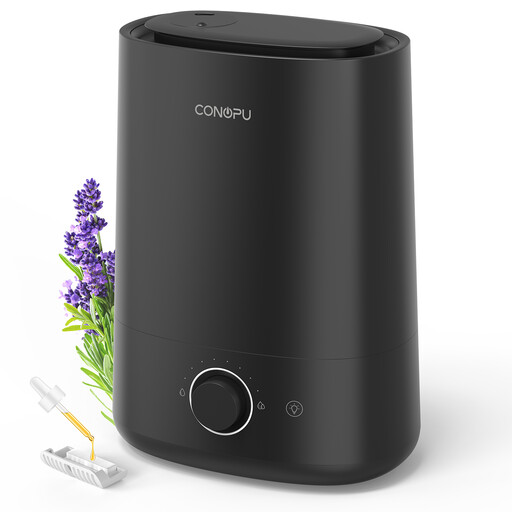
Why it suits this profile : its top-fill design and simple controls make everyday use easy in a bedroom, living room or child’s bedroom.
The dedicated oil compartment prevents oils from being poured directly into the water, while automatic shut-off activates when the level becomes too low.
5 L tank, stated operating noise of 28 dB, 360° adjustable nozzle and up to 50 hours of running time, depending on the selected mode.
We have selected a complete, real-time updated range of products that meet these selection criteria and European safety regulations.
A humidity level between 40% and 60% is generally recommended for indoor comfort. However, the ideal level depends on the temperature, ventilation and room in question. Use the built-in sensor as a guide, and avoid directing mist towards a wall, piece of furniture or electronic device.
It depends on the appliance’s power consumption and how long it runs. Cool-mist models often use relatively little electricity, while warm mist requires more energy. A timer or automatic mode can limit unnecessary running time. If the appliance will be switched off for an extended period, remember to empty and dry the tank.
Place it on a flat, stable and dry floor, leaving around 20 to 25 cm of clear space around the air inlets and outlets, in accordance with the instructions. Avoid any direct splashes of water. For extended use, connect the hose to a drain with a downward slope, and check regularly that the filter remains clean.