
Livraison le jour même ou le lendemain

Qualité garantie

Débloquez vos offres de bienvenue: Livraison GRATUITE | Jusqu'à -80 % | 30 jours d'essai gratuits à JoyPlus
Téléchargez l'application
Air that is too dry can quickly make a room uncomfortable. Conversely, excessive humidity encourages condensation, unpleasant odours and marks appearing on walls. However, choosing an air humidifier or dehumidifier is not simply a matter of comparing a number on the box.
There are several common pitfalls to watch out for when buying: a stated coverage area measured under very specific conditions, a noise level measured in a particular mode, or an aromatherapy function that does not necessarily allow essential oils to be added to the tank. Here are the criteria to consider before you buy.
A large tank does not guarantee the same run time in every situation. This depends on the mist output, room temperature and selected mode. A 5- or 6 litre ultrasonic humidifier means you will need to refill it less often, but you should also check the mist output in ml/h and confirm that it has an automatic shut-off when the water level becomes too low.
The stated noise level can vary depending on the mode used. For a bedroom, a quiet humidifier should be assessed in night mode, not just at its lowest setting. With a quiet dehumidifier, the compressor does not make the same noise as the fan, particularly when starting up or during automatic defrosting.
A moisture absorber designed for a cupboard will not be enough to treat an entire cellar. Conversely, a very powerful electrical appliance will often be oversized for a small bathroom. The area to be treated, room volume, ventilation quality and frequency of humidity problems should all guide your choice.
In a child’s bedroom or when using a baby humidifier, place the appliance out of reach, with no accessible cable, and clean it frequently. A humidifier is not a medical device. For models with an essential oil diffuser, use only the compartment provided for this purpose when authorised by the manufacturer. Never pour oil directly into the tank if the instructions prohibit it.
The stated capacity — for example 10, 16, 20 or 25 litres per day — is measured under specific temperature and humidity conditions. It therefore does not necessarily correspond to the amount of water collected in your home.
You should also check:
A dehumidifier with a drainage hose is ideal for extended operation. However, the hose must remain directed towards a drain positioned lower than the appliance outlet.
A moisture absorber works using hygroscopic crystals or beads. Quiet and easy to install, it is mainly suitable for small spaces and moderately damp rooms.
An anti-mould moisture absorber can be used in a room up to the area stated by the manufacturer. For a dressing room, drawer or wardrobe, it is better to choose sachets or a refill designed for smaller spaces. Always keep crystals and refills out of the reach of children and animals.
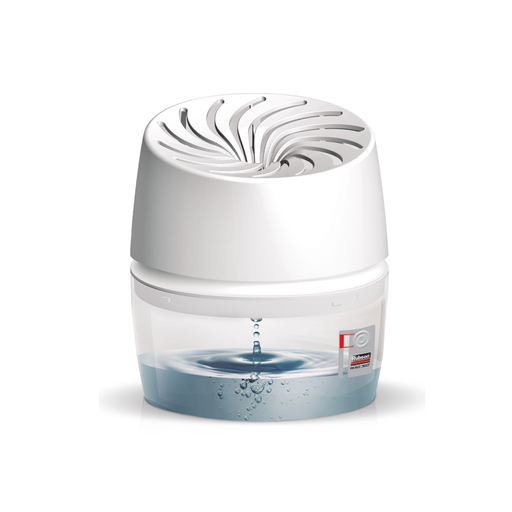
Why this choice suits this profile : This electricity-free format is ideal for anyone looking to treat a bedroom, bathroom or small space of up to 20 m² simply and effectively.
The stated coverage area and level indicator help prevent unsuitable use or a forgotten replacement.
Quiet operation, no electricity required and a 450 g refill included.
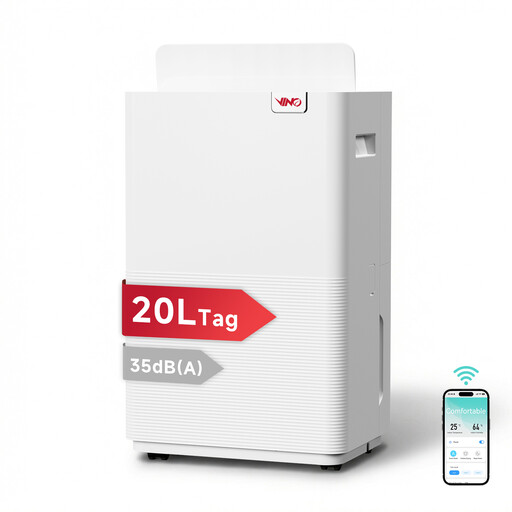
Why this choice suits this profile : App control, a timer and automatic modes are ideal for users who want to monitor the humidity in their home more precisely.
The app does not replace the basic settings: the appliance also has a 2.5 l tank and continuous drainage.
Stated capacity of up to 20 l/day depending on measurement conditions, night mode rated at 35 dB and the option to connect a drainage hose.
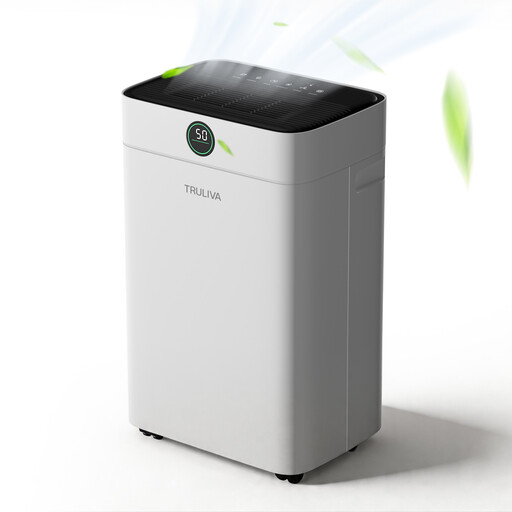
Why this choice suits this profile : It is designed for very damp homes, rooms where laundry is dried, and spaces such as cellars, bathrooms or poorly ventilated flats.
The supplied hose and automatic shut-off reduce the need for repeated emptying and lower the risk of the tank overflowing.
Stated capacity of up to 25 l/day under the specified conditions, laundry-drying mode, automatic defrosting and a 2.8 l tank.
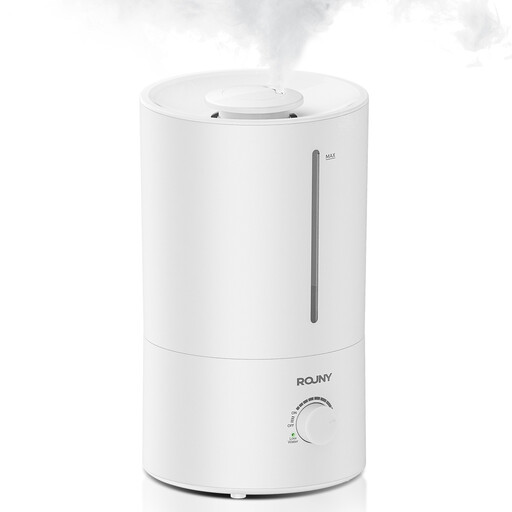
Why this choice suits this profile : With its cool mist, this model is well suited to a bedroom, office or living room, particularly if top filling is a priority.
The adjustable output lets you match the mist flow to the room size, rather than being limited to a single output level.
4 l tank, stated maximum output of 350 ml/h, 360° adjustable outlet and a stated noise level of 38 dB(A) or less.
We have selected a complete, real-time updated range of products that meet these strict criteria while complying with European safety regulations.
When using a humidifier, use clean water and never exceed the maximum level. If the appliance will not be used for more than 48 hours, empty the tank and allow the various components to dry. Regular cleaning helps limit mineral deposits and residue that can build up in the base.
For a dehumidifier, leave enough space around the air intake and outlet grilles. Clean the filter according to the instructions: with frequent use, this is often recommended every two weeks. If you have transported the appliance in an inclined position, leave it standing upright for the period specified by the manufacturer before plugging it in.
Finally, a moisture absorber should be replenished as soon as its refill is saturated. Do not place crystals near food or a heat source, or anywhere accessible to children.
Indoor humidity should be adjusted gradually. A separate hygrometer allows you to monitor differences between a bedroom, bathroom and cellar. Avoid leaving a humidifier running continuously without checking for condensation on windows or walls.
The cost depends on the appliance’s power rating in watts, how long it runs and the tariff charged by your electricity supplier. Automatic mode, the timer and continuous drainage help you target operating periods more effectively. To estimate energy consumption, compare the rated power rather than relying solely on the stated extraction capacity.
The lifespan of a refill varies depending on the room size, temperature and humidity level. Sachets designed for wardrobes can last for several weeks, while 450 g refills are designed for larger spaces. Before replacing it, check the indicator or the condition of the gel.