
Livraison le jour même ou le lendemain

Qualité garantie

Débloquez vos offres de bienvenue: Livraison GRATUITE | Jusqu'à -80 % | 30 jours d'essai gratuits à JoyPlus
Téléchargez l'application
An air humidifier can make your home more comfortable when the indoor air feels too dry, particularly in winter, in a heated bedroom or in an air-conditioned office. However, some appliances can quickly become a nuisance: a tank that is difficult to clean, irritating noise at night or a fine mist that settles on your furniture.
Before you buy, three common pitfalls are worth bearing in mind.
For a bedroom or office, a 3 to 4-litre tank may be sufficient, depending on how long you use it. Models with a capacity of 5 litres or more mean you will not need to refill the appliance as often in a large room, but they take up more space and become heavier when full.
Do not focus solely on the tank capacity. The mist output, measured in ml/h, indicates how much water is released into the air. As a guide, the product specifications featured here quote outputs of 200, 250, 275 or 350 ml/h. The stated coverage should be appropriate for the size of the room: a large open-plan space is not the same as a 12 m² bedroom.
A large-capacity humidifier is useful for extended use, while a compact appliance will be easier to place on a bedside table. Also check its dimensions and the recommended distance from walls, furniture and electronic devices.
An ultrasonic humidifier turns water into fine droplets using a vibrating membrane. It generally produces a cool mist, without heating the water. This technology is often popular thanks to its compact design and quiet operation.
An appliance fitted with a sensor can monitor the ambient humidity. Automatic humidity control then adjusts its operation according to the selected humidity level. Connected models may display data in an app, schedule operating times or offer an automatic mode.
However, be wary of marketing claims: a ‘smart’ function does not mean you can ignore the manual. Check the adjustment range, the stated accuracy, compatibility with your Wi-Fi network and the conditions for using the app.
Choose a top-fill humidifier with a wide opening and removable parts. You should be able to empty, rinse and dry the tank easily. Follow the maintenance schedule provided by the manufacturer: several product specifications recommend rinsing every few days and carrying out a full clean once a week.
Always place the appliance on a flat, stable and water-resistant surface. Direct the mist outlet away from walls, bed linen and electrical appliances. Unplug it before cleaning, moving or refilling it.
An air humidifier with an essential oil diffuser should have a dedicated compartment or pad for this purpose. Never add oil directly to the tank unless the instructions specifically allow it. Concentrated oils must be kept out of the reach of children and pets.
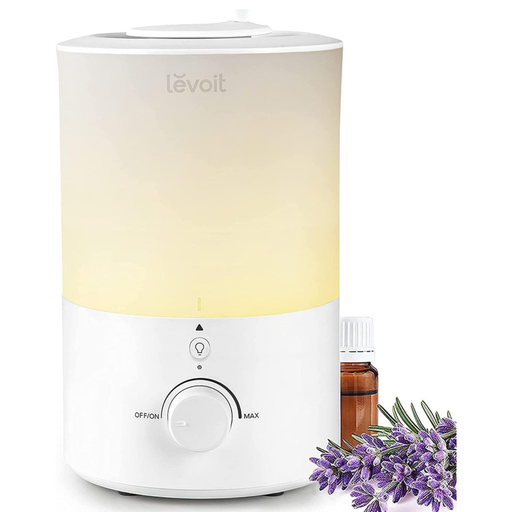
Why this choice suits this profile : Its 3 litre tank, simple dial and top-fill design make it a suitable choice for a first installation in a bedroom, office or living room.
The mist level can be adjusted manually, while the two 360° adjustable outlets help prevent moisture from being directed at a wall.
The product specification states 28 dB, automatic shut-off when the water level is too low, a night light and a dedicated compartment for water-soluble oils.
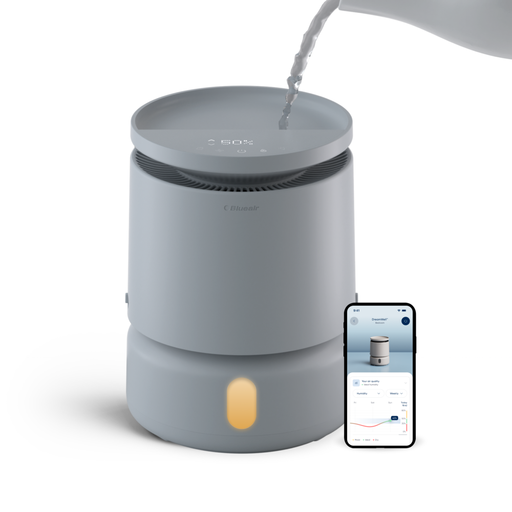
Why this choice suits this profile : Users who value design, app-based monitoring and quiet night-time operation will find several settings conveniently brought together here.
The InvisibleMist technology is designed to produce no visible mist, which may help limit visible deposits on surfaces, provided you follow the maintenance instructions in the manual.
The product specification mentions 20 dBA, up to 48 hours of use, a dishwasher-safe tank and app control.
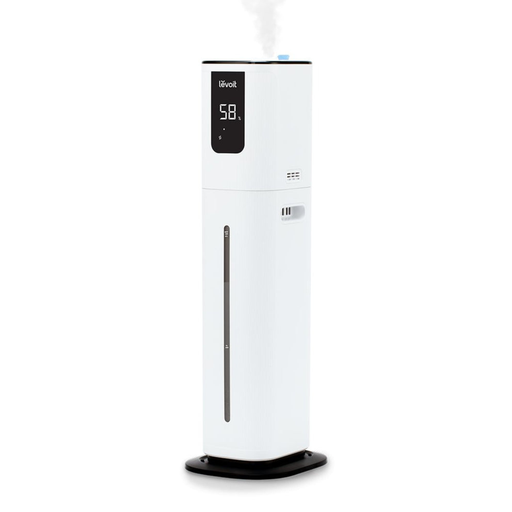
Why this choice suits this profile : With its 10 litre tank and stated coverage of up to 55 m², it is suitable for large rooms and extended use.
Its large capacity reduces the need for refills, while maintenance reminders in the app help you remember to clean it.
The product specification states up to 100 hours of running time on the lowest setting, a noise level below 28 dB, real-time monitoring and voice control.
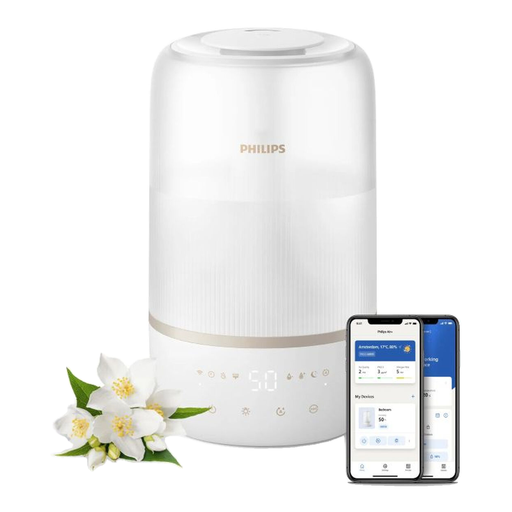
Why this choice suits this profile : Its compact design, humidity settings from 40 % to 70 % and Air+ app fit easily into a sleep or working-from-home routine.
The sensor, automatic mode and 1 to 12 hour timer prevent the appliance from running continuously when it is not necessary.
The product specification lists 3 litres, up to 32 hours of running time, a 275 ml/h output and 34 dB in standby, with a separate oil diffuser.
We have put together a complete, real-time updated selection of products that meet these demanding criteria and European safety standards.
In a child’s bedroom, a baby humidifier must be kept out of reach and should never be handled without supervision. A night light can be useful, but it does not replace the precautions required when dealing with water and electrical connections.
A range of between 40 % and 60 % is generally used as a guide for indoor comfort. Adjust the setting according to the actual readings, temperature and ventilation. Avoid running the appliance at maximum power without checking the humidity level.
The cost depends on the electrical power, how long you use it and your electricity tariff. To estimate it, multiply the power in kW by the number of hours of use, then by the price per kWh. The models featured have different power ratings, so check their technical specifications before comparing them.
It depends on the quality of the water, how often you clean the appliance and whether filters or cartridges need replacing. Regularly rinsing the tank, drying it between uses and checking for deposits will help keep the appliance working properly.