
Livraison le jour même ou le lendemain

Qualité garantie

Débloquez vos offres de bienvenue: Livraison GRATUITE | Jusqu'à -80 % | 30 jours d'essai gratuits à JoyPlus
Téléchargez l'application
Uncomfortable indoor air can’t be fixed with the same appliance in every situation. In winter, or in a home that’s heavily heated, an air humidifier can reintroduce a little moisture. Conversely, a poorly ventilated bathroom, a cellar or a bedroom affected by condensation calls for a dehumidifier or, for a small area, a moisture absorber.
The right choice depends on the measured humidity level, the floor area to be treated, the acceptable noise level and the time you’re willing to spend on maintenance.
A humidifier won’t reduce condensation and can’t replace an appliance designed to extract water from the air. If your windows are streaming, a musty smell sets in or marks persist on the walls, start by installing a hygrometer and look for the source of that excess moisture.
Conversely, running a dehumidifier in an already dry room risks making the air uncomfortable. A weather station with indoor measurement, like the Marathon Berlin, can help you compare rooms and track changes in temperature and humidity.
A 5 or 6 litre tank doesn’t necessarily offer the same runtime depending on the mist output, the mode selected and the ambient temperature. To get a clear picture, look at these elements together:
A large tank is practical, provided you can remove, fill and clean it without effort.
Stagnant water encourages deposits and unpleasant odours. The cleaning frequency recommended by the manufacturer must remain compatible with your daily routine. Some models accept essential oils in a dedicated compartment, while others forbid any addition to the tank.
The ROUNY MOS W3, for example, boasts a silver ion function and a dial control. However, its manual advises against adding essential oils, perfume or detergent to the tank. For a humidifier with aromatherapy, use only the tray provided for that purpose.
The output is expressed in millilitres per hour. A device delivering 200 to 300 ml/h can suit a bedroom or an office, but air circulation and ceiling height also play a role. 360° adjustable nozzles allow you to direct the mist away from a wall, piece of furniture or electronic device.
Ultrasonic models produce a cool mist through vibrations. Generally compact and energy-efficient, they are nevertheless sensitive to the quality of the water used, which can encourage mineral deposits. If a fine white dust appears on surfaces, consult the manufacturer’s recommendations regarding water and cleaning.
For a bedroom humidifier, don’t stop at the noise level stated in decibels: also check which mode that measurement corresponds to. A value recorded in night mode doesn’t necessarily reflect the noise produced at maximum output.
Product sheets indicate, for example:
This difference shows the value of checking the manual and detailed specifications before placing an order.
A humidifier with automatic humidity control has a sensor that adjusts operation around a target level. Handy for avoiding repeated manual adjustments, this system still depends on the sensor’s location. Place the appliance away from a window, a radiator and the mist outlet.
For family use, also check the stability of the base, the automatic shut-off, the protection against low water and the accessibility of the tank. In a child’s bedroom, the appliance must be kept out of reach. Never place it near the bed or near a socket that could be exposed to moisture.
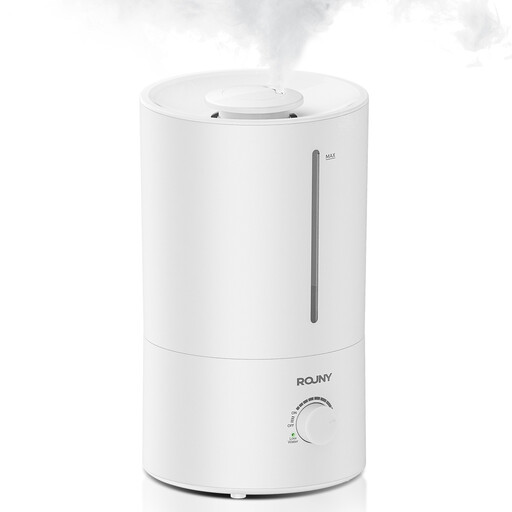
Why this model fits: its 4-litre top-fill tank and simple dial control make it a suitable choice for a bedroom, office or living room used every day.
The output adjusts gradually, which prevents the appliance from running permanently at full power. The manual also specifies which liquids should not be added.
4 L tank, stated maximum output of 350 ml/h, 360° adjustable outlet and noise level indicated at ≤ 38 dB(A).
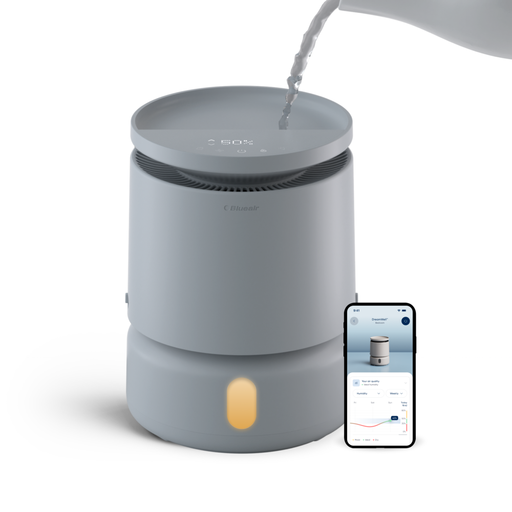
Why this model fits: it targets people looking for invisible mist, connected control and better-structured maintenance, in both a bedroom and a living room.
The claimed evaporation technology avoids visible mist and the deposits associated with ultrasonic atomisation. The tank and filter are designed to simplify maintenance.
Stated runtime of up to 48 hours, app control, diffuser stone and noise level stated at 20 dBA.

Why this model fits: it suits homes dealing with condensation, drying laundry or high humidity, in a room of up to around 40 m² according to the product sheet.
This is a dehumidifier, not a humidifier. Continuous drainage avoids having to empty the tank regularly, while the automatic shut-off reduces the risk of overflow.
Stated capacity of up to 20 L/day, 2.5 L tank, app, laundry drying mode and R290 refrigerant.
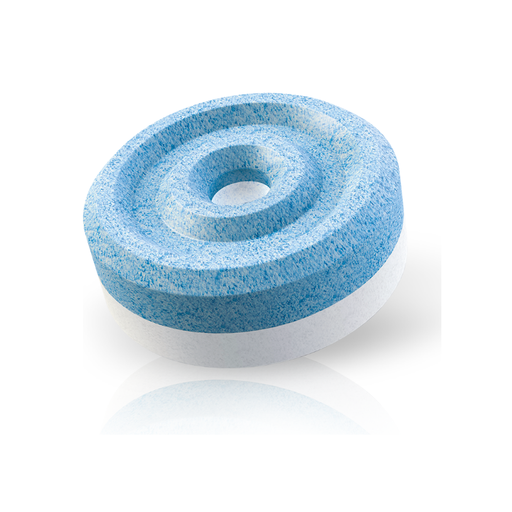
Why this model fits: these refills are suitable for cupboards, small rooms and areas without a power supply, when you need to treat localised humidity.
It doesn’t claim to offer the output of an electrical appliance: its action is limited to a specific area and the refills must be replaced once saturated.
Pack of 6 refills of 450 g, stated technology against humidity and odours, compatibility with AERO 360° appliances.
We’ve put together an updated selection of appliances and solutions so you can compare capacities, features and uses related to indoor humidity.
There’s no universal duration. Start by measuring the humidity, then use the minimum output suitable for the room. A timer or automatic control can prevent the appliance from running unnecessarily. Air the room regularly and empty the tank according to the manual, especially after several days without use.
Always unplug the appliance before filling or cleaning it. Rinse the tank, clean the nozzle and dry the accessible parts following the manufacturer’s instructions. Models equipped with a filter, such as some evaporation appliances, also require periodic replacement or washing.
Consumption depends mainly on the power, the output and the number of hours of use. The technical sheets indicate, for example, 23 W for the ROUNY MOS W3 and 22 W for a CONOPU model. To estimate the cost, multiply the power in kilowatts by the number of hours of operation, then by your electricity tariff.