
Livraison le jour même ou le lendemain

Qualité garantie

Débloquez vos offres de bienvenue: Livraison GRATUITE | Jusqu'à -80 % | 30 jours d'essai gratuits à JoyPlus
Téléchargez l'application
An air humidifier can make a bedroom, living room or office noticeably more comfortable when the indoor air is too dry. But you need to choose a model that suits your environment. Tank capacity, noise, maintenance, diffusion technology and smart features all have a direct impact on everyday comfort.
Before you head to the checkout, it’s worth looking beyond the promises of “record battery life” or “ultra-fine mist”. Here are the criteria to consider, the common mistakes to avoid, and a selection of models for different needs.
A 3 to 10-litre tank doesn’t guarantee the same operating duration in every situation. Run time depends on the mist output, the mode selected and the room temperature. A large tank can also make the appliance bulkier and harder to move.
Always check the conditions under which the claimed run time was measured. The “100 hours” quoted by some models usually corresponds to the lowest mist setting, not typical everyday use.
Stagnant water encourages deposits and unpleasant odours. If the appliance is difficult to open, has hard-to-reach corners, or has a tank that can’t be rinsed properly, maintaining it can become a chore after just a few weeks.
A top-fill humidifier is often more convenient, provided the design genuinely makes the tank easy to access. You’ll still need to empty any remaining water, rinse the various parts regularly, and follow the manufacturer’s recommendations.
In a small bedroom, too high a mist output can cause condensation on windows, walls or furniture. The mist should also not be directed towards any electronic device, absorbent fabric or nearby wall.
For a bedroom, a quiet humidifier for the bedroom with an adjustable output will generally be easier to adapt than a model that runs at a fixed power level.
An ultrasonic air humidifier produces a cool mist using high-frequency vibrations. This technology allows for compact, discreet appliances, but it requires particular attention to water quality and tank cleanliness.
An evaporative model circulates air through a damp element. It produces little or no visible mist, like the Xiaomi Smart Evaporative Humidifier. This design may appeal to those who want to minimise droplet spray, provided the recommended maintenance is followed scrupulously.
A portable nebuliser serves a completely different purpose. It is used to administer a solution intended for nebulisation, as directed by a healthcare professional. It is therefore not a replacement for a room humidifier.
Measured in millilitres per hour, the output corresponds to the amount of mist the appliance releases. An adjustable model offers more flexibility when moving between a study, bedroom or living room.
If you’re looking for a large-capacity humidifier, also consider the size, stability and ease of moving it. A 10-litre tank can be useful in a large room, but may prove impractical on a bedside table.
For sleeping or working, compare the stated noise level in decibels. The values between 16 and 38 dB shown on product specs correspond to specific operating conditions and can vary depending on the mode used.
A night light, timer or touch control can make the appliance more pleasant to use. A humidifier with smart control or a connected humidifier also lets you control it from an app, schedule its operation and, depending on the model, monitor the humidity level.
Never add oil, fragrance or cleaning product directly into the tank unless the manufacturer explicitly allows it. Some appliances have a separate compartment that can accommodate water-soluble oils, as per the instructions in the manual.
In a child’s room or with a baby humidifier, place the appliance out of reach, on a stable, waterproof surface. The presence of a “night light” function does not mean the appliance can be handled by a child.
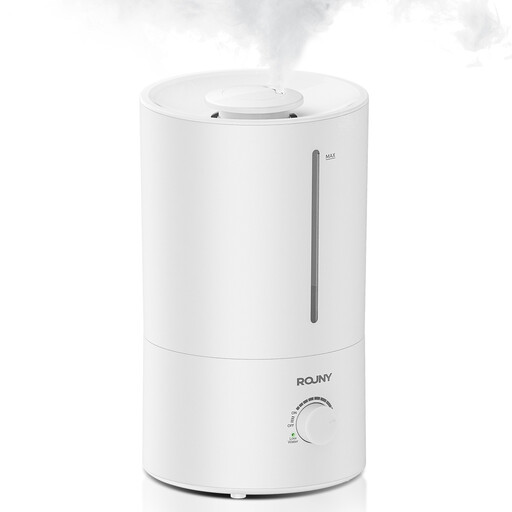
Why this choice suits this profile: With its 4-litre tank, adjustable dial and top-fill design, this model is well suited to a first installation in a bedroom, study or living room.
The output adjusts gradually, reducing the risk of releasing too much mist in a small room.
4-litre tank, maximum stated output of 350 ml/h, 360° adjustable nozzle and stated noise level of 38 dB(A) or less.
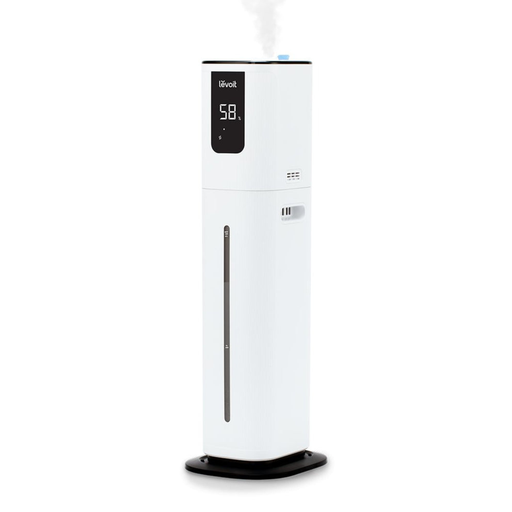
Why this choice suits this profile: Households with a large living room or those wanting to automate settings will appreciate its generous tank and smart features.
The app lets you schedule operating periods and monitor the stated humidity level, rather than leaving the appliance running without control.
10-litre tank, stated coverage up to around 55 m², noise level below 28 dB and control via the VeSync app or a compatible voice assistant.
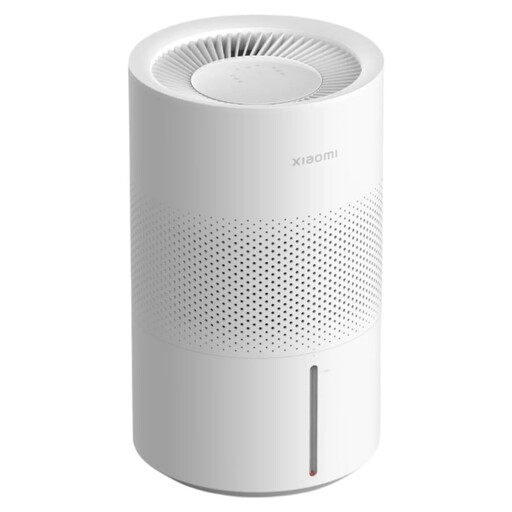
Why this choice suits this profile: Its evaporative operation and control via the Xiaomi Home app will suit users looking for smart management with minimal visible mist.
The lack of visible mist limits direct spray, but does not replace the need for regular maintenance of the tank and internal components.
Control via Xiaomi Home, stated power of 9 W, stated capacity of 2.25 to 4 litres depending on version, and aroma diffusion function.
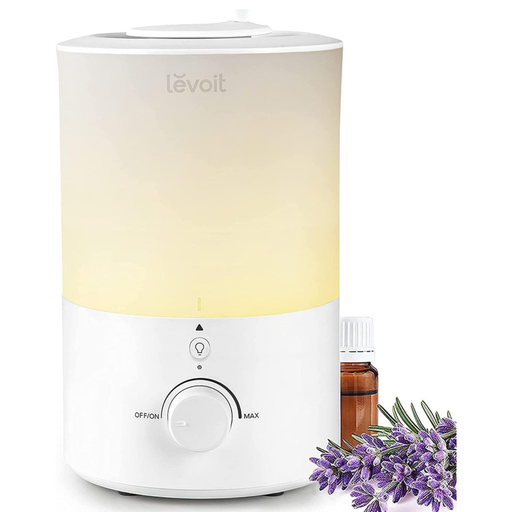
Why this choice suits this profile: With its 3-litre size, this versatile appliance can find a place in a bedroom, child’s room or study.
Top-fill design, automatic shut-off when water runs low, and two adjustable nozzles make everyday use simpler.
3-litre tank, stated noise level of 28 dB, adjustable dial, night light and separate compartment for water-soluble oils.
We’ve put together a comprehensive, real-time updated list of products that fully meet these strict selection criteria and European safety regulations.
Place it on a flat, stable, waterproof and clear surface. Avoid a carpeted floor, being too close to a wall, and directing the mist towards the bed, a power socket or any electronic device. Manuals often recommend leaving about 30 cm of space around the outlets.
The lifespan depends on build quality, cleaning frequency and the eventual replacement of filters or wear parts. To make it last, empty the tank when the appliance is not in use, rinse it regularly and unplug it before any maintenance.
It depends on its power and how long it’s used. The models shown have a power rating between 9 and 27.5 W. Even when used for several hours a day, a 23 W appliance generally uses far less energy than a heating device. To keep consumption down, choose an output suited to the room and set it to switch off once the air is no longer too dry.