
Livraison le jour même ou le lendemain

Qualité garantie

Débloquez vos offres de bienvenue: Livraison GRATUITE | Jusqu'à -80 % | 30 jours d'essai gratuits à JoyPlus
Téléchargez l'application
Air that is too dry can quickly make your home uncomfortable, particularly when the heating is on in winter or in an air-conditioned bedroom. An air humidifier can improve everyday comfort, provided you choose a device suited to the size of the room, the noise level and the time you can dedicate to maintenance.
A 5 or 10-litre tank does not guarantee long operation in every situation. How long the humidifier runs also depends on the mist output, the mode selected and the ambient humidity level. A powerful device may therefore use more water than a more compact model.
Manufacturers sometimes measure noise levels in one specific mode. So check the decibel rating, but also whether the device has a night mode, switchable indicator lights and automatic regulation. In a bedroom, a model rated between 25 and 35 dB can help minimise noise. However, this does not guarantee complete silence in every situation.
Stagnant water, limescale and deposits on the ultrasonic transducer can affect performance and encourage unpleasant smells. For lasting performance, it is better to choose a device that is easy to open, with a wide-opening tank and removable parts. Essential oils should never be poured directly into the tank unless the instructions explicitly allow it.
An ultrasonic air humidifier turns water into fine droplets using a transducer. It generally produces cool mist, uses little electricity and is well suited to use in a bedroom or office. Warm-mist models heat the water, but their energy consumption is often higher. Their hot surface also requires particular care when children are present.
Evaporative devices, such as some NanoCloud models, release humidity that is almost invisible. They can reduce the white marks left by minerals, but generally require a filter to be replaced or cleaned regularly.
Compare these three details:
For a standard-sized bedroom, a 3 to 5-litre tank may be sufficient, depending on the setting used. In an open-plan lounge or a large room, a 6 to 10-litre high-capacity humidifier paired with a higher output will be more practical. A wide opening at the top makes both filling and cleaning easier.
An air humidifier with a humidistat measures ambient humidity and automatically adjusts the output to the selected level. This prevents you from leaving the device running continuously without proper control. Depending on the model, the adjustment range may extend, for example, from 40% to 70%.
You should also check for:
In a child’s bedroom, the device must be kept out of reach and used under adult supervision. The description ‘baby humidifier’ does not replace the need to follow the manufacturer’s safety instructions.
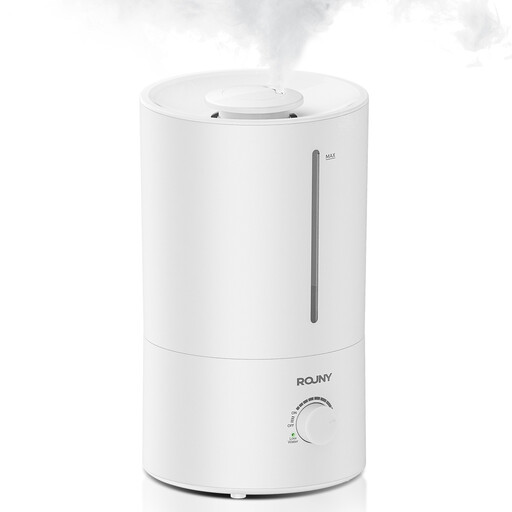
Why it suits this profile: Its compact design fits easily into a bedroom, office or living space used every day. The rotary control is also very easy to use.
Its 4 L tank and top-fill design mean fewer trips to the tap, while the output can be adjusted gradually.
Stated maximum output of 350 ml/h, 360° adjustable outlet and a stated noise level of 38 dB(A) or less.
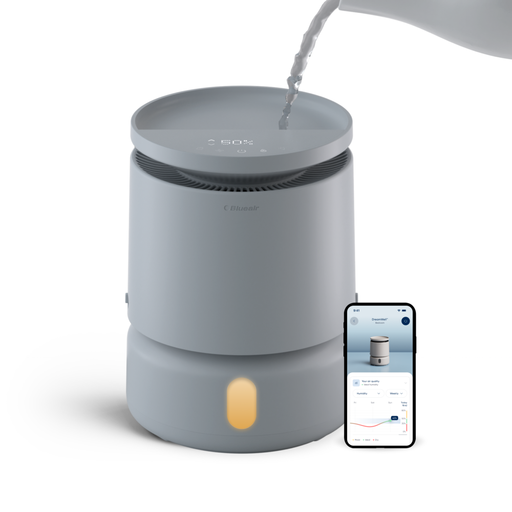
Why it suits this profile: Those who want to integrate their humidifier into a connected home will appreciate app control and customisable programmes.
The mist-free operation helps reduce the risk of wet surfaces or mineral deposits, provided maintenance is carried out as instructed.
Stated coverage of up to 55 m², stated operation of up to 48 hours and a stated noise level of 20 dBA.
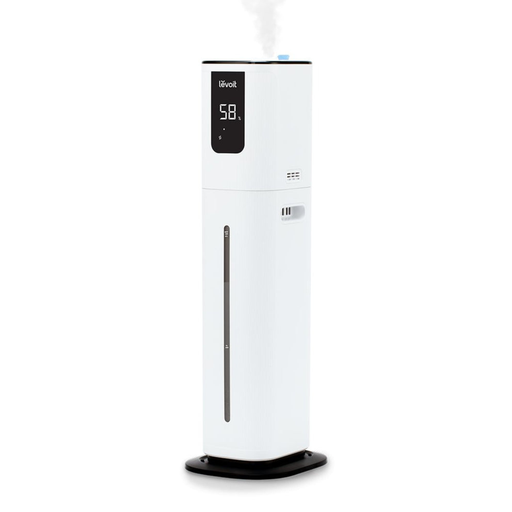
Why it suits this profile: Its large tank is ideal for bigger rooms, open spaces and households that prefer to refill less often.
The app can be used to schedule operating periods and monitor humidity, rather than leaving the device running without supervision.
10 L tank, stated coverage of approximately 55 m², VeSync app control and a stated noise level below 28 dB.

Why it suits this profile: Those who want to switch between cool and warm mist have several modes to choose from, as well as app-based monitoring.
The sensor and automatic mode help maintain a set humidity level, while cleaning reminders make maintenance easier to keep track of.
6 L tank, stated output of up to 500 ml/h, warm and cool mist, app control and humidity adjustment in stated 5% increments.
We have selected a complete range, updated in real time, of products that meet these demanding criteria and European safety standards.
Place the device on a flat, stable and waterproof surface, a safe distance from walls, textiles and electrical equipment. Direct the mist outlet towards a clear area. Use clean water and follow the instructions regarding tap, filtered or demineralised water.
To prevent deposits and unpleasant smells:
An air humidifier with an essential-oil diffuser should have a separate compartment or a dedicated tray. Keep concentrated oils out of children’s reach and use them in accordance with the precautions provided by their manufacturer.
Devices with a humidistat often offer settings between 40% and 60%. The ideal level depends on the room, temperature and ventilation. A separate hygrometer can help you check the reading displayed by the humidifier.
It depends on the device’s power, how long it runs and the electricity tariff. A 20 to 30 W ultrasonic model generally uses less electricity than a warm-mist device, whose power consumption can be considerably higher. Automatic mode and the timer can also reduce operating time.
This varies according to build quality, the water used and how regularly the device is maintained. Frequent cleaning, respecting the maximum fill level and replacing consumables all help preserve the tank, sensor and transducer.