People who often make fried food at home
You regularly cook chips, doughnuts or breaded food, and are happy to deep-fry as long as cleaning, storing and disposing of the oil remain manageable.


For the occasional fry-up, a pan suited to your hob, your oven or a frying pan could save you buying a dedicated appliance. If you prefer deep-frying and cook this way often, an electric deep-fat fryer is worth considering. An air fryer may suit you better if you also plan to use it for other hot-air cooking, though you shouldn’t automatically expect the same results as deep-frying. In every case, consider the space you have, how easy the appliance is to clean and, for deep-fat fryers, how you’ll dispose of used oil.
You regularly cook chips, doughnuts or breaded food, and are happy to deep-fry as long as cleaning, storing and disposing of the oil remain manageable.
You’re considering hot-air cooking for breaded food and other dishes. In that case, basket capacity, the space it takes up, noise levels and how well the model performs matter just as much as its advertised features.
You rarely fry or brown these foods and don’t want to give up space for a dedicated appliance. Depending on what you actually cook, a pan on the hob, your oven or a frying pan may be enough.
First decide whether you want to cook in hot oil or with hot air, then weigh up how often you’ll use it, how easy it is to clean and how much space you have. Your oven and frying pan are also worth considering if you rarely cook these foods.
Consider it: for occasional deep-frying without a dedicated electric appliance, using a pan that’s suitable for your hob.
Bear in mind: the hob will be in use while you cook, and you’ll need to deal with the hot oil afterwards.
Consider it: for regular deep-frying, especially if you want to keep your hob free.
Bear in mind: filtration features vary by model and don’t eliminate the need to dispose of used oil.
Consider it: if you’ll also use hot-air cooking for other dishes.
Bear in mind: it doesn’t cook in hot oil. According to Que Choisir, results for chips vary between models, and the appliance can be bulky and noisy.
Consider it: if you only cook these dishes occasionally and would rather use the equipment you already have.
Bear in mind: your oven or hob will be in use, and the results won’t automatically match deep-frying.
| Factor | What to check | Who it matters to |
|---|---|---|
| Results for different foods | For an air fryer, look for tests covering the foods you cook and check whether you need to shake the basket. For deep-frying, consider how much food you plan to cook in each batch. | If I mainly cook chips or breaded food, I want to choose the cooking method based on the results I’m looking for. Around 27% of consumers would make this their top priority. |
| Cleaning and oil | Check which parts are removable and which can actually go in the dishwasher. For deep-frying, look into any filtration features and plan to take used oil to a local collection point. | Between batches, I want to keep cleaning to a minimum and avoid underestimating the effort involved in dealing with oil, smells and splashes. Cleaning would come first for around 27% of consumers. |
| Space and how often you’ll use it | Compare the appliance’s dimensions and storage requirements with the space you have in your kitchen. If you plan to use a pan on an induction hob, check that the exact model is compatible. | If I rarely cook these foods, I don’t want a dedicated appliance taking up space in my kitchen. If I use a pan on the hob, it also needs to be suitable for it. Space and actual use would come first for around 20% of consumers. |
| Other types of cooking | Make a list of the dishes you plan to cook using hot air, then check the features, usable cooking area and accessories included with the model you’ve chosen. | I’m considering an air fryer to try different ways of cooking, not just to make chips. Around 26% of consumers would put this versatility first. |
Its appearance alone won’t tell you whether it’s compatible with your hob. Que Choisir advises against cast aluminium for this use and recommends steel instead.
Look for an explicit statement that the exact model you’re considering is compatible with induction hobs.
The two cooking methods are different. Que Choisir’s tests also show that chips may cook unevenly in the basket, depending on the model.
Look for tests covering the foods you usually make, and check the instructions to see whether you need to shake the food during cooking.
ADEME says used frying oil must not be poured down the sink or toilet, or tipped out into the environment.
Have a sealed container ready for the cooled oil, and find out where your local collection point is.
A deep-fat fryer also takes time: you’ll need to let the oil cool, store it and take it to a collection point.
The pan, basket, lid and other parts may each have different cleaning instructions.
Check the instructions for the exact model and find out which removable parts can actually go in the dishwasher.
Worth considering if you’re looking for an electric deep-fat fryer with cleaning or filtration features that suit your routine.
The Easy Fry range may appeal if you want to use a hot-air appliance for a variety of dishes.
A range of air fryers in different capacities to compare against the size of your batches and the space you have.
An option for a traditional deep-frying pan if compatibility with your type of hob is a key consideration.
These appliances showcase two options for frequent or varied cooking: an electric deep-fat fryer and an air fryer. If you only cook occasionally, compare them with using a pan on the hob, your oven or a frying pan.
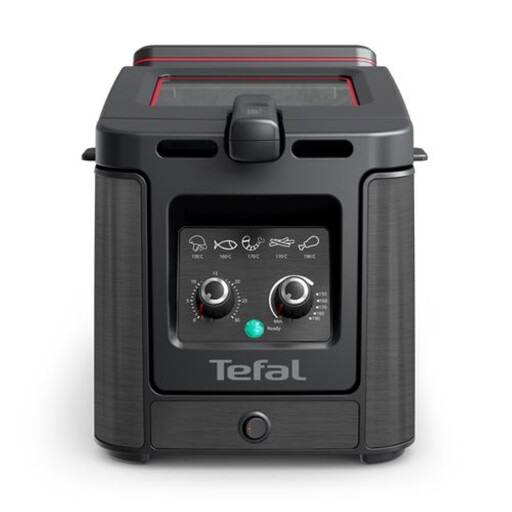 Image unavailable
Worth considering if you want to deep-fry and easy cleaning matters to you. The stated capacity is 3.5 L. Check the cleaning instructions for removable parts and make sure you have a plan for dealing with the oil after use.
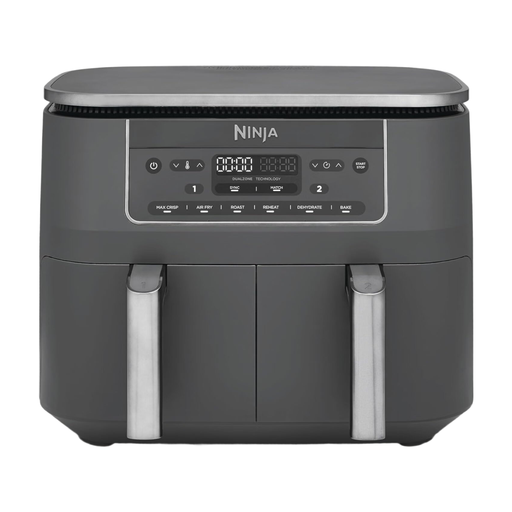 Image unavailable
The two drawers may suit you if you want to cook two different foods using hot air. The title lists six functions and a total capacity of 7.6 L. Check the dimensions to make sure it will fit in your kitchen, and consult the instructions for cleaning the drawers and crisper plates.
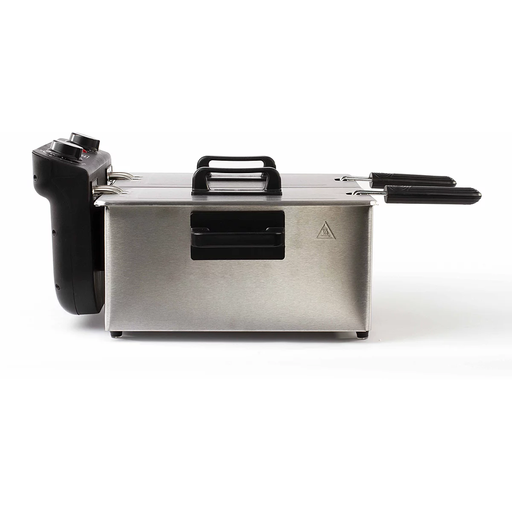 Image unavailable
The two-pan design may suit people who want to cook separate batches in hot oil. The title lists two 3 L pans and a power rating of 3,300 W. Check how much space you’ll need and the cleaning instructions before buying. The oil will need to cool before you store or dispose of it properly.
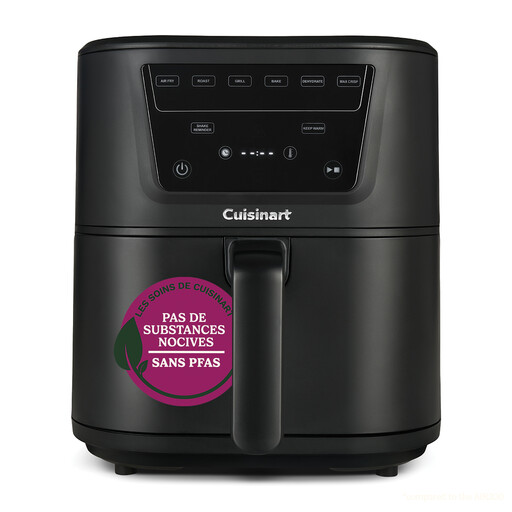 Image unavailable
Worth comparing if you’re looking for a hot-air appliance with a stated capacity of 7.6 L. The name “Compact Max” doesn’t tell you how much space it will take up, so check its external dimensions and the clearance needed around it.
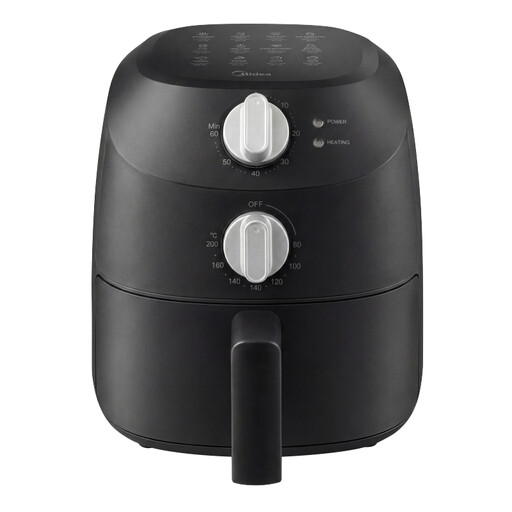 Image unavailable
The 2 L basket is worth considering if you cook small portions using hot air. The title lists a 60-minute timer and a non-stick basket. Check the dimensions and noise level, and find out which parts can go in the dishwasher.
No. ADEME says frying oil must not be poured down the sink or toilet, or tipped out into the environment. Once it has cooled, put it in a sealed container and find out about your local recycling centre or oil collection point.
No. You’ll need to check the pan you choose. Que Choisir advises against cast aluminium for induction hobs and recommends steel instead. In all cases, look for an explicit compatibility statement for the exact model.
Not if you automatically expect the same results as deep-frying: an air fryer cooks using hot air. Que Choisir found that results for chips vary between models and can be uneven in the basket. Look for tests covering the foods you’re interested in.
Check the instructions for your chosen model to see which parts can be removed and which are dishwasher-safe. For a deep-fat fryer, also check how the oil is drained, whether it can be filtered and how it should be stored. For an air fryer, check the cleaning instructions for the basket and crisper plate.