People who often cook one or two portions
If your food fits in the basket or on the rack, an air fryer could save you having to use the full-size oven. If you mostly cook in oven dishes and tins, check the internal dimensions of a mini oven instead.


To avoid switching on the full-size oven for small, regular cooking jobs, choose according to the dishes you make: an air fryer for food that fits in a basket or on a rack, a mini oven if you mostly use oven dishes and tins, or a microwave with the right cooking modes if you also reheat and defrost food frequently. None is an automatic replacement for a full-size oven: check the usable space, overall footprint, cleaning requirements and cooking modes before deciding.
If your food fits in the basket or on the rack, an air fryer could save you having to use the full-size oven. If you mostly cook in oven dishes and tins, check the internal dimensions of a mini oven instead.
Compare the appliance’s footprint, how its door or drawer opens, and the space you’ll need to store it. UFC-Que Choisir also draws attention to the fan noise from air fryers, particularly in an open-plan kitchen or a small space.
A microwave with a cooking function could suit you if you regularly do all of these. Check the model’s modes: a grill does not necessarily mean it also has a convection function.
Worth considering: for small, regular cooking jobs that fit in the basket or on the rack.
The trade-off: its functions overlap with those of an oven; UFC-Que Choisir also flags its potential size and noise.
Worth considering: if you often cook small portions in an oven dish or tin, or on a baking tray.
The trade-off: the advertised capacity does not guarantee that your usual dishes will fit inside.
Worth considering: if you also regularly reheat and defrost food.
The trade-off: check for the cooking mode you want and which containers are suitable for each mode.
Once you’ve chosen an appliance type, check that its dimensions and modes suit the food you actually cook.
| Criteria | What to check | Consider your needs |
|---|---|---|
| Usable space | Compare the internal dimensions of the basket or cavity with those of your dishes. Also check the available height and how the door or drawer opens. | I want to be able to cook my portion or use my usual tin, rather than choosing based only on the advertised capacity in litres. |
| Electricity use | Compare the energy measured for the same recipe and quantity, as well as the cooking time and preheating. In a UFC-Que Choisir test using a small quiche Lorraine, air fryers used 36% less electricity on average than a mini oven for the same quantity; this result does not apply to every dish. | For food I cook regularly, I want to compare energy use for a similar cooking task, rather than draw conclusions from the wattage alone. |
| Cleaning and care | Check how to remove and clean the basket, racks or tray. Look in the instructions to see whether removable parts are dishwasher-safe and where to store the accessories. | After a simple meal, cleaning and storage should be manageable for how often I’ll use the appliance. |
| Noise and positioning | For an air fryer, look for a noise measurement while it is running and check the space required for positioning it, including the clearances specified in the instructions. | In my open-plan kitchen, I want to know whether the fan noise is likely to bother me while food is cooking. |
| Functions | Check the modes listed in the instructions and which containers are suitable for each one. For a combination microwave, distinguish between microwave, grill and convection modes. | An additional appliance makes sense for me if it covers things I do often, beyond what my current appliances already do. |
A basket and an oven cavity won’t accommodate the same shapes of dish. The capacity in litres alone won’t tell you whether your tin or portion will fit.
Measure your usual containers, then check the internal dimensions, available height and how the appliance opens.
Energy use depends on factors such as the recipe, quantity and cooking time. The UFC-Que Choisir test that favoured air fryers for a small quiche does not predict the results for every kind of cooking.
Look for measurements based on a dish and quantity similar to yours.
The fan runs while food is cooking. UFC-Que Choisir points out that noise deserves particular consideration in an open-plan kitchen or small space.
Check a noise measurement or test, and consider where you plan to put the appliance.
A container that is microwave-safe is not necessarily suitable for the grill or convection mode. For cling film and bags, the DGCCRF advises against using them in a microwave unless they are specifically marked as suitable.
Check the container’s markings and the instructions for each cooking mode you use.
These options include air fryers, a mini oven and a microwave with grill. First choose the type of cooking that suits your habits, then check the dimensions and modes of the model you’re considering.
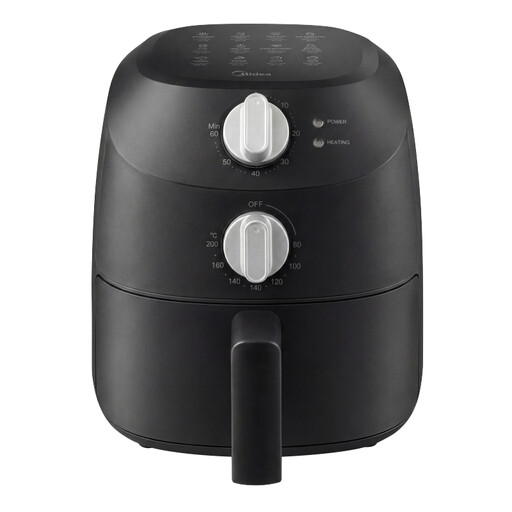 Image unavailable
Worth considering for small portions that suit a basket. The title lists a 2 L capacity, 1150 W, a 60-minute timer and a non-stick basket that is dishwasher-safe. Check the basket’s usable dimensions and the space the appliance needs.
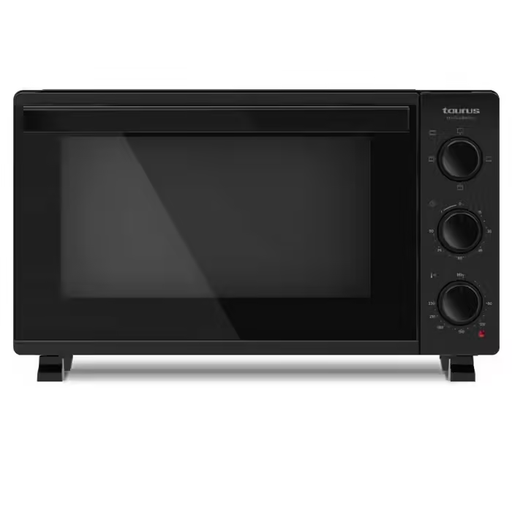 Image unavailable
An option to consider if you cook in oven dishes or tins rather than in a basket. Its advertised capacity is 23 L; check the internal dimensions before expecting it to fit your usual containers.
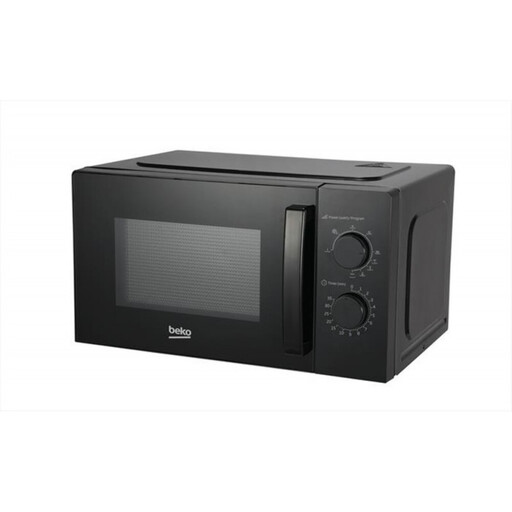 Image unavailable
Worth considering if a microwave and grill suit the way you cook regularly. The title lists a 20 L capacity and 700 W. If you also want to cook using convection, check that this mode is available; a grill alone doesn’t mean it is.
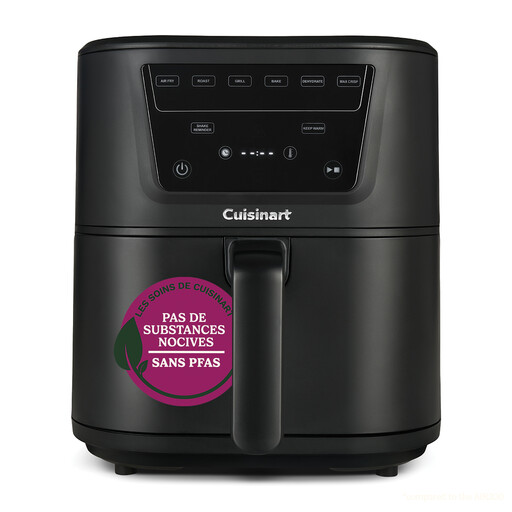 Image unavailable
This 7,6 L model is best compared with the space you have available and the quantities you cook. For small portions, check the basket’s usable dimensions and the appliance’s footprint instead of relying on the advertised capacity alone.
Not necessarily. UFC-Que Choisir points out that an air fryer performs functions that an oven already covers; its usefulness depends mainly on the size and shape of the food you cook in it regularly. If your large dishes or tins don’t fit in its usable space, keep the full-size oven for those jobs.
No. Compare the energy used for the same recipe and quantity, taking cooking time and preheating into account. In a UFC-Que Choisir test using a small quiche Lorraine, air fryers used 36% less electricity on average than a mini oven for the same quantity; this result does not automatically apply to other recipes or models.
No. In its 2026 study with the Institut national de la consommation, ADEME compared four combination ovens with ten built-in convection ovens. Efficiency varied by dish and model, with no clear advantage for combination ovens in this test. These results do not allow conclusions to be drawn about every countertop appliance.
No. Check that the container is suitable separately for microwave and grill use. The DGCCRF advises against using cling film or a bag in the microwave if it is not specifically marked as suitable for that use; you should also follow the appliance instructions.
No. The European Commission states that small ovens and appliances with a microwave function are outside the scope of the mandatory energy labelling shown for domestic ovens. To compare compact cooking options, look instead for energy measurements based on a comparable recipe and quantity.