People with a small, poorly ventilated kitchen
Smells, splashes and the space an appliance takes up on the worktop can matter just as much as the cooking results when you’re choosing.


If you only cook occasionally in a small kitchen where smells are slow to clear, an air fryer is worth considering: Que Choisir reports fewer unpleasant smells with hot-air cooking than with deep-frying in oil. However, check that you have enough worktop space, that the capacity suits you and that you’re happy with the results when cooking fresh chips. A deep-fat fryer is still an option if you value the crispness of traditional frying more and are happy to handle the oil. An oven or frying pan means you won’t need to buy a dedicated appliance.
Smells, splashes and the space an appliance takes up on the worktop can matter just as much as the cooking results when you’re choosing.
If you rarely make these foods, weigh up the storage space needed for a dedicated appliance against the handling and cleaning involved with a pan of hot oil.
A removable basket and dishwasher-safe parts can make cleaning easier, provided those features are available on the model you choose.
First, decide whether you want to avoid deep-frying in oil and buying another appliance. Then compare the space you have, your usual portion sizes and the results you want from the recipes you actually make.
Worth considering: if smells and handling a pan of hot oil are your main concerns. Que Choisir links hot-air cooking with fewer unpleasant smells in small kitchens.
The trade-off: the appliance takes up space, you may only be able to cook a limited amount at a time, and fresh chips may not be as crisp as chips fried in oil, as Que Choisir points out.
Worth considering: if you fry food only occasionally but want the characteristic results of deep-frying, and have a well-ventilated room.
The trade-off: it takes up a hob, and you’ll need to deal with splashes, smells and the oil afterwards.
Worth considering: if you regularly deep-fry in oil but don’t want to use up a hob.
The trade-off: you’ll still need to handle and maintain the oil. According to Que Choisir, filters vary in effectiveness and don’t trap the smells released when the basket is lowered into or lifted out of the oil.
Worth considering: if you only make crispy foods occasionally and would rather use the appliances you already have than find space for another one.
The trade-off: results depend on the recipe and shouldn’t be assumed to match deep-frying in oil. A small amount cooked in a frying pan also needs to be watched.
| Priority | What to check | Think about your needs |
|---|---|---|
| Smells | Compare the cooking method and the ventilation available. Que Choisir reports fewer unpleasant smells with hot-air cooking, but notes that a filter in a deep-fat fryer won’t trap them all. | I want to cook without frying smells becoming difficult to clear from my small kitchen. |
| Cleaning | Check which parts of your chosen model are removable and dishwasher-safe. With a deep-fat fryer, you’ll also need to think about filtering, storing and disposing of the oil. | After an occasional cooking session, cleaning should take no more time than I’m prepared to spend on it. |
| Cooking results | Look for tests of the exact model using the recipes and quantities you usually make. Que Choisir’s testing protocols assess cooking results and ease of use, among other things; a listed programme alone doesn’t guarantee crispness. | If I mainly make fresh chips, their texture matters more to me than the number of cooking modes. |
| Space and capacity | Measure the space available, how far the drawer opens and the clearance required by the instructions. Match the stated capacity to the amount you can cook at once, and don’t assume a larger basket will be easy to store. | I’d rather cook several occasional batches than have an appliance taking up too much space all the time—or the other way round if I often cook larger quantities. |
Results depend on the recipe, quantity and model. Que Choisir notes that fresh chips may lack the characteristic crispness of traditional deep-frying.
If fresh chips are what you make most, look for a cooking test of the exact model rather than relying on the phrase ‘oil-free’.
A small basket may mean cooking several batches; a large one may take up too much space in a kitchen that already has an oven.
Measure the worktop or storage space you have in mind, then check how much room you’ll need to open the drawer and follow the model’s ventilation instructions.
Que Choisir says filters vary in effectiveness and smells can still escape as the basket is lowered into and lifted out of the oil.
If smells are a deciding factor, compare this with hot-air cooking or using the oven. If you choose to deep-fry in oil, take the ventilation available into account.
Depending on the model and how often you use it, you’ll also need to allow for replacing the oil and, possibly, the filter.
For a small quiche Lorraine, Que Choisir measured an average electricity consumption 36% lower with the air fryers it tested than with a mini oven in October 2024, for the same quantity. This result doesn’t apply to every recipe or appliance.
To compare two appliances, use the same recipe and quantity. Also consider how much space the appliance takes up if you’ll be adding it to your oven.
The Easy Fry range includes models with different capacities. Moulinex describes the Easy Fry Essential 3.5 L, for example, as a compact model with a dishwasher-safe, non-stick basket.
The Airfryer range includes models with different capacities. Philips says the 4.2 L Series 1000 NA120/00 has a non-stick basket that’s dishwasher-safe.
Ninja is one of the brands in the air fryer category covered by Que Choisir.
These hot-air appliances offer a way to avoid handling a pan of hot oil. Their stated capacities range from compact baskets to a model with two drawers. Compare them with your portion sizes and the space available, without assuming they’ll all deliver the same cooking results.
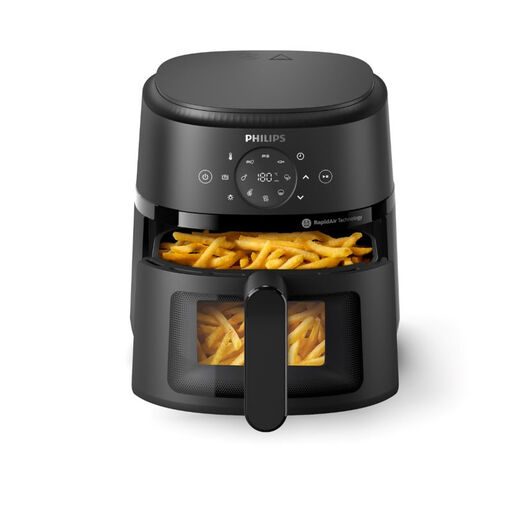 Image unavailable
Its stated 3.2 L capacity is worth comparing with the smaller portions you usually make. Before finding space for it in a cramped kitchen, check its dimensions and clearance requirements. If crispness is crucial, look for a cooking test of this specific model.
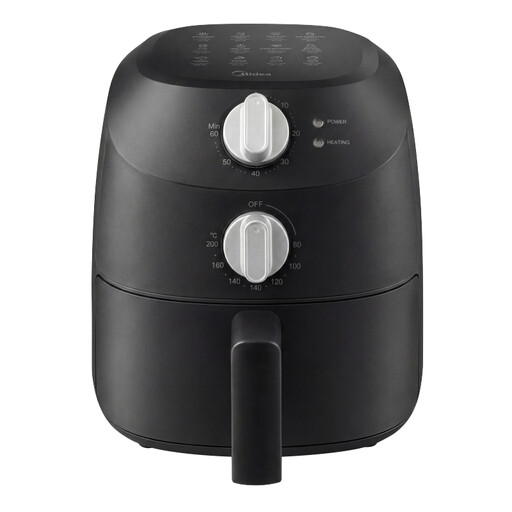 Image unavailable
The 2 L basket is worth considering for small quantities, although you may need to cook several batches. The product name specifies a non-stick, dishwasher-safe basket and a 60-minute timer. Also measure the space needed to set it up.
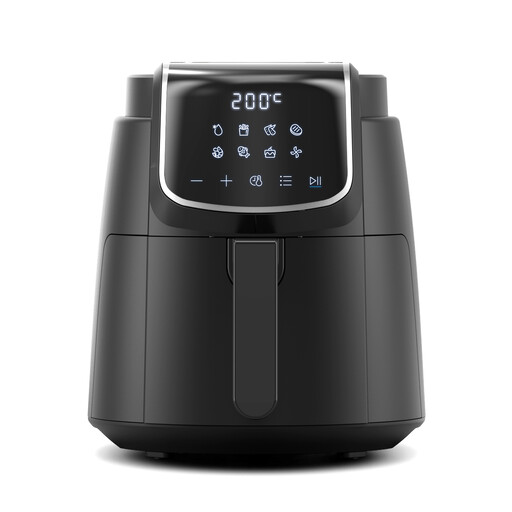 Image unavailable
Compare this 4 L capacity with the amount you cook and the space you have available. The product lists eight pre-set modes, a temperature range of 35 to 200 °C and a 60-minute timer. These settings don’t replace testing it with your usual recipes. Check the dimensions and dishwasher-safe parts before buying.
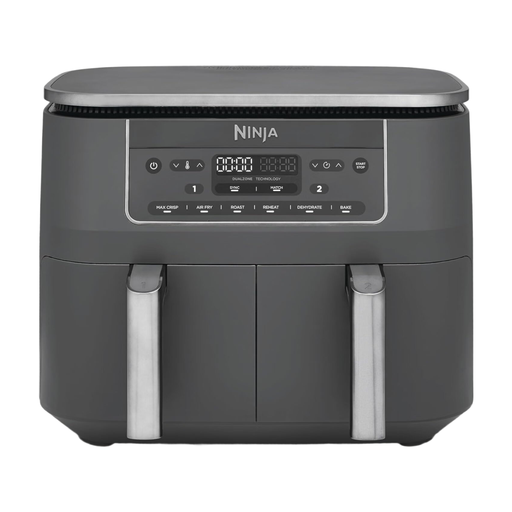 Image unavailable
The two drawers may appeal if you want to cook two foods for the same meal. For occasional frying in a small kitchen, the stated total capacity of 7.6 L makes it particularly important to measure the available space and room needed to open the drawers before choosing this model.
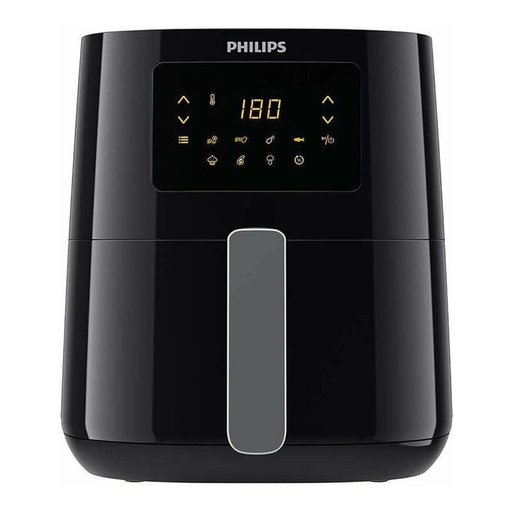 Image unavailable
This model offers a way to cook with hot air without handling a pan of hot oil. To see if it suits your kitchen and the food you make, check its dimensions, usable capacity and dishwasher-safe parts, and look for cooking tests specifically of the HD9252/70.
Start by checking results for recipes and quantities similar to your own. Que Choisir’s testing protocols take cooking results and ease of use into account. Depending on the type of appliance, also compare consistency, smells, cleaning, noise and safety rather than focusing only on the number of programmes.
No. Que Choisir links hot-air cooking with fewer unpleasant smells than deep-frying in oil in a small kitchen, but doesn’t promise that it will be completely odour-free. A filter in a deep-fat fryer won’t trap every smell either, particularly when the basket is lowered into or lifted out of the oil.
Start with the amount you usually cook, then measure the available space, including room to open the drawer and ventilate the appliance. A small basket may mean cooking several batches; a larger capacity is only useful if you regularly cook enough food to need it.
Don’t pour it down the sink or toilet. Que Choisir advises removing any crumbs if you plan to reuse the oil, and suggests taking oil for disposal to a household waste recycling centre or putting it in a sealed container. Check your local council’s guidance to find out what to do in your area.