An air fryer is a good choice if you often prepare small, varied portions with little added oil, provided its cooking surface and footprint suit your needs. If you mainly want the results of deep-fat frying or cook large batches, compare deep-fat fryers instead, taking odour and maintenance into account. For occasional use, the oven or frying pan you already own may be all you need.
Which method is right for you?
Smaller households that cook often
If you regularly cook breaded foods, vegetables or roasted dishes, an air fryer can handle a range of tasks. Look at the basket’s cooking surface, noise levels, ease of cleaning and the space it will take up, rather than just its capacity in litres.
Families who prefer deep-fat frying
If you serve large portions of chips and prefer the texture of traditional deep-fat frying, compare deep-fat fryers by their food capacity. Depending on the model, an electric deep-fat fryer may offer oil filtration or removable parts, but you’ll still need to maintain and dispose of the oil.
Households that rarely fry food
If your oven or frying pan already does the job for occasional meals, consider which dishes would genuinely justify another appliance and where you would store it.
What should you compare before choosing?
Start with the result you want most often, then weigh up the amount you need to cook against cleaning and storage requirements.
| Criteria |
What to check |
My needs |
| Texture |
Compare the results for the foods you cook, especially fresh chips. UFC-Que Choisir points out that an air fryer may not achieve the characteristic crispness of traditional deep-fat frying. |
If I’m mainly looking for the results of deep-fat frying, I won’t choose an air fryer assuming it will deliver the same thing. |
| Amount per batch |
With an air fryer, look at the basket’s cooking surface and how the food needs to be arranged, not just the stated capacity in litres. With a deep-fat fryer, distinguish between the food capacity and the oil capacity. |
I want to serve the portions my household usually eats without having to cook multiple batches. |
| Cleaning and odours |
Check which parts can be removed and how they should be cleaned. For a deep-fat fryer, look at its filtration system and compatible filters, but don’t assume they eliminate odours. |
Cleaning up after a meal matters as much to me as cooking; if I use frying oil, I also need to plan how to dispose of it. |
| Space and how often you’ll use it |
Measure the space available for use and storage, then consider which recipes would need this appliance rather than your oven or frying pan. |
If I only need it for the occasional meal, I’d rather check whether my existing appliances are enough before adding another one. |
| Electricity and added oil |
Compare energy use for the same recipe and quantity, including preheating. UFC-Que Choisir’s tests show that energy use varies by recipe and appliance; consider the oil added to your recipe separately. |
I want to limit the oil I add or compare electricity use per meal, without taking general claims about savings for granted. |
What pitfalls should you avoid?
-
Expecting an air fryer to perform like a large deep-fat fryer
UFC-Que Choisir notes that fresh chips need to be cooked in small quantities in the drawer for a good result. A large batch may therefore need to be cooked in several rounds.
If very crispy fresh chips are your priority, compare the two cooking methods first. For an air fryer, look at test results for this recipe and the quantity you usually prepare.
-
Taking a claimed electricity saving as a guarantee
Energy comparisons vary depending on the recipe, quantity and appliances used. A result measured against a mini oven won’t apply to every oven or meal.
Look for measurements based on a comparable recipe and quantity, rather than relying on the stated wattage alone.
-
Underestimating the maintenance involved with a deep-fat fryer
After cooking, you’ll need to deal with the oil and clean the appliance. ADEME states that used frying oil must not be poured down the sink or toilet, or disposed of in the environment.
Check how to drain the oil, which parts are washable and what collection options your local authority provides. If the model has a filter, check its reference and maintenance instructions.
Some odour filters need replacing. Compatibility and replacement frequency depend on the specific model.
-
Adding an air fryer when your oven already does the job
An appliance left on the worktop takes up space, even if your oven already handles the dishes you have in mind.
Make a list of the dishes you’d regularly cook in an air fryer and measure the available space before choosing a size.
Which brands are worth considering?
These brands offer appliances worth comparing, but capacity, features and results should be assessed for each individual model.
Ninja
Ninja is among the air fryer manufacturers tested by UFC-Que Choisir. When comparing its models, start with the type of cooking you want, then consider usable capacity, noise and energy use measured under comparable conditions.
- A range of air fryer models to consider, depending on the number of drawers and the dishes you plan to cook.
- A brand’s inclusion in a comparison doesn’t guarantee the results of every model or recipe.
Moulinex
Moulinex offers air fryers and electric deep-fat fryers. Its range lets you compare both methods, while bearing in mind that their maintenance requirements differ.
- For a deep-fat fryer, check the filtration features and parts available for the exact model.
- A filter or accessory made for one range won’t necessarily fit another.
Philips
Philips lists air fryer models with capacities of 3,2 L and 4,2 L. The stated capacity alone doesn’t tell you how much food is suitable for one batch.
- Specific model details make it easier to compare the stated size with the space you have available.
- Check the cooking surface and food arrangement instructions before estimating how many portions it can handle.
Joybuy models to consider
This selection includes electric deep-fat fryers and air fryers, so you can compare models for both methods. If you only cook this way occasionally, your oven and frying pan are also worth considering.
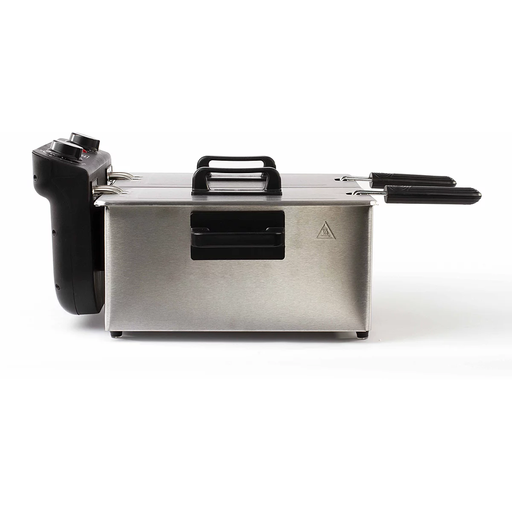 Image unavailable
Livoo DOC217, 2 × 3 L deep-fat fryer, 3 300 W
The two bowls are useful if you want to cook separate foods in hot oil. Check how much food it can hold for the meals you make, along with the cleaning instructions. You’ll also need to deal with the used oil.
View on Joybuy
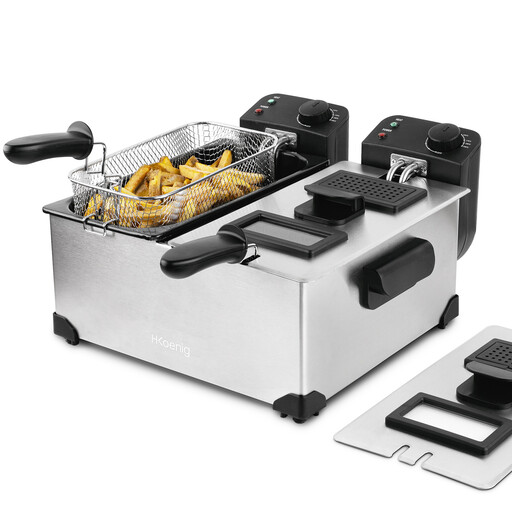 Image unavailable
Hkoenig DFX600, 2 × 3 L deep-fat fryer, 3 600 W
The two baskets and independent thermostats let you cook separate foods at the same time. The model is listed with odour filters and removable baskets; check the food capacity and filter maintenance requirements. Filtration doesn’t remove the need to deal with used oil.
View on Joybuy
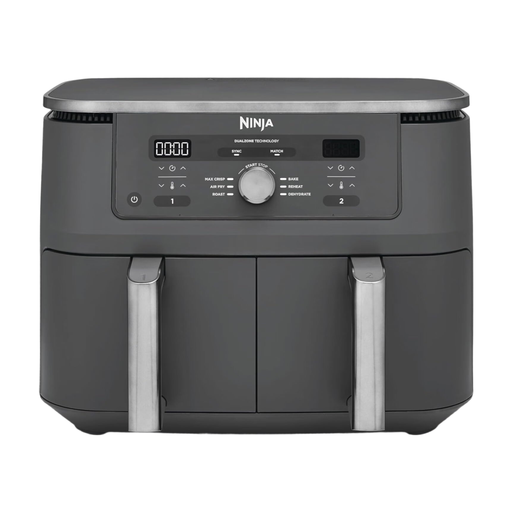 Image unavailable
Ninja Dual Zone DZ400EU, 9,5 L air fryer with two drawers
The two drawers are handy for cooking separate dishes at the same time using hot air. The product title lists six functions and dishwasher-safe baskets. Check the quantity that suits your recipes rather than estimating portions from the total capacity alone, and make sure the plug is compatible with your electrical setup.
View on Joybuy
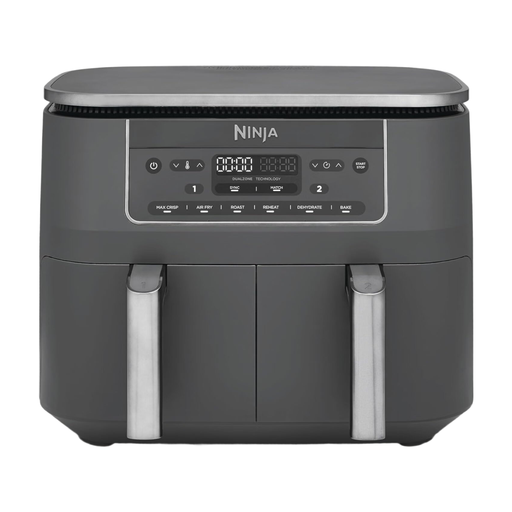 Image unavailable
Ninja Dual Zone DZ300EU, 7,6 L air fryer with two drawers
This two-drawer model lets you cook two dishes at once using hot air. The product title lists six functions and dishwasher-safe baskets. Compare the amount it can actually cook per batch, and check the voltage and plug type before you buy.
View on Joybuy
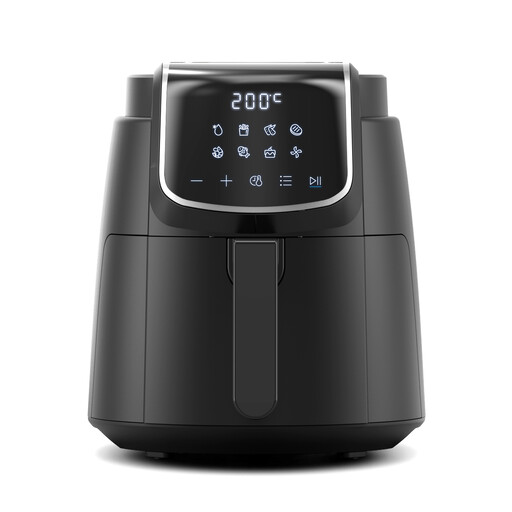 Image unavailable
Midea, 4 L air fryer, 1 500 W, eight modes
With eight modes and a shake reminder, this single-basket model suits a range of dishes. The stated temperature range is 35 to 200 °C, and it has a 60-minute timer. Check the basket’s usable cooking surface, cleaning instructions and electrical compatibility with your setup.
View on Joybuy
Frequently asked questions
Is an air fryer suitable for a large family?
It depends on how much food the baskets can cook properly in one go. UFC-Que Choisir highlights capacity limitations, particularly for fresh chips. Compare the cooking surface with the number of batches you usually make, and don’t assume the stated capacity in litres translates directly into portions.
Does an air fryer always use less electricity than an oven?
No. UFC-Que Choisir’s tests show that results vary depending on the recipes and appliances compared. For your needs, look for a comparison based on an equivalent quantity that takes preheating and cooking time into account.
Is food cooked in an air fryer always lower in fat?
No. An air fryer can help you limit the oil added during cooking, but the final fat content also depends on the food and recipe. Don’t assume results for chips will apply to all breaded foods or ready meals.
What should I do with used frying oil?
Don’t pour it down the drain or dispose of it in the environment, in line with ADEME guidance. Let it cool, put it in a sealed container and check your local authority’s collection arrangements.
Does an odour filter get rid of frying smells?
Don’t expect a filter to eliminate every odour. How it’s used and maintained depends on the fryer, so check the reference for a compatible filter and the model-specific replacement instructions.


