Smaller households that make chips often
For one or two people, the appliance’s size, ease of use and cleaning matter just as much as its stated capacity. UFC-Que Choisir recommends taking these factors into account when choosing an air fryer.


If you regularly make chips at home, start by considering how much you need to cook at once, how much space you have and how much cleaning you’re willing to do. An air fryer can suit frequent small portions, while an electric deep fat fryer means managing the oil. Sticking with your oven means you don’t need another appliance. In every case, check the model’s usable capacity rather than relying on its stated volume alone.
For one or two people, the appliance’s size, ease of use and cleaning matter just as much as its stated capacity. UFC-Que Choisir recommends taking these factors into account when choosing an air fryer.
If everyone eats at the same time, check the maximum weight of chips per batch and the cooking surface. UFC-Que Choisir recommends at least 6 L for an air fryer intended for four people, while also advising you to check its usable capacity.
If you only make chips occasionally or your kitchen is short on space, carrying on using your oven or mini oven can save you from buying another appliance. Whether another appliance is worthwhile will depend on the portions you make and how else you would use it.
If you regularly make chips at home, start with your main consideration: the batch size you need to serve, the space you want to save, cleaning or the energy used for a small cooking task.
Consider it: if you often make small or medium portions and have a dedicated space on your worktop.
Bear in mind: the amount of chips you can cook per batch depends on the basket’s usable capacity, and its parts need to be cleaned according to the instructions.
Consider it: if you fry regularly and the model’s stated chip capacity suits the batches you make.
Bear in mind: you’ll need to handle, store and dispose of used oil, as well as clean the appliance.
Stick with it: if you already have a suitable oven and don’t want to make room for another appliance.
Check: how long your usual cooking takes and how much energy it uses before buying another appliance in the hope of reducing either.
| Consideration | What to check before buying | Who is it for? |
|---|---|---|
| Capacity and batch size | Compare the maximum weight of chips and usable capacity with the largest batch you usually make, rather than relying on the “XXL” label. | If several people are waiting to eat together, avoiding multiple batches becomes a priority; around 31% of consumers would put capacity at the top of their list. |
| Space and uses | Measure the space available, allowing for the clearances specified in the instructions, then compare the uses you have in mind with those of your oven. | In a kitchen where every bit of space counts, adding an appliance for a job your oven already does can make storage harder; around 25% of consumers would prioritise space and versatility. |
| Cleaning and oil | Check which parts are removable and dishwasher-safe. If you’re considering a deep fat fryer, also plan for handling used oil. | If cleaning the appliance after every batch or handling oil is your main concern, this will influence your choice; around 25% of consumers would make it their priority. |
| Electricity use | Look for comparable measurements based on the same recipe and quantity: the stated wattage alone won’t tell you how much energy one cooking session uses. | If you cook small portions repeatedly, you may want to compare the electricity used per batch; around 19% of consumers would make this their top consideration. |
A large stated capacity doesn’t tell you how many chips you can cook at once. UFC-Que Choisir recommends checking the usable capacity. A model that’s too small may mean cooking in several batches, while a larger appliance takes up more space.
Compare the model’s stated chip capacity and cooking space with the largest batch you usually make.
This varies between appliances and parts. Moulinex instructions, for example, specify that some baskets, bowls or lids can go in the dishwasher, but that doesn’t apply to every appliance in the range.
Check the instructions for the exact model to see which parts are removable, hand-wash only or dishwasher-safe.
A deep fat fryer adds another task after cooking. ADEME says that used oil must not be poured down the sink or toilet, or discarded in the environment.
Let it cool, put it in a sealed container and find out where to take it for disposal in your local area.
You’ll also need somewhere to store the oil and, depending on local arrangements, may need to take it to a collection point.
Wattage alone isn’t enough to establish how much energy is used to cook a batch. UFC-Que Choisir’s results for air fryers and a mini oven relate to specific appliances, quantities and recipes, not every way of cooking chips.
If electricity use will help you choose, compare kWh measurements for the same recipe and an equivalent quantity.
These models give you the chance to compare air fryers and electric deep fat fryers for making chips at home. If your current oven already meets your needs, also weigh up whether a new appliance is worth the space it would take up and the extra cleaning it would involve.
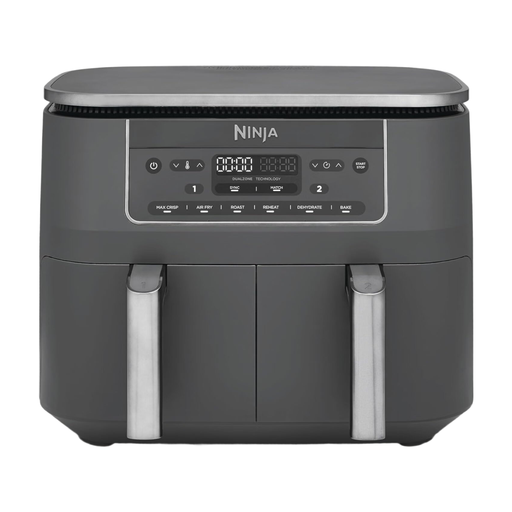 Image unavailable
Worth considering if you’d like to cook different foods in two drawers: the product title states a total capacity of 7,6 L and six functions. Check the maximum weight of chips for each drawer and the space you’ll need before relying on it for a large batch.
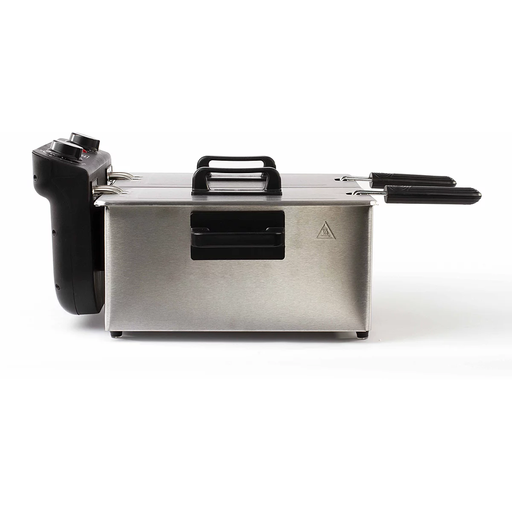 Image unavailable
Its two bowls may appeal to households that want to cook different foods. The product title states 2 × 3 L and 3 300 W; check the maximum weight of chips, the dimensions and which parts are dishwasher-safe. A deep fat fryer also means planning how to cool and dispose of the oil.
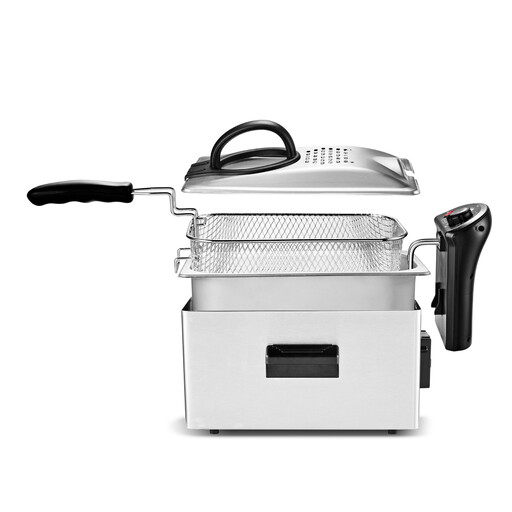 Image unavailable
If you’re considering this size for small batches, first check the maximum weight of chips it can handle. Before buying, also confirm how it cooks: the product title uses “Air Fryer”, while the model is described as a deep fat fryer. Check the instructions for details on cleaning its parts, too.
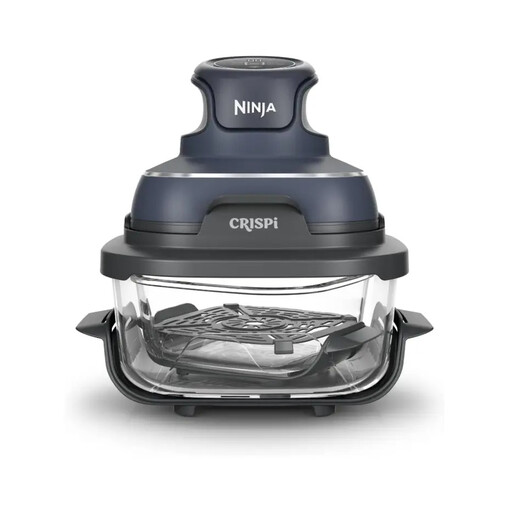 Image unavailable
To see whether this size suits your portions, check how many chips each container can hold, how much space you’ll need to use and store it, and the cleaning instructions. Don’t assume several containers can cook at the same time unless the instructions confirm this.
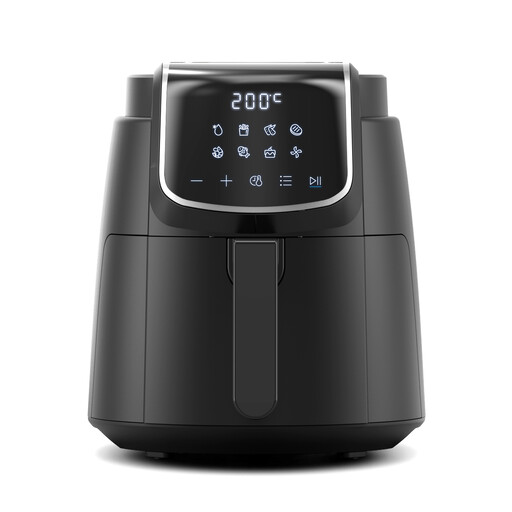 Image unavailable
For regular small portions, compare its stated 4 L capacity with the weight of chips you want to cook at once. The product title gives a temperature range of 35 to 200 °C; its 1 500 W power rating alone won’t tell you how much energy one batch uses.
UFC-Que Choisir recommends at least 6 L for four people. For chips, also check the model’s maximum capacity by weight and its cooking surface: volume alone doesn’t guarantee a large enough batch.
Cleaning depends on the model’s parts, but you’ll still need to handle the oil. Some deep fat fryers have a removable bowl, basket and lid that are dishwasher-safe; check the instructions for each part before buying.
No. For a quiche lorraine cooked in the same quantity, UFC-Que Choisir measured an average of 36% less electricity with the air fryers tested than with a mini oven. This result doesn’t predict how much energy your chips will use: compare measurements for the same recipe and quantity.
Don’t pour it down the sink or toilet. ADEME also advises against disposing of it in the environment. Once it has cooled, put it in a sealed container and ask your local council where to take it for disposal.
Read the instructions for your model, including guidance on filling it, keeping an eye on it, handling hot oil and cleaning. INRS highlights the risk of burns from contact with or splashes of hot liquid, and advises against leaving a deep fat fryer unattended while it’s switched on.