Home cooks bothered by frying smells
You regularly make crispy food, but lingering smells after a meal are your main concern. The cooking method matters, as does ventilation: no appliance means you can skip airing the kitchen.


If cooking smells are your main concern, start by considering hot-air cooking: UFC-Que Choisir presents it as one way to reduce them, without promising a completely odour-free kitchen. A deep-fat fryer remains an option for traditional frying, provided you’re happy to manage the oil and ventilate the kitchen. If your oven already handles the quantities you prepare, compare how you actually use it before adding another appliance.
You regularly make crispy food, but lingering smells after a meal are your main concern. The cooking method matters, as does ventilation: no appliance means you can skip airing the kitchen.
You want to avoid cooking in batches. The usable area and volume of the basket, the space the appliance takes up and the capacity of your existing oven all influence your decision.
You want to cut down on cleaning after cooking, particularly filtering, storing and replacing oil. A hot-air fryer also needs regular cleaning.
Worth considering: if smells from deep-fat frying bother you and your portions fit in the basket.
Bear in mind: according to UFC-Que Choisir, this type of appliance can be bulky and its fan noisy; it won’t eliminate all smells.
Worth considering: if you want to regularly cook food by immersing it in oil.
Bear in mind: the oil needs to be handled and maintained. UFC-Que Choisir notes that filters don’t prevent smells when you handle the basket.
Stick with it: if your existing oven suits the recipes and quantities you prepare.
Compare: for each recipe, look at how much you can cook at once and the cooking time, rather than assuming another appliance will always use less energy.
| Criteria | What to check | Who it matters to |
|---|---|---|
| Smells and ventilation | Compare the cooking methods and ventilation options. For a deep-fat fryer, check whether it has a filter and how to maintain it, but don’t rely on the filter alone. | When smells linger after a meal, I want to choose a cooking method that suits my kitchen without giving up on ventilation; around 33% of consumers prioritise this need. |
| Portions and food | Match the basket’s usable area and volume to your portions; assess each basket separately on a dual-basket model. | If cooking several portions means I have to make multiple batches, how much I can cook at once becomes crucial. This is the priority for around 27% of consumers. |
| Cleaning and oil | Check which parts can be removed and washed. With a deep-fat fryer, also plan for filtering, storing and replacing the oil. | After regular cooking, I’d rather spend less time handling oil and cleaning; around 20% of consumers put ease of maintenance first. |
| Electricity and existing appliances | Compare the same recipe and quantity, taking cooking time and the number of batches into account, rather than looking only at the stated power rating. | My oven may already do the job: before adding another appliance, I want to know which one suits my usual portions. For around 20% of consumers, this is the priority. |
The food, handling the basket and ventilation all affect smells too. UFC-Que Choisir highlights, in particular, the limitations of filters in deep-fat fryers.
Choose a cooking method that suits your recipes, then make sure you can ventilate the kitchen instead of relying on a single anti-odour feature.
The stated volume doesn’t tell you how much food you can spread out in the basket for your recipe. A larger appliance also takes up more room.
Start with your usual portions and compare the basket’s shape and surface area, as well as the space available in your kitchen.
A basket that’s too small may mean cooking in several batches.
A removable bowl or filter can make some tasks easier, but you’ll still need to deal with residue and check the condition of the oil.
Check which parts are washable, and follow the model’s instructions for filtering and replacing the oil.
You’ll also need to let the oil cool, filter it and store it between uses.
Results vary depending on the recipe, quantity, appliance being compared and number of batches. A favourable result for a small meal doesn’t settle the question for a larger one.
For the recipes you make regularly, compare the quantities actually cooked and consider how you use your existing oven.
The Easy Fry range includes air fryers with different capacities and features, depending on the model.
The Airfryer range includes models in different sizes, as well as dual-basket versions.
The Filtra Pro range is for people who want to keep deep-fat frying.
These air fryers and this electric deep-fat fryer let you compare the capacities and cooking methods discussed above. If your existing oven already suits the meals you make, consider it alongside the other options before choosing another appliance.
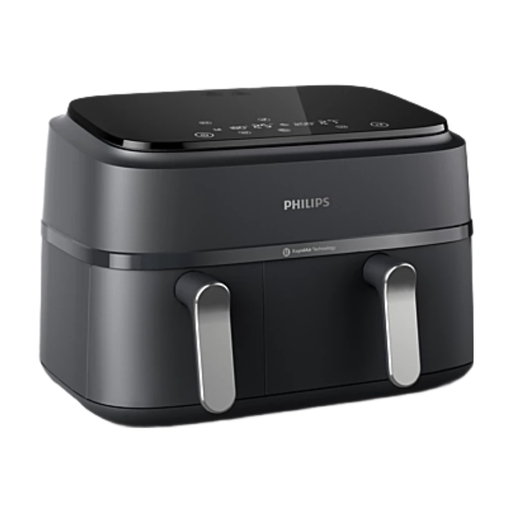 Image unavailable
Worth considering if you want to cook two different foods in separate baskets. The stated total capacity is 9 L; check the space available and each basket’s usable volume against your portions.
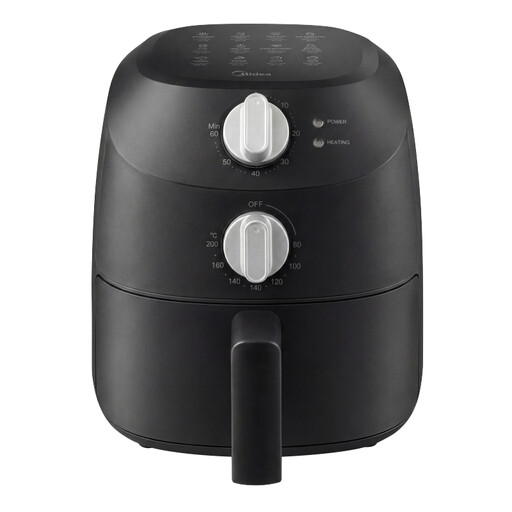 Image unavailable
Its 2 L size is worth considering for smaller meals; if you need several portions ready at once, check how much you usually cook. The product title lists a dishwasher-safe non-stick basket and a 60-minute timer.
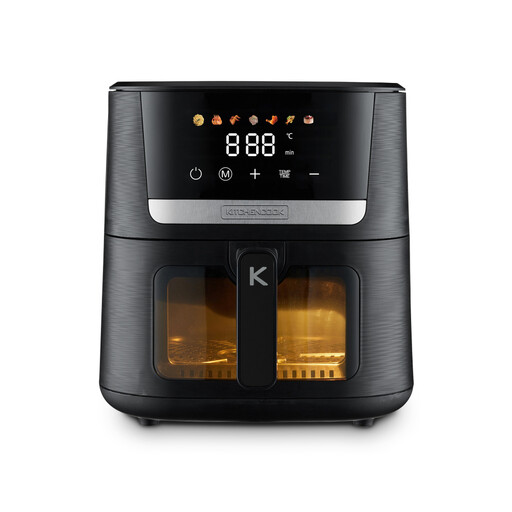 Image unavailable
Worth comparing if you’d like to keep an eye on cooking through a window. The model is listed as having a 7 L capacity and digital display; check how the capacity suits your portions and measure it before deciding where to put it.
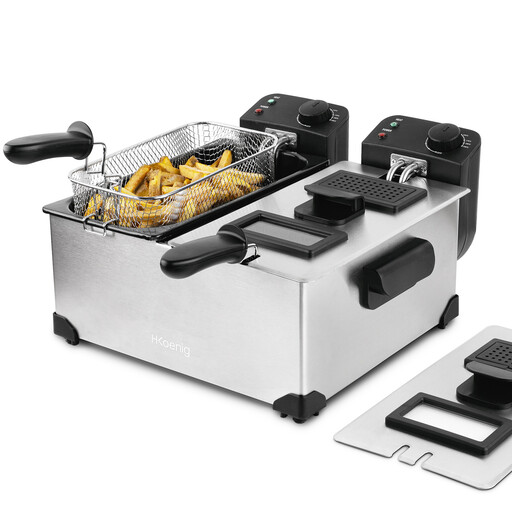 Image unavailable
Worth considering if you prefer deep-fat frying and want two separate baskets. The product title lists two independent thermostats, removable baskets and anti-odour filters; these don’t guarantee an odour-free kitchen. Make sure you can ventilate the room and take care when handling hot oil.
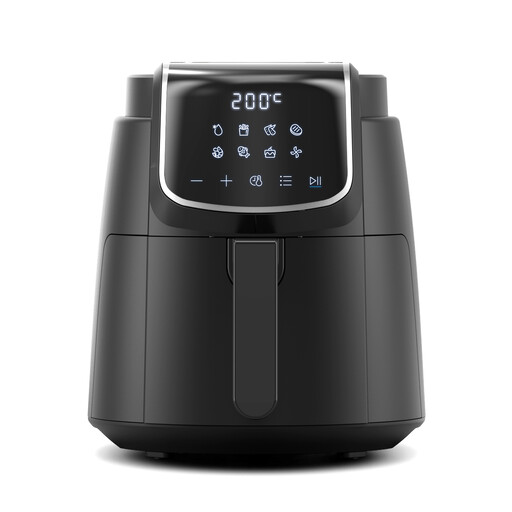 Image unavailable
Compare its 4 L size with your usual portions rather than looking only at the stated volume. The product title lists a temperature range of 35 to 200 °C, a 60-minute timer and a reminder to turn the food; the stated power rating doesn’t tell you how much energy a recipe will use.
No, there’s no guarantee that cooking will be odour-free. UFC-Que Choisir presents reduced smells as a possible benefit of hot-air cooking, but smells also depend on the food and the kitchen. Ventilate while preparing meals and make sure the air is refreshed.
No, a filter won’t trap every smell. UFC-Que Choisir notes, in particular, that smells escape when the basket is lowered into or lifted out of the oil, so make sure you can ventilate the room too.
Compare the same recipe and quantity, aiming for a similar result, and count every batch. UFC-Que Choisir found that air fryers used less energy in some tests, but that result won’t automatically apply to every meal; the stated power rating alone doesn’t tell you how much energy is used per portion.
Check which parts of your chosen model can be removed and washed, and whether it can be repaired. For a deep-fat fryer, also consult the instructions for filtering and replacing the oil. In France, the government departments responsible for the environment direct end-of-life electrical and electronic equipment to appropriate collection schemes.