People who cook small portions in a compact space
You usually prepare one portion or side dish at a time. The usable cooking surface in the basket needs to justify the space the appliance will take up on your worktop.


For roasting a small dish at a time, a single-drawer air fryer can complement your oven if its cooking surface is large enough for your portions and you have room for it. A dual-drawer model is better suited to cooking two items at once. If your oven or mini oven already meets your everyday needs, sticking with it means you won’t have to make room for another appliance. Before choosing, check the model’s actual footprint, noise level and cleaning requirements, and don’t assume it will save electricity.
You usually prepare one portion or side dish at a time. The usable cooking surface in the basket needs to justify the space the appliance will take up on your worktop.
You want to prepare two different foods at the same time rather than in separate batches. In this case, separate cooking zones matter more than a compact design.
Your oven or mini oven meets your usual needs. Before adding an air fryer, you want to know whether frequent small-batch cooking is worth the extra space, noise and cleaning.
For small portions of roasted or grilled food, start with how much you need to cook and how many dishes you want to prepare at once. Then compare the air fryer’s intended use with your current oven.
| Criterion | What to check | Who it matters to |
|---|---|---|
| Usable capacity and space | Compare the internal cooking surface with your portions, and check the appliance’s dimensions with the drawer open against the clearances specified in the manual. Que Choisir suggests 3 to 4 l as a guide for one or two people, but this volume alone doesn’t guarantee enough room for your food. | When I’m cooking one small dish and short on worktop space, I want to avoid a basket that’s too narrow as well as an appliance that’s difficult to position. Around 42% of consumers put this balance between portion size and space first. |
| Cooking two dishes at once | Check the capacity of each zone, whether the settings can be controlled independently and whether there’s a synchronisation feature, rather than looking at the total capacity alone. | If two parts of my meal need different cooking settings, I’d rather cook them together than in separate batches. This is a priority for around 25% of consumers. |
| How it compares with an oven | Consider the noise, the parts that need cleaning and the space you’ll need to set aside. To compare electricity use, look for per-cook measurements based on a similar recipe and quantity. | If I’m already happy with my oven, I want a new appliance to make cooking small portions more convenient without adding too many extra tasks. This distinct use comes first for around 33% of consumers. |
An “XL” or “XXL” label doesn’t tell you how much usable surface there is for arranging your food. The usable capacity and shape of the basket affect how many portions you can cook in one batch.
Compare the internal dimensions and the sizes of dishes that will fit with the food you usually prepare, rather than looking at the stated capacity alone.
Separate zones are mainly useful for cooking different foods at the same time. If you almost always prepare just one item, they may not justify the extra space the appliance takes up.
Check the capacity of each drawer and ask yourself how often you’d actually use both zones together.
Energy use varies depending on the recipe, quantity, cooking time and appliance. A figure for an oven’s annual energy use won’t tell you how much you could save when cooking a particular small dish.
If energy use is an important factor in your decision, compare per-cycle measurements for the same quantity and a similar recipe, rather than looking at the rated power alone.
In a small kitchen, cooking noise and how easy it is to reach the sides and corners can matter just as much as the appliance’s size.
Check any available noise test results and read the manual to find out which parts need washing and whether they can go in the dishwasher.
An appliance with lots of accessories or a glass door may take longer to clean.
These appliances let you compare two types of use: preparing a small quantity at a time or using two drawers for two parts of a meal. Compare their usable capacity and the space they need with your oven before deciding whether an extra appliance would be useful.
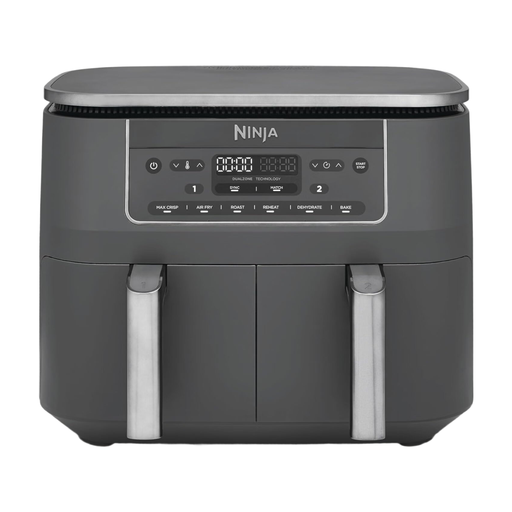 Image unavailable
Worth considering if you regularly prepare two parts of a meal at the same time. The model name indicates two drawers and a total capacity of 7,6 l. Check that each drawer has enough usable surface for your portions.
Roast is one of the advertised functions. Also check how much space you’ll need with the drawers open and the clearance instructions in the manual.
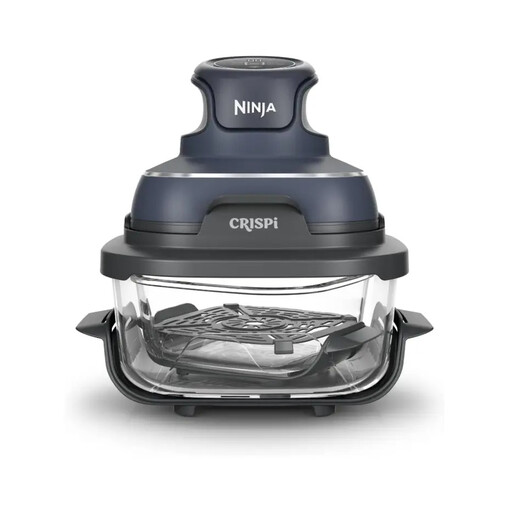 Image unavailable
An option to consider if you want to prepare a small quantity without needing to cook two things at once. Check that your chosen container offers enough surface area for your food and that you have room for the appliance, including the required clearances.
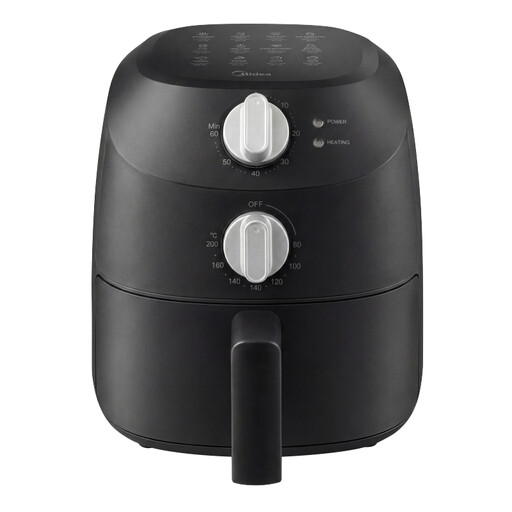 Image unavailable
Worth considering for a small dish if the basket has enough surface area for your portions. Its stated capacity of 2 l is below the 3 to 4 l guide given by Que Choisir for one or two people.
The product name indicates a 60-minute timer and a dishwasher-safe basket. If you’re specifically looking for roasting or grilling modes, check the model’s functions and cooking instructions before choosing.
Que Choisir suggests 3 to 4 l as a guide for a single basket intended for one or two people. Also check the internal surface area and the size of your food: the stated capacity doesn’t guarantee everything will fit the way you want to cook it.
Not necessarily: there’s considerable overlap between what you can cook, roast and grill in an air fryer and an oven. Depending on the model, an air fryer can be handy for frequent small quantities or two separate dishes, while an oven is still useful for dishes and quantities that won’t fit in the air fryer.
No, you can’t assume it will use less energy for every recipe. Que Choisir records the energy used per cook in its tests. To compare two appliances, look at measurements for similar quantities and dishes.
Check which parts can be removed and whether the manual says they’re dishwasher-safe. Also look at how easy it is to reach the sides, corners and, if applicable, the glass panel. Accessories can mean more parts to clean after roasting or grilling.
Check the manual and electrical specifications to make sure they’re suitable for your home’s electrical installation. For products that require CE marking, the DGCCRF explains that this mark indicates the manufacturer’s commitment to meeting the applicable European requirements; it is not a quality certification.